




William IV Rosewood Tea Table
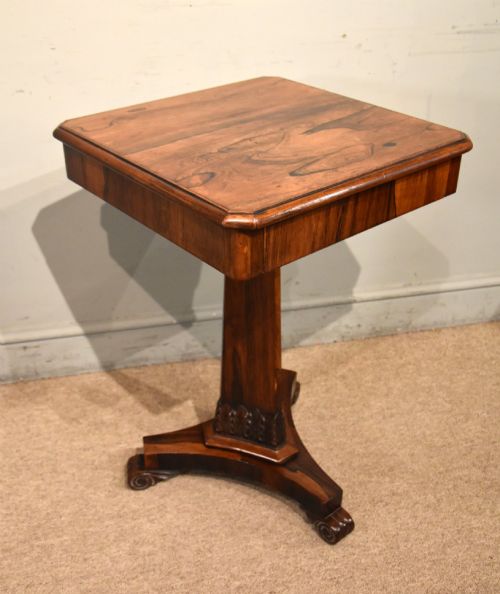
A william iv rosewood tea table brings deep grain and solid form to a room, built to serve evening hospitality.
William IV Rosewood Tea Table
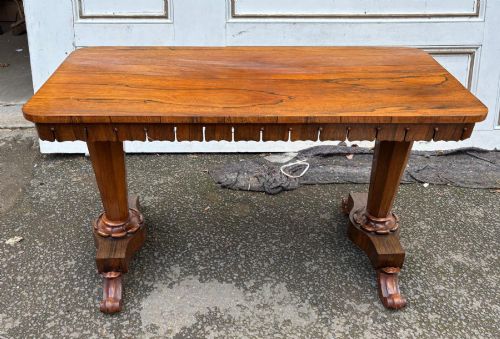
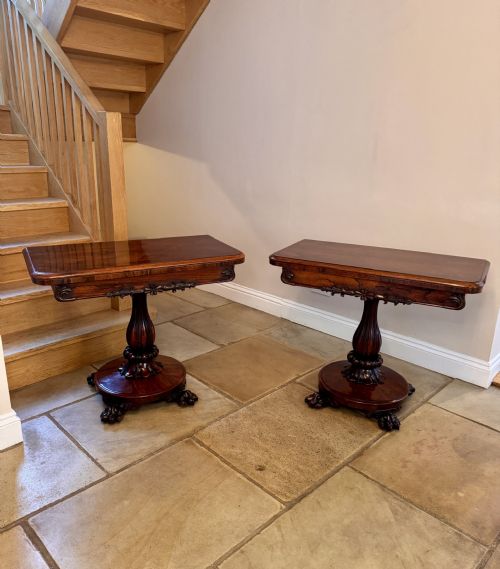
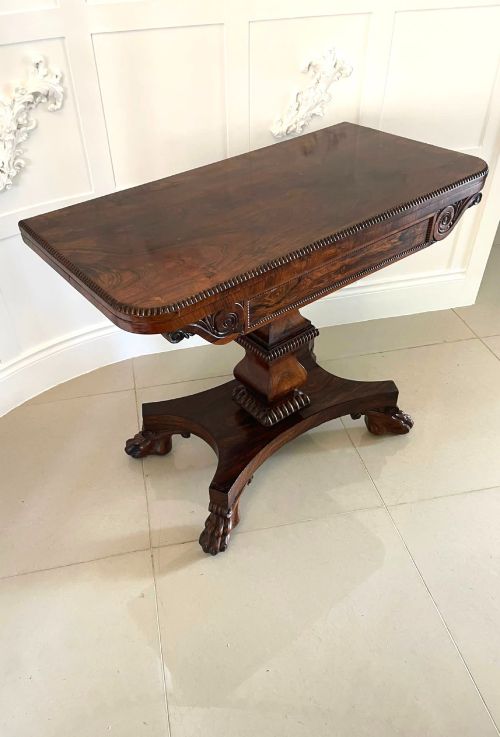
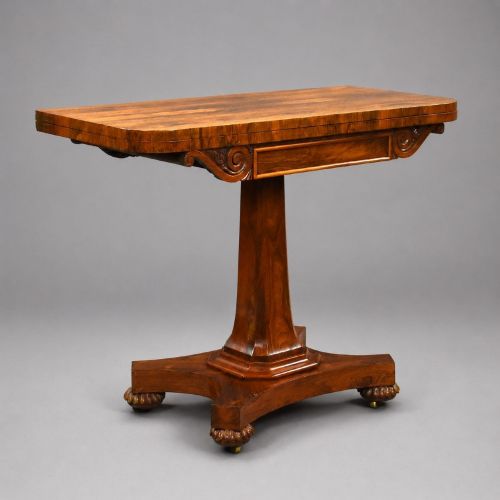
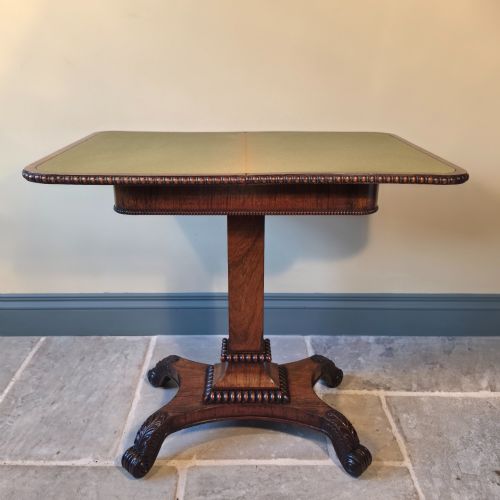
A william iv rosewood tea table is a heavy timber piece designed for nineteenth-century entertaining, most often appearing as a fold-over top variant.
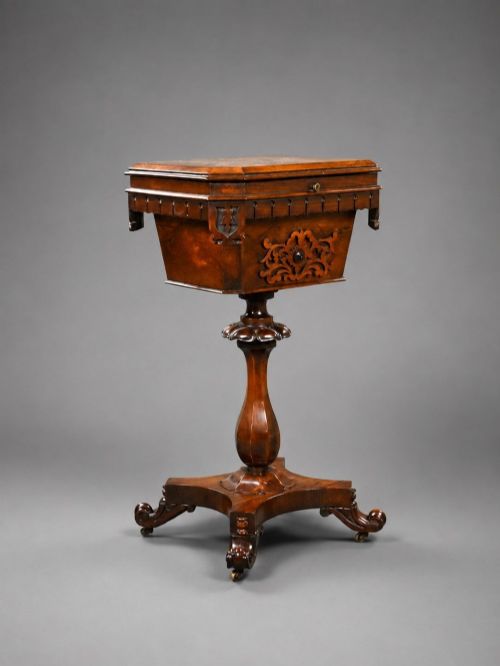
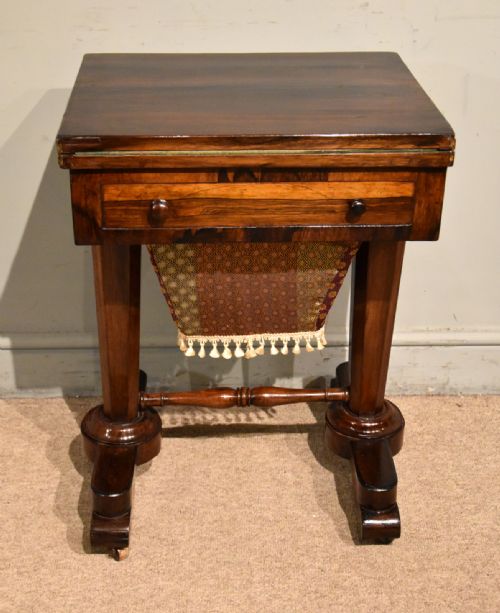
The evidence shows these tables crossing stylistic boundaries into card tables, games tables, and tea poys, anchored firmly in the nineteenth century and Regency periods.
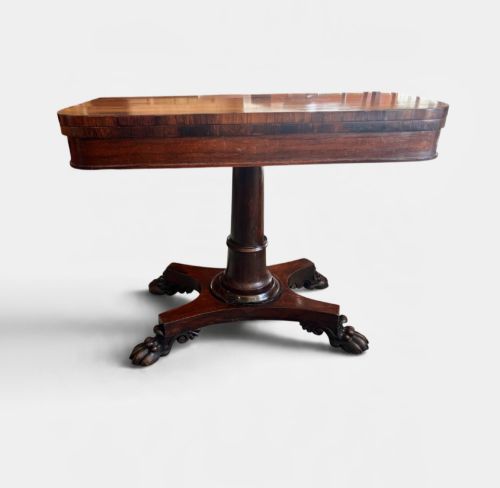
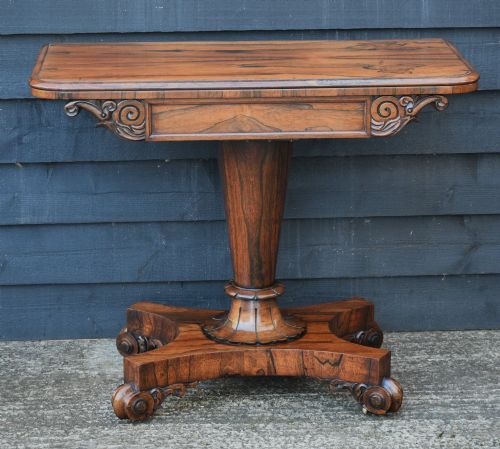
Makers utilised rich rosewood timbers alongside secondary woods, shaping square, demi-lune, and tilt-top surfaces supported on sturdy pedestals.
Construction and Materials
Workshops built these pieces using dense rosewood veneers over firmer sub-frames, often incorporating boxwood stringing and brass castors for mobility.
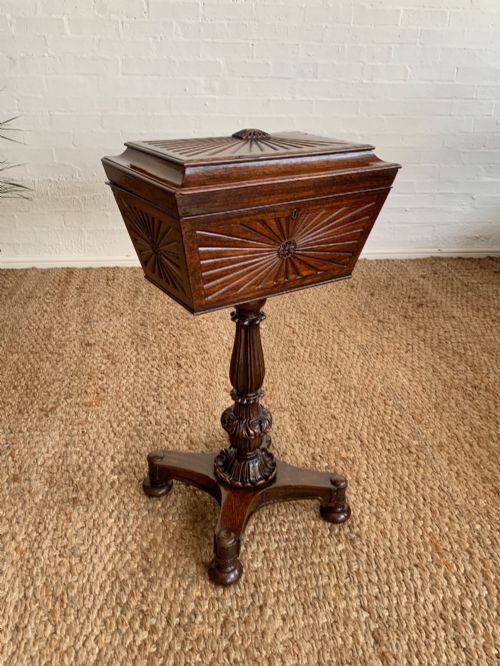
Carving appeared on pedestals and bases, utilising details such as sunburst motifs and carved dolphin forms to enrich the heavy timber profiles.
William IV Rosewood Tea Table Retail Price Guide 2026
Typical asking prices for william iv rosewood tea table among the pieces listed under this phrase on Sellingantiques today, from the lower quarter to the upper quarter. They describe what is for sale here now, not the wider market.
Some tables feature carved dolphins swimming up the base to support the tea service above.
Quality Variations
The distinction between standard production and top-tier workshop attribution lies in the crispness of the timber carving and the symmetry of the rosewood grain matching.
Better examples maintain tight hinge mechanisms for fold-over leaves and stable pedestals without auxiliary bracing.
Gillows·T & G Seddon
The William IV Rosewood Tea Table Glossary
- Rosewood
- A dense, heavily figured timber valued for dark grain patterns. It forms the primary visible surface on these tables.
- Fold-over
- A hinged table top that doubles its surface area when opened. This mechanism allows a console to function as a tea or card table.
- Teapoy
- A small box or chest on a pedestal used to store tea leaves. Surviving examples often double as work tables.
- Pedestal
- A central column supporting the table top. It frequently terminates in a platform base with scroll feet.
- Baize
- A woolen felt fabric used to line the interiors of card and games tables. It provides a soft surface for playing cards.
William IV Rosewood Tea Table: Frequently Asked Questions
What is a tea table used for?
These tables served the ritual of afternoon or evening tea in nineteenth-century parlours. The folding top allowed the furniture to sit flat against a wall when not in use.
Opened up, the surface held tea service items or provided a stable area for card games and social gathering.
How do I identify the period?
Look for the heavy proportions and dark rosewood timber characteristic of the nineteenth century and the Regency era. Details like carved pedestals and fold-over mechanisms point directly to this timeframe.
Compare the form against records from the eighteen-thirties, which show similar pedestal bases and turn-over leaves.
Can I use it daily?
These tables adapt well to modern living as console surfaces or occasional desks. The fold-over leaf remains functional for expanding surface space.
Care should be taken with moisture and direct sunlight to protect the antique rosewood polish and timber grain.
What is a teapoy?
A teapoy is a lidded container mounted on a central pillar, designed to hold dry tea leaves securely. They often include interior compartments and work box fittings.
In the evidence, these pieces share the same rosewood construction and nineteenth-century origin as the tea tables.