

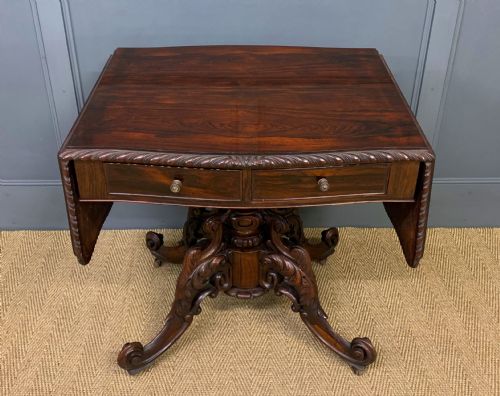
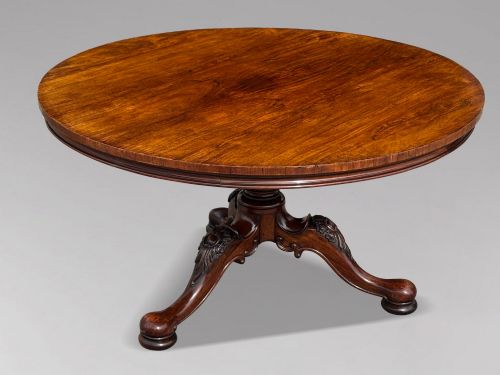
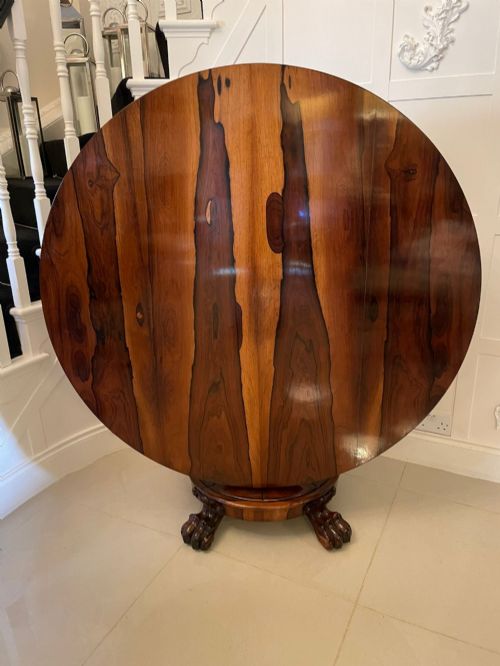
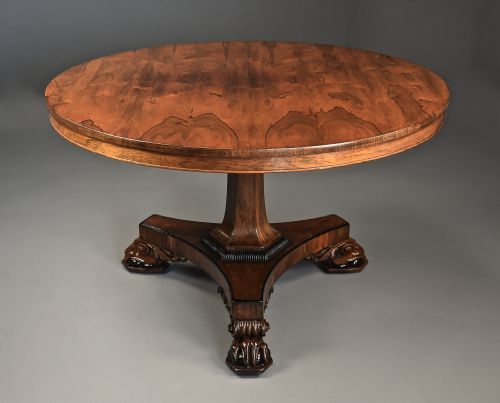



William IV Rosewood Centre Table
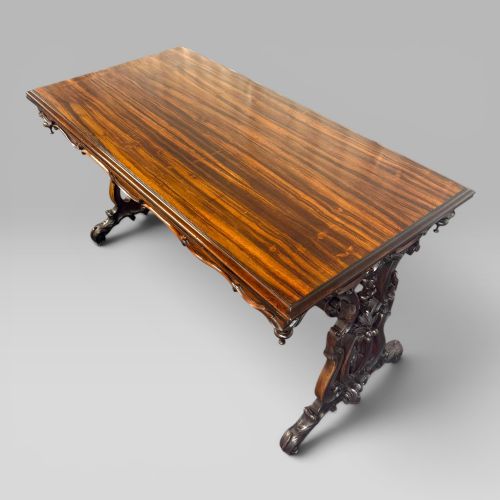
A william iv rosewood centre table stands free in a room, offering rich timber grain and solid pedestals for daily use.
William IV Rosewood Centre Table
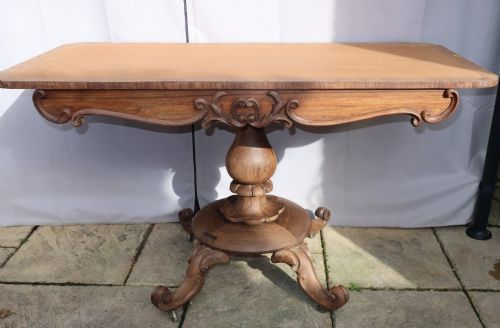
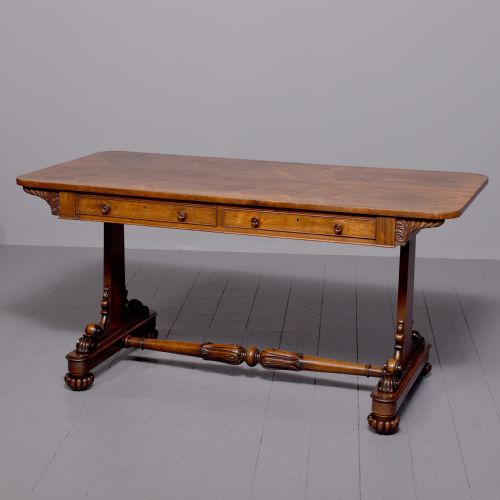
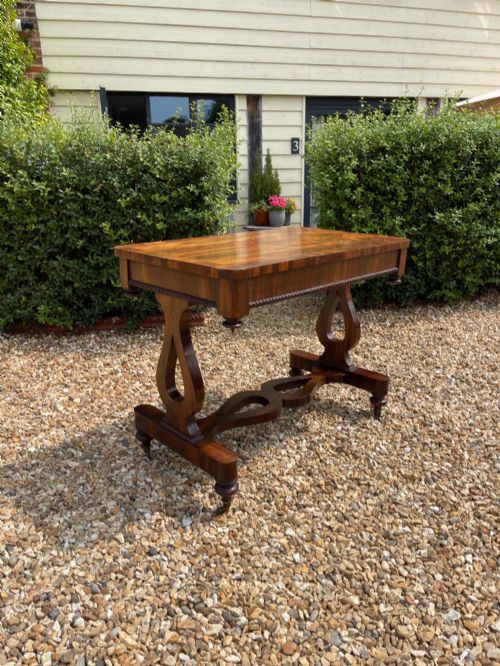
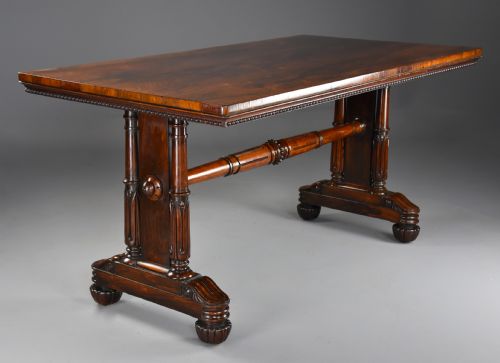
When you search for a william iv rosewood centre table, you examine heavy timber tables designed to sit in the middle of a room rather than against a wall. The examples on this page span the 19th century, with origins in the Regency, William IV, and early Victorian periods.
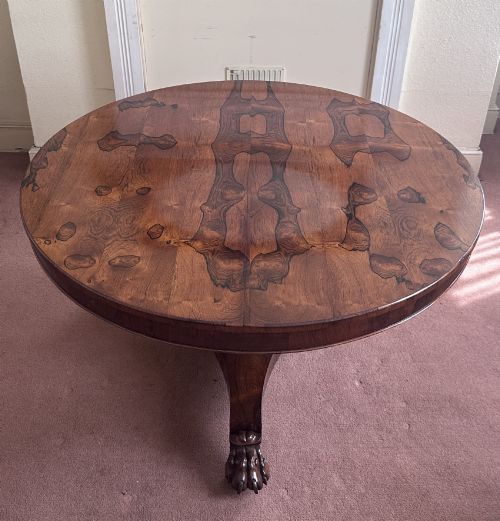
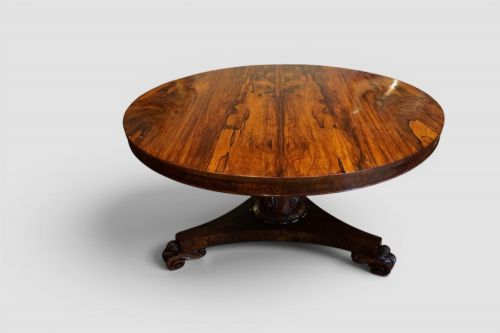
Most entries function simultaneously as dining tables, library tables, and breakfast tables. You will encounter circular tops with tilt mechanisms, supported on triform bases or heavy pedestals.
Makers such as James Winter of Wardour Street in London and Mein of Kelso appear in the listings alongside unassigned pieces of similar character. The wood choice extends to zebrawood, goncalo alves, and mahogany alongside the dominant rosewood.
Construction and Materials
Cabinet makers utilised dense rosewood veneer laid over solid timber foundations to achieve deep colour and strong grain patterns. Selected pieces incorporate brass inlay to accentuate the top or base.
Circular breakfast tables often employ a tilt top mechanism supported by a heavy central pillar and a robust triform base. Subsidiary woods like mahogany provide structural stability beneath the decorative surfaces.
William IV Rosewood Centre Table Retail Price Guide 2026
Typical asking prices for william iv rosewood centre table among the pieces listed under this phrase on Sellingantiques today, from the lower quarter to the upper quarter. They describe what is for sale here now, not the wider market.
Tables tilt upright with hidden brass catches so they can rest politely against the parlour wall when the dancing starts.
Judging Quality
Quality rests on the selection of the rosewood timber and the weight of the underlying construction. Pieces exhibiting strong, figured grain and heavy pedestals stand apart from simpler variations.
Attribution to documented workshops like Gillows or James Winter elevates a piece through superior carving and tighter joinery. The crispness of carved details on the triform base distinguishes finer examples from standard production.
James Winter of Wardour Street·Mein of Kelso·Gillows
The William IV Rosewood Centre Table Glossary
- Rosewood
- A dense, dark timber with prominent dark grain, favoured by 19th-century cabinet makers for luxury furniture. It takes a high polish and shows rich colour variations.
- Tilt top
- A tabletop hinged to the central pillar so it can pivot vertically when not in use. This mechanism allowed tables to be stored against walls in smaller spaces.
- Triform base
- A three-sided pedestal foot assembly that supports the central column. It provides stability for heavy circular tables.
- Library table
- A large freestanding table designed for reading and writing, often fitted with drawers beneath the top. They feature finished backs so they can stand in the middle of a room.
- Goncalo alves
- An exotic tropical hardwood with striking contrasting grain patterns, sometimes utilised alongside rosewood in 19th-century tables.
William IV Rosewood Centre Table: Frequently Asked Questions
What is a centre table?
A centre table is finished on all sides so it can stand independently in the middle of a room. These pieces provide a central surface for lamps, books, or dining.
During the 19th century, they served multiple functions as breakfast tables, library tables, and dining tables depending on their size and mechanism.
How do I use a tilt top table?
The tilt top mechanism allows the circular surface to pivot ninety degrees into a vertical position. This enabled owners to push the table out of the way against a wall when the room was needed for other purposes.
To use it flat, release the brass catch underneath and lower the top securely onto the pedestal base.
How do I date a rosewood table?
Dating relies on stylistic clues such as the form of the pedestal base, the turning of the central column, and the presence of specific wood types like zebrawood or goncalo alves. Pieces attributed to the William IV period typically display bold, heavy proportions and distinct classical revival motifs.
Comparisons with documented makers from London and regional workshops help narrow the decade of production.
Where should I place a library table?
Library tables work best positioned away from walls where their finished backs and drawers remain accessible from multiple sides. They anchor large reception rooms or studies.
Keep them away from direct sunlight and heat sources to protect the rosewood veneer from drying out.