
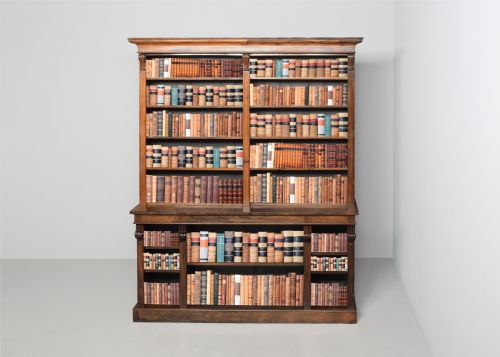
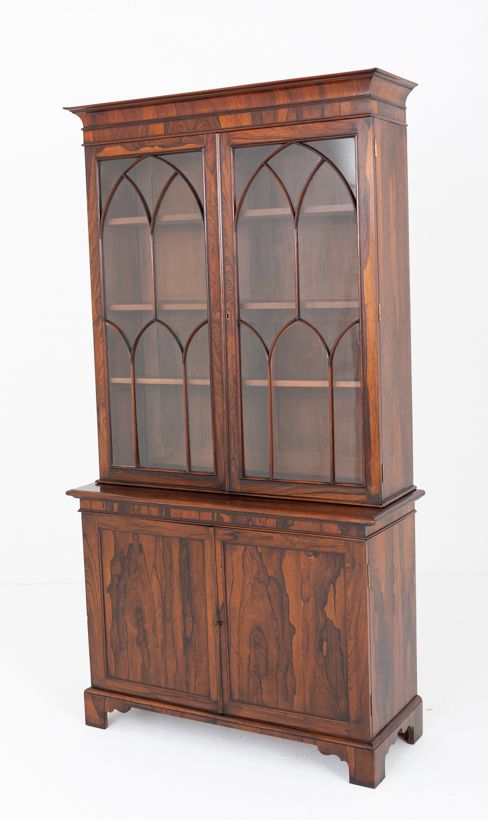
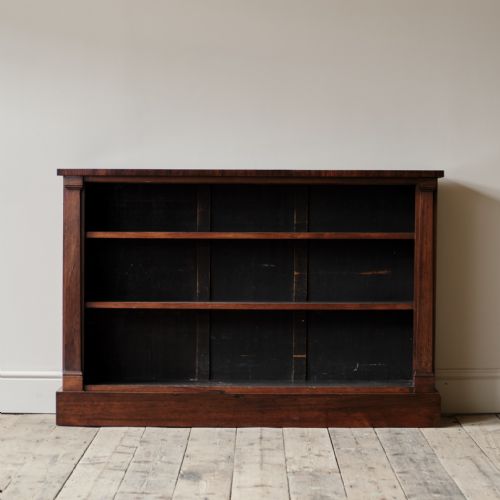
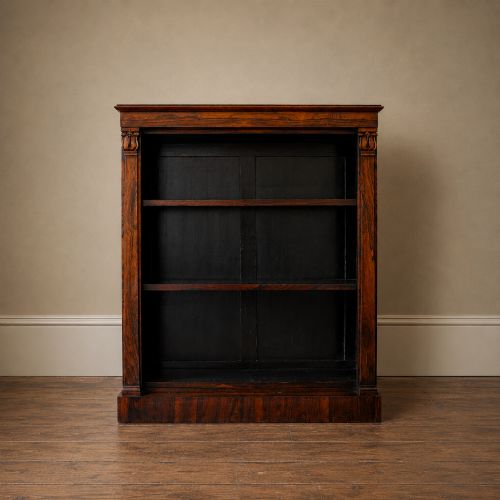
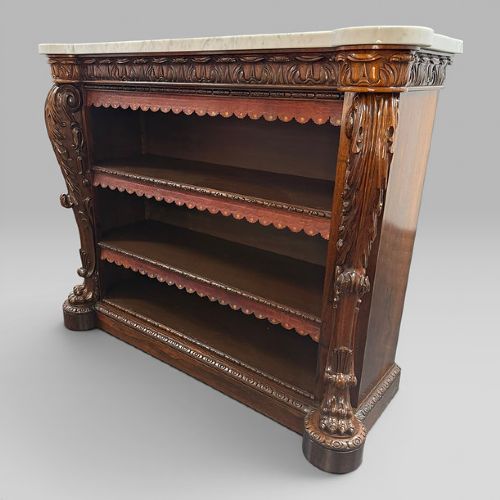
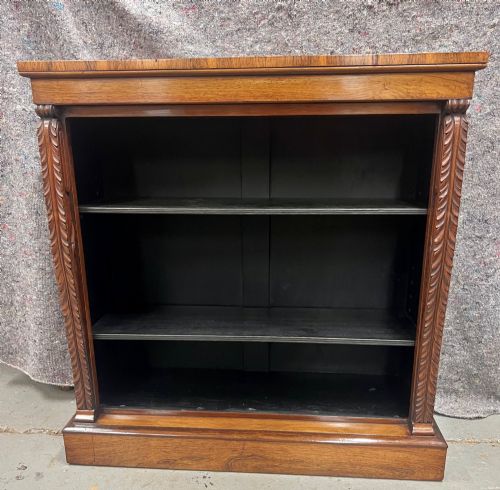


William IV Rosewood Bookcase
A william iv rosewood bookcase brings rich grain and solid proportions to a room, offering both display space and architectural character.
William IV Rosewood Bookcase
A william iv rosewood bookcase combines the robust cabinet-making traditions of the nineteenth century with dense timber and formal restraint. Buyers seeking this phrase encounter open shelf formats, glazed cabinets, and low side pieces designed for parlours and libraries.
Most examples date from the nineteenth century, spanning Regency, William IV, and early Victorian periods. Open bookcases with adjustable shelves appear frequently alongside marble top cabinets and breakfront forms.
Materials and Construction
Makers utilised dense rosewood timbers, often applied as veneers over secondary woods like oak and pine, supported by brass details and glass panels. Marble tops appear on specific cabinet variants, adding weight and contrasting colour to the dark grain.
Internal construction relies on adjustable timber shelving systems and substantial end supports. Joinery techniques reflect the period's demand for stability in large freestanding furniture.
Listings feature periods from the eighteenth and nineteenth centuries, alongside materials including rosewood, glass, brass, marble, and oak.
Judging Quality and Execution
Quality rests upon the selection of rosewood veneer and the precision of brass inlay work. Pieces displaying continuous grain patterns across the front demonstrate superior cabinet-making execution.
Proportion and structural integrity distinguish finer examples, particularly where marble tops, glazed doors, or brass fittings integrate seamlessly with the timber frame.
Gillows
The William IV Rosewood Bookcase Glossary
- Breakfront
- A piece of furniture where the central section projects forward from the flanking cabinets. This configuration creates visual depth in larger library rooms.
- Dwarf bookcase
- A low bookcase designed to sit below window height without obstructing light. These items provide accessible top surfaces for display.
- Glazed bookcase
- A cabinet fitted with glass panel doors to protect volumes from dust. The glazing bars often form geometric patterns characteristic of the period.
- Waterfall bookcase
- A set of open shelves diminishing in depth from bottom to top in a stepped profile. This form gained popularity during the early nineteenth century.
William IV Rosewood Bookcase: Frequently Asked Questions
How do I care for rosewood?
Keep wooden furniture away from direct sunlight and sudden temperature changes to prevent the timber and veneer from drying out. Dust regularly with a soft, dry cloth rather than applying silicone polishes.
Apply specialised wax sparingly only when the surface appears dry. Maintaining stable room humidity preserves the integrity of the antique polish and underlying timber.
Are shelves adjustable on these pieces?
Many nineteenth-century open bookcases incorporate adjustable wooden shelving supported by brass rack strips or timber fillets. This mechanism allowed owners to alter shelf heights for varying volumes.
Original internal fittings add utility and authenticity to the piece. Check the shelf support system to confirm period manufacture.
Where should I place a low bookcase?
Low bookcases and side cabinets suit living rooms, hallways, and studies where tall furniture might block natural light. Their upper surfaces provide space for lamps and decorative objects.
Freestanding low cabinets also function as room dividers in open plan interiors. Ensure the back is finished if the piece stands away from a wall.
How do I distinguish William IV from Regency?
William IV furniture generally exhibits heavier proportions and bolder classical details than earlier Regency designs. Turned columns, robust plinth bases, and dense rosewood veneers typify this transitional phase.
Regency pieces often display lighter scale and more delicate brass inlay work. Cabinetmakers of both eras drew upon classical architectural motifs.