



William IV Mahogany Chiffonier
A William IV mahogany chiffonier brings architectural dignity and practical low storage to a room through rich timber and restrained classical carving.
William IV Mahogany Chiffonier
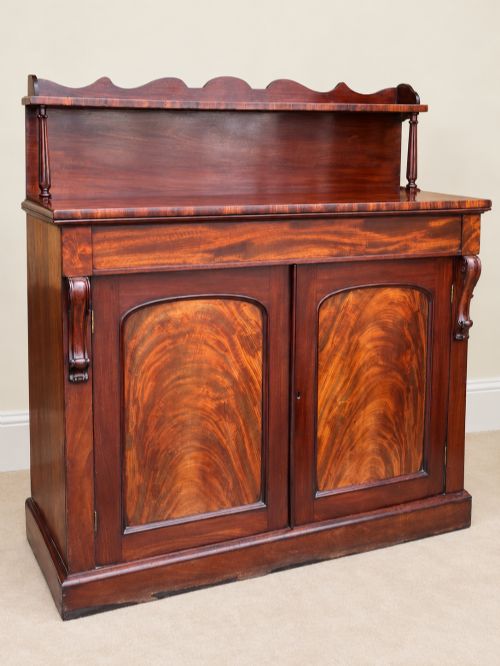
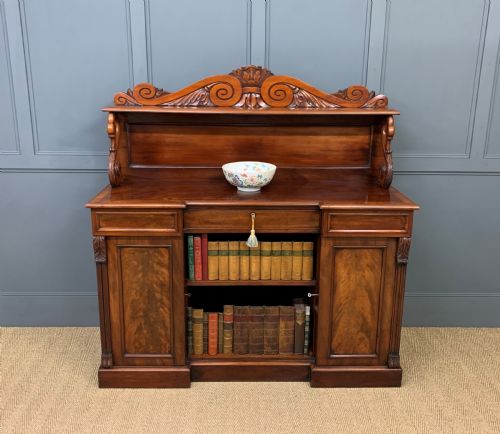
A William IV mahogany chiffonier is a low sideboard or side cabinet designed for dining rooms and libraries during the early nineteenth century. These pieces typically combine a shelved superstructure or low back with a closed cupboard base enclosed by panelled doors.
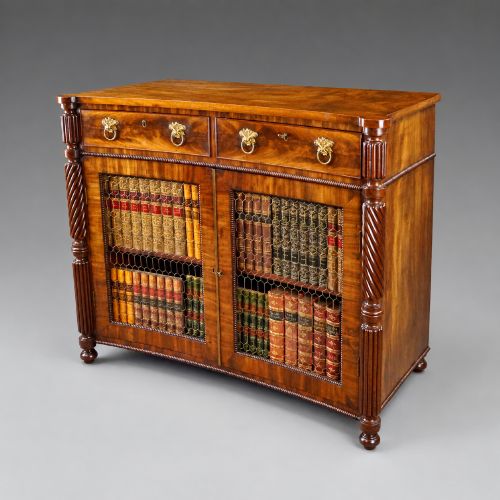
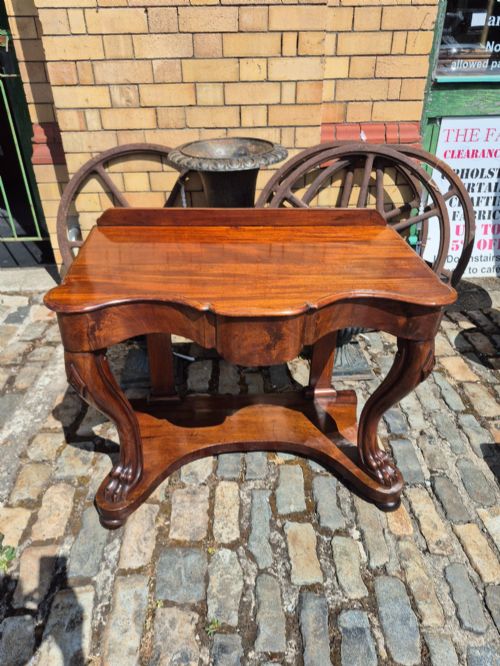
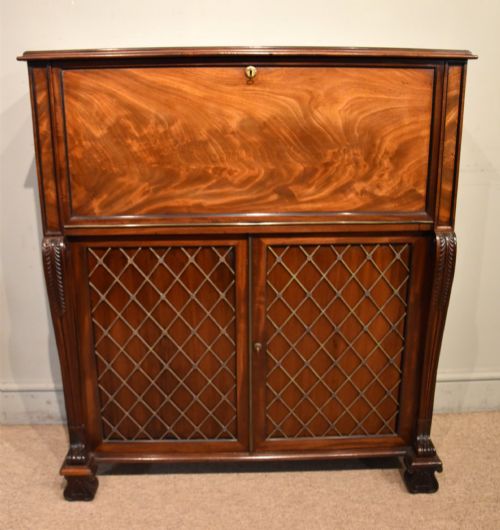
Most examples found here date from the nineteenth century, including pieces attributed to the William IV and early Victorian periods. Formats range from narrow cabinets and two-door cupboards to concave side cabinets and secretaire variants.
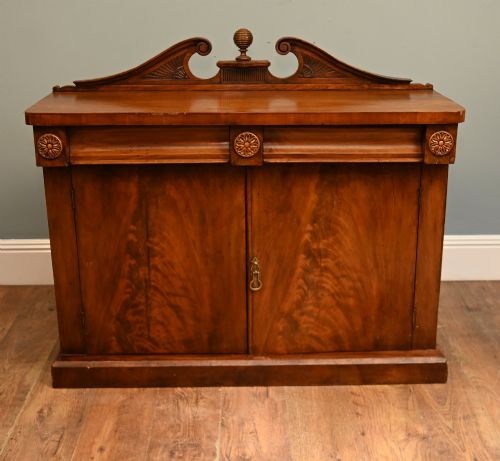
The primary form serves as both display surface and concealed storage, often featuring figured timber veneers on the front elevation. Collectors encounter variations from plain utilitarian pieces to carved examples bearing architectural motifs.
What varies in quality
The selection of timber grain distinguishes standard production from finer work, particularly the matching and symmetry of flame mahogany veneers across the front panels. Superior execution shows thoughtful alignment of the wood figure.
Carving depth and crispness separate workshop standards, as master carvers produced sharp architectural enrichment rather than soft, rounded profiling. The proportion of the piece, particularly in smaller or concave formats, also dictates the desirability of the cabinet.
William IV Mahogany Chiffonier Retail Price Guide 2026
Typical asking prices for william iv mahogany chiffonier among the pieces listed under this phrase on Sellingantiques today, from the lower quarter to the upper quarter. They describe what is for sale here now, not the wider market.
Listings feature nineteenth-century pieces executed in solid mahogany, flame mahogany veneer, brass, and pine.
Gillows
The William IV Mahogany Chiffonier Glossary
- Chiffonier
- A low cabinet with a cupboard base, frequently surmounted by a shelf tier or scroll back. It developed from the sideboard to serve smaller domestic spaces.
- Flame mahogany
- A cut of mahogany timber exhibiting a rolling, flame-like grain pattern. Cabinet makers reserved this veneer for prominent surfaces.
- Secretaire
- A desk component incorporated into a cabinet, featuring a drop-front writing drawer with internal compartments. It conceals stationery storage behind the main facade.
- Concave
- A curved inward front elevation found on select side cabinets. This shaping softens the rectilinear profile of the furniture.
- Superstructure
- The upper shelving assembly attached to the back of certain chiffoniers. It provides open display space above the main sideboard top.
William IV Mahogany Chiffonier: Frequently Asked Questions
What is a William IV chiffonier used for?
These cabinets function as low sideboards providing enclosed storage in dining rooms and living spaces. The top surface holds decorative objects while lower cupboards conceal tableware or household items.
Some variants include upper shelves for display or pull-out writing drawers for correspondence. Their compact proportions suit modern rooms desiring period character without excessive bulk.
How do I identify a William IV chiffonier?
Identification rests on classical architectural details such as scroll corbels, turned feet, and bold mahogany grain. The style bridges late Regency austerity and early Victorian elaboration.
Look for flame mahogany veneers on the door panels and substantial timber construction. Superstructures often feature plain or scrolled wooden backs rather than tall mirrors.
Where should I place a chiffonier at home?
A chiffonier works well against a dining room wall, in a hallway, or as a low media console in a sitting room. The shallow depth prevents the cabinet from projecting too far into the floor space.
Keep the piece away from direct heat sources and strong sunlight to protect the mahogany veneer. Regular polishing maintains the sheen of the timber surface.
How do these differ from standard sideboards?
Chiffoniers are generally smaller than traditional dining room sideboards and frequently incorporate a raised back tier with shelves. Their design focuses on multi-use living spaces rather than grand formal dining.
Many examples include fitted secretaire drawers or narrower cupboard widths. This makes them adaptable for storage duties where a full sideboard proves too large.