

William IV Gaming Table
A william iv gaming table brings substantial rosewood and mahogany engineering to the evening parlour, offering ingenious fold-over tops and hidden compartments for cards or chess.
William IV Gaming Table
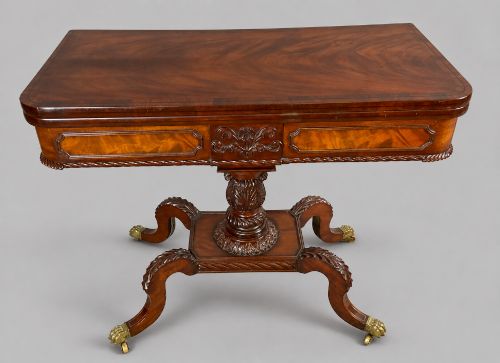
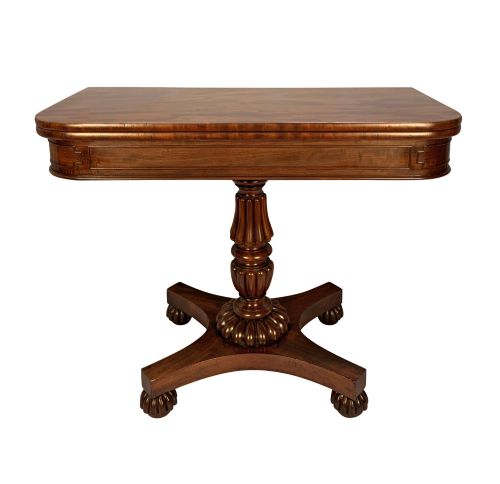
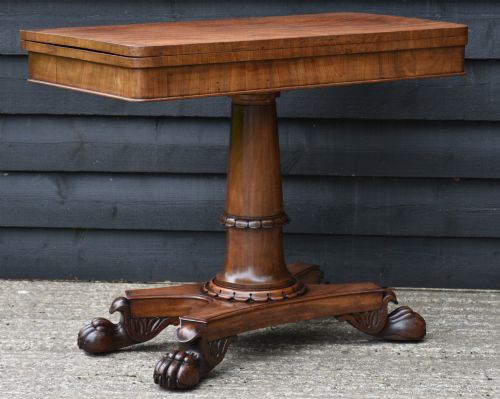
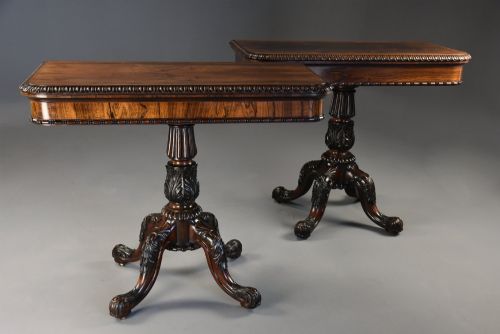
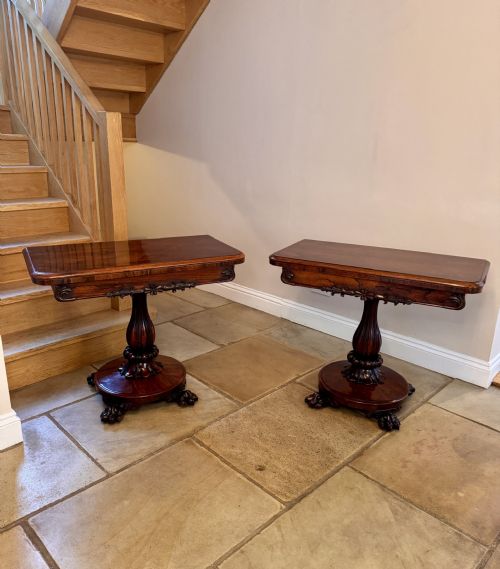
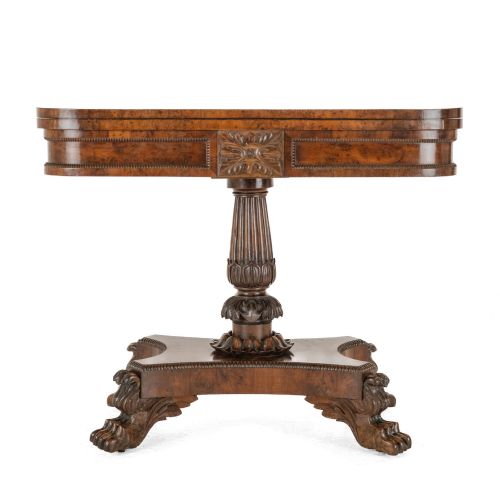
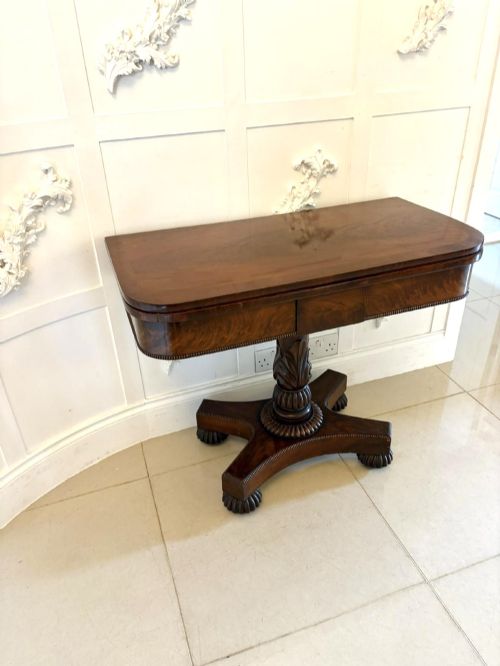
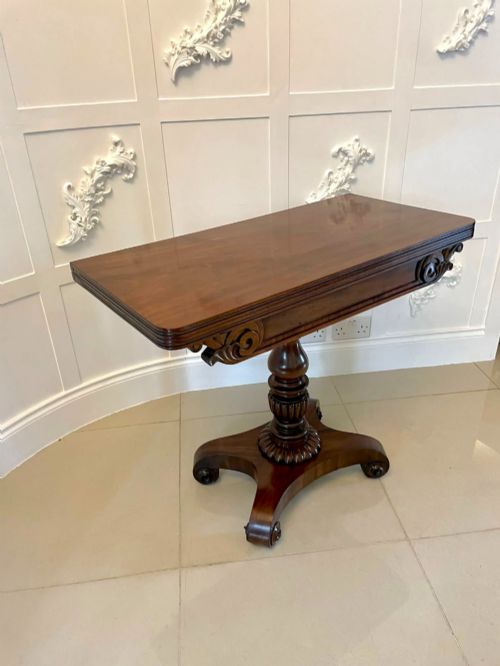
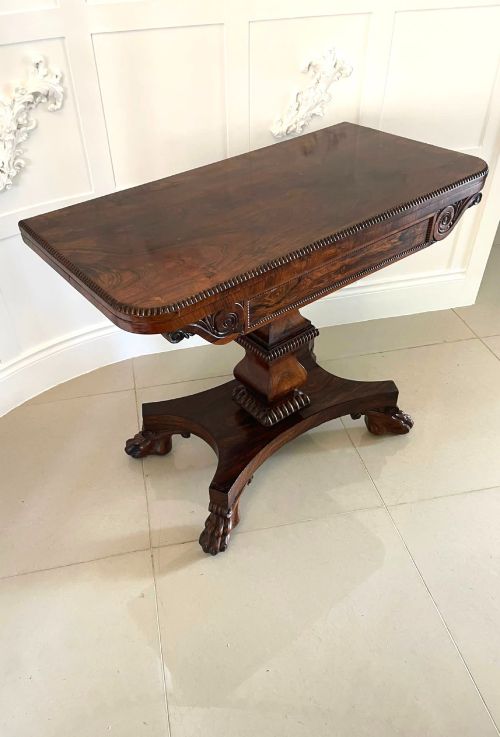
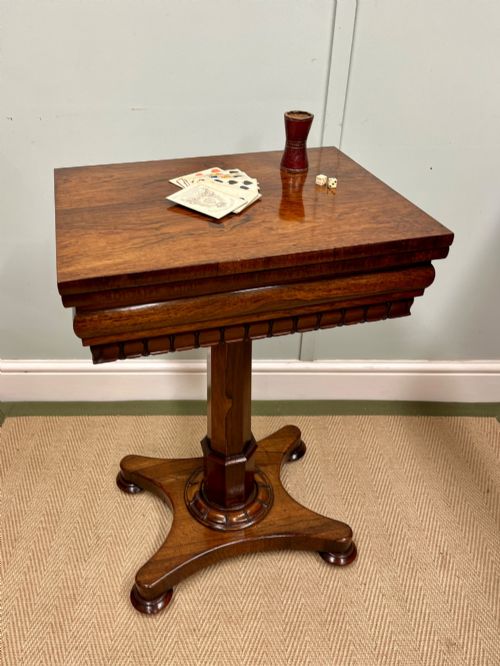
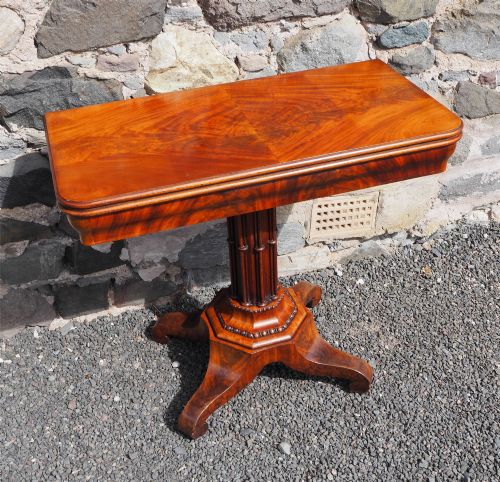
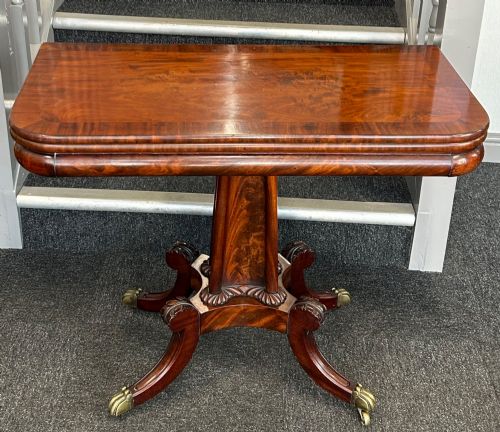
A william iv gaming table is a domestic piece designed primarily for card playing, chess, and parlour entertainment during the nineteenth century. These items appear most frequently in rosewood and mahogany, taking the form of fold-over card tables, tea tables, and pedestal games tables.
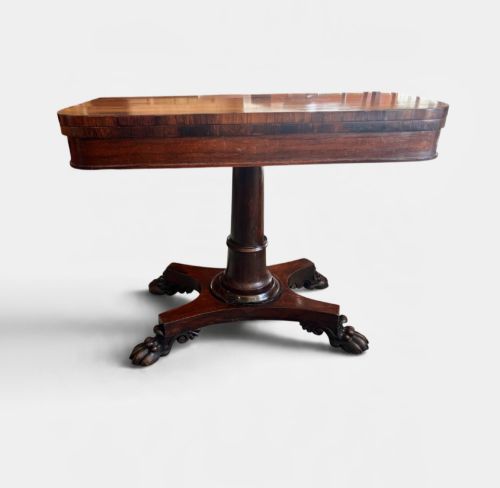
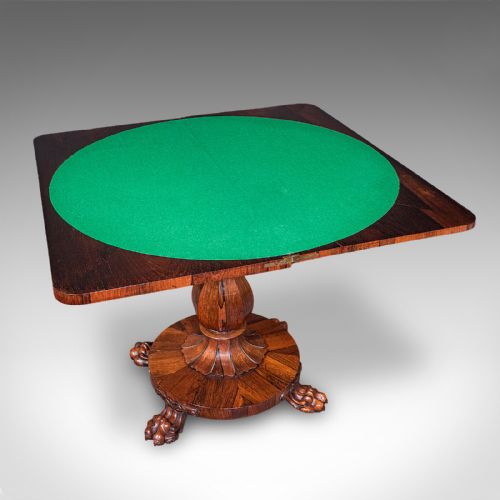
Makers of this era constructed these pieces to serve dual functions, acting as console or side tables against the wall before opening to reveal a baize-lined playing surface. Examples span the Georgian, Regency, and William IV periods, featuring pedestal bases, carved dolphin supports, or tripod legs.
Materials and Technique
Cabinetmakers utilised dense timbers such as mahogany and rosewood, frequently applying flame mahogany veneer to achieve striking grain patterns across the folding tops. The structural framework often incorporated oak for stability, while interior compartments relied on fine carpentry to house gaming pieces.
Surfaces designed for play utilised fabric or baize inserts fitted neatly within the wooden borders. Heavy turned pedestals and platform bases provided the necessary counterweight to support the extending leaves of the fold-over mechanisms.
William IV Gaming Table Retail Price Guide 2026
Typical asking prices for william iv gaming table among the pieces listed under this phrase on Sellingantiques today, from the lower quarter to the upper quarter. They describe what is for sale here now, not the wider market.
Listings feature rosewood, mahogany, and burr yew wood, alongside baize and fabric inserts.
Standards of Execution
The distinction between ordinary production and superior work lies in the choice of timber and the crispness of the carved details. Tables exhibiting figured grain, burr yew, or well-matched flame mahogany veneer demonstrate a higher tier of craftsmanship.
Structural integrity in the pivoting and folding mechanisms dictates the enduring utility of the piece. Subtle carving on the pedestal base and precise joinery separate standard workshop output from items attributed to prominent makers.
Gillows·William Trotter
The William IV Gaming Table Glossary
- Baize
- A coarse woollen material traditionally used to line the playing surfaces of card tables. It provides a flat, soft texture that prevents cards from sliding during a game.
- Fold-over
- A tabletop design featuring a hinged leaf that opens outward to double the surface area. This mechanism conceals a hidden compartment beneath the top when closed.
- Flame mahogany
- A veneer cut from the fork of the mahogany tree to produce a rippled, flame-like grain pattern. Cabinetmakers utilised this technique on prominent exterior surfaces for decorative effect.
- Pedestal base
- A central pillar supporting the main body of the table, often resting on a platform with scroll feet. This design allows adequate legroom for seated players.
William IV Gaming Table: Frequently Asked Questions
How do you open a fold-over card table?
The top leaf rotates on a pivot or hinges upward and swings outward to rest upon a pivoted frame or gate leg. This action reveals the hidden well or compartment used for storing cards and counters.
Care must be taken to support the weight of the moving leaf evenly during this operation to protect the original hinges and internal wooden pivots.
What games were played on these tables?
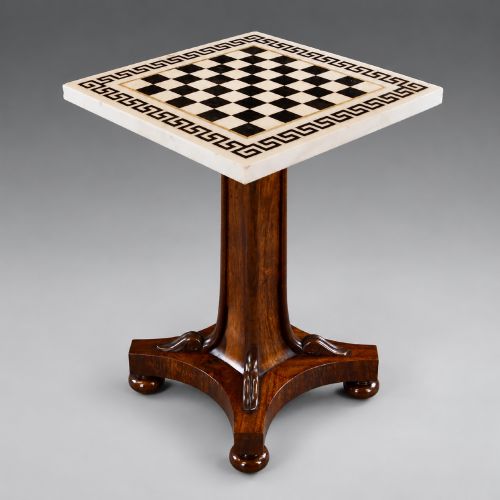
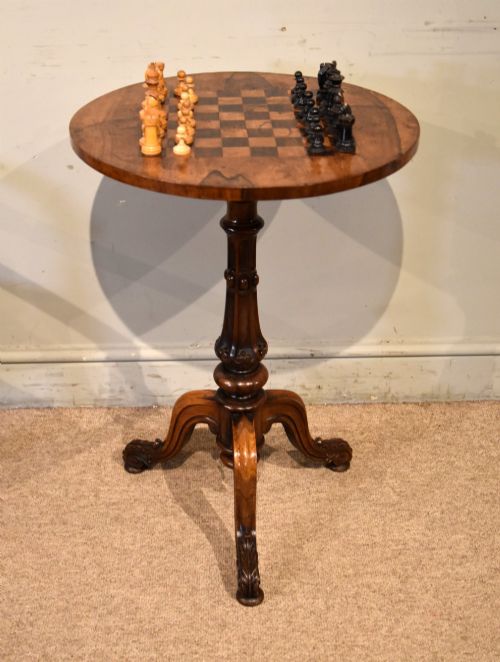
Owners used these tables for popular nineteenth-century parlour pastimes including whist, cribbage, poker, and chess. Some surfaces feature inlaid chessboards directly into the timber.
The interchangeable nature of the top allowed the room to transition rapidly from formal tea service to evening gaming.
Where should a gaming table sit?
In a nineteenth-century interior, these pieces stood flush against a parlour wall as a console or side table when closed. Opening the table required pulling it toward the centre of the room to accommodate seated players.
Placing the timber away from direct heat sources protects the rosewood and mahogany veneers from shrinking or cracking over time.
How do you distinguish William IV from Regency?
William IV pieces generally display heavier proportions, bolder pedestal turnings, and substantial scroll feet compared to the lighter, more restrained classical lines of the Regency period. Rosewood and figured mahogany dominate both eras.
Execution details like the depth of the frieze and the styling of the carved pillar help clarify the manufacturing decade.