



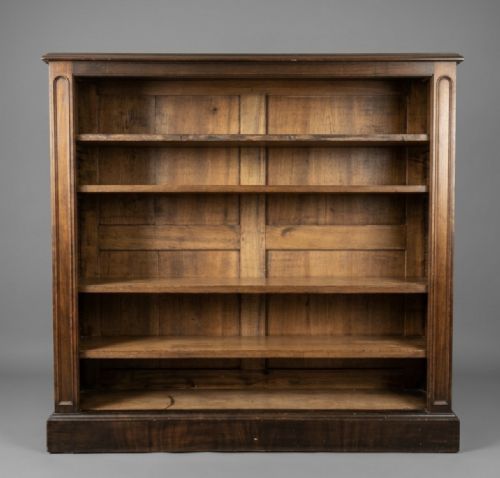
Wide Open Bookshelf
A wide open bookshelf provides immediate access to a collection of volumes, bringing architectural timber and practical shelving into a room.
Wide Open Bookshelf
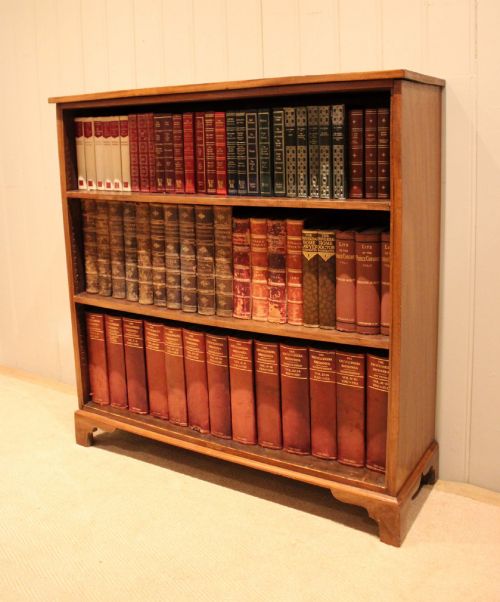
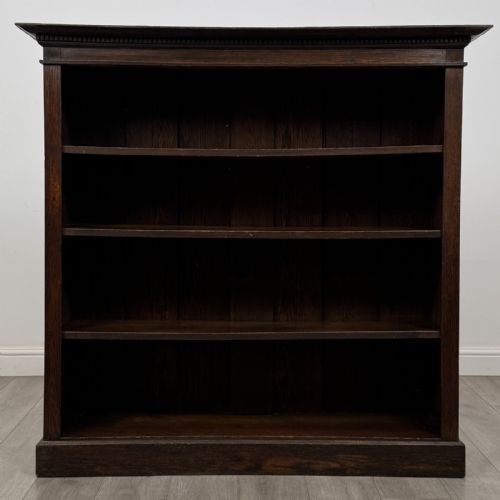
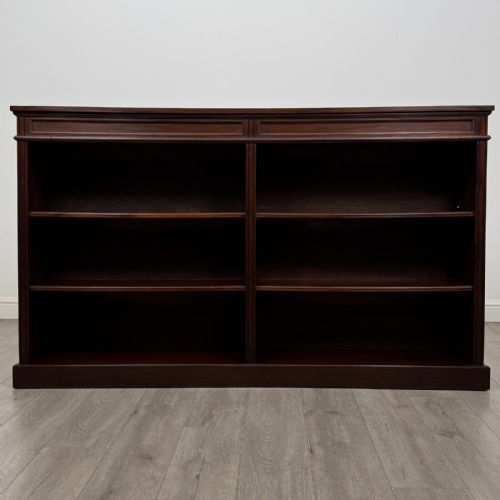
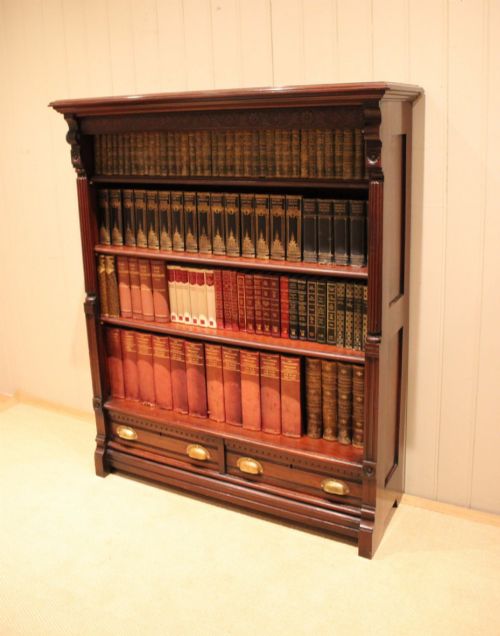
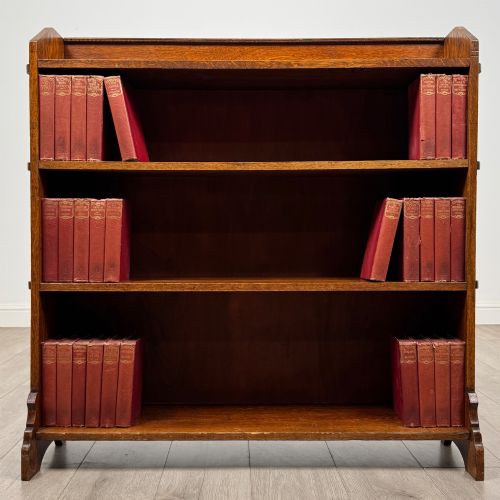
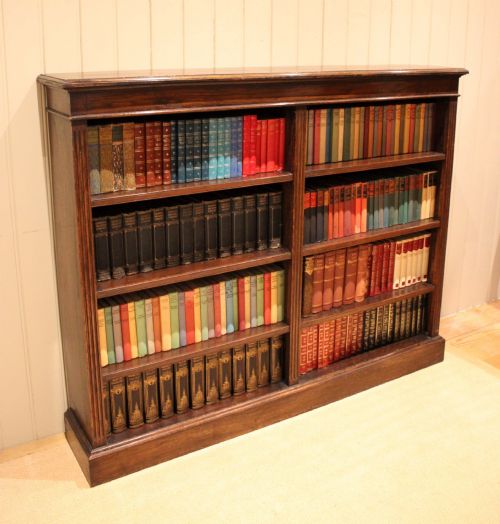
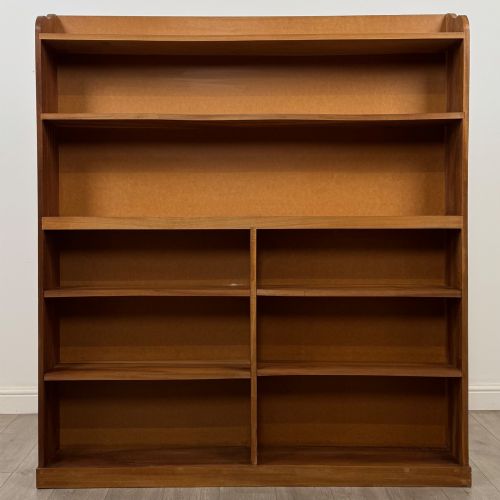
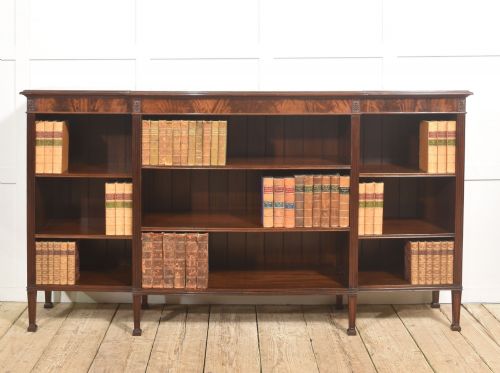
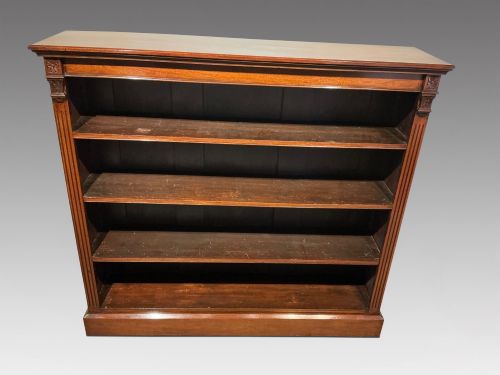
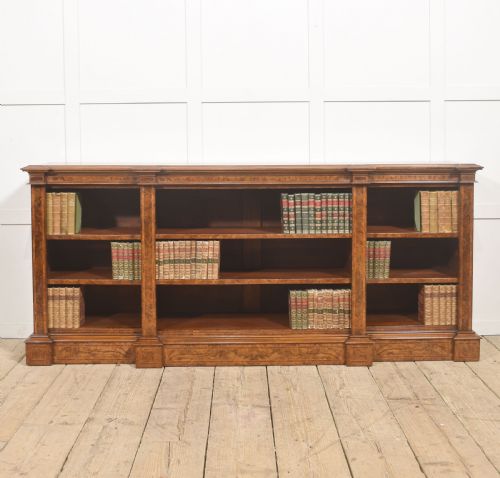
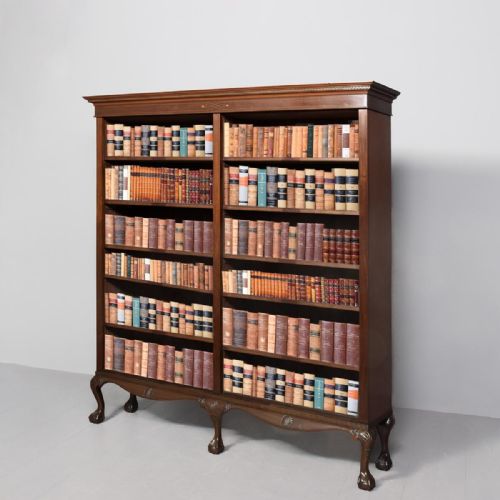
A wide open bookshelf offers unobstructed frontal access to shelves, functioning primarily as a library bookcase or freestanding shelving unit. The pieces found here span the nineteenth and early twentieth centuries, encompassing Victorian, Edwardian, and Arts and Crafts examples.
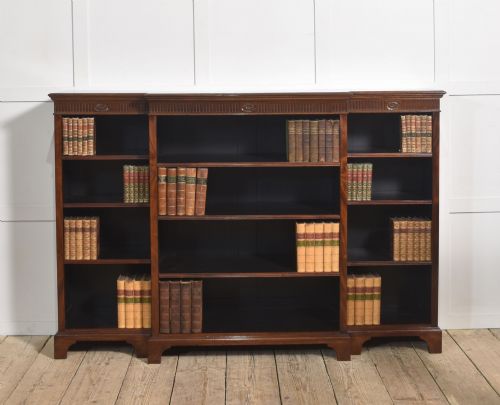
Most items take the form of large library bookcases, low open front units, or breakfront variants. Formats range from rustic pine bookshelves to substantial mahogany and oak pieces featuring adjustable shelves.
How they were made
Construction relies upon traditional cabinet timbers such as mahogany, oak, walnut, pine, teak, and rosewood. Selected pieces utilise flame mahogany veneers and decorative wood inlay to enhance the primary surfaces.
Joinery techniques accommodate heavy shelf loads, often integrating adjustable wooden supports and bracketed uprights. Carved ornamentation appears on specific Victorian and Arts and Crafts examples alongside brass fittings.
Several bookcases include adjustable shelves designed to rescue oversized volumes from awkwardly lying flat on top.
What varies in quality
Quality separates utilitarian storage from fine cabinetmaking through timber selection and proportion. Dense grain patterns in mahogany or burr walnut indicate superior material choices compared to standard utility pine.
Refinement in architectural details such as breakfront cornices, carved friezes, and cleanly fitted adjustable shelving systems marks the distinction between standard workshop output and superior production.
Lamb of Manchester
The Wide Open Bookshelf Glossary
- Breakfront
- A cabinet design where the central section projects forward from the flanking wings. This configuration breaks the linear monotony of a long bookcase.
- Adjustable shelves
- Shelving supported on movable pegs or ratchets rather than fixed in place. This mechanism allows the internal vertical spaces to accommodate books of varying heights.
- Waterfall bookshelves
- Shelving units constructed with stepped tiers that recede in depth from bottom to top. The profile resembles cascading water.
- Ebonised
- Timber treated with a dark chemical stain or finish to imitate ebony. This technique was popular in nineteenth-century furniture design.
- Aesthetic Movement
- A late nineteenth-century design style emphasising visual beauty over narrative subject matter. Furniture from this movement often shows simplified lines and Japanese-inspired decoration.
Wide Open Bookshelf: Frequently Asked Questions
How do I adjust the shelves?
Most period open bookcases utilise a system of wooden ratchets, brass studs, or shelf slips fixed to the interior sides. Lifting the timber board allows you to reposition the supports into alternative slots.
Ensure the shelf remains level across all four supports to prevent warping under the weight of heavy volumes.
Are these bookcases suitable for heavy books?
Large nineteenth-century library bookcases in mahogany or oak were built specifically to hold substantial collections of heavy leather-bound volumes. Their solid timber construction and fixed vertical dividers provide strong structural support.
Lighter Edwardian pine or walnut pieces function better with moderate shelving loads rather than dense academic libraries.
How do I identify a Victorian open bookcase?
Victorian examples typically feature rich dark timbers like mahogany or walnut, often accompanied by deep cornices and heavy plinth bases. Look for hand-cut dovetails and traditional timber backs rather than modern plywood.
Gothic revival and Aesthetic movement variants display characteristic architectural carving or ebonised surfaces.
Can I place these against any wall?
Freestanding bookcases require a flat surface and benefit from being secured to the wall using discreet brackets, particularly for tall two-part units. This prevents tipping when upper shelves hold heavy weight.
Keep timber furniture away from direct heat sources and strong sunlight to protect the polish and prevent wood shrinkage.