



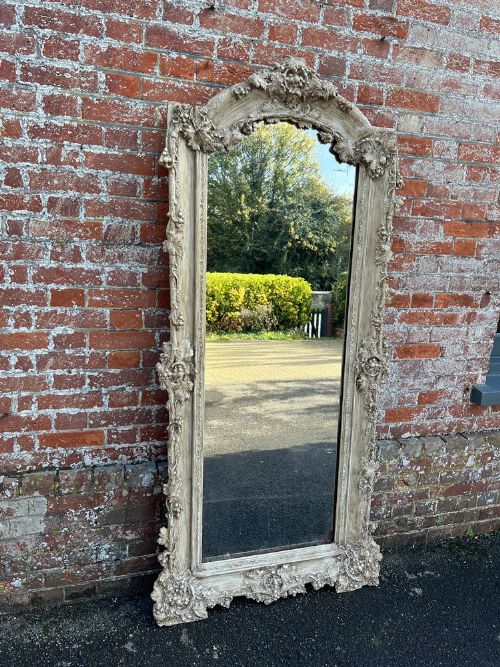


White Wood Mirror
A white wood mirror brings a bright, luminous presence to a room, reflecting light while showing the character of aged paint and carved detail.
White Wood Mirror
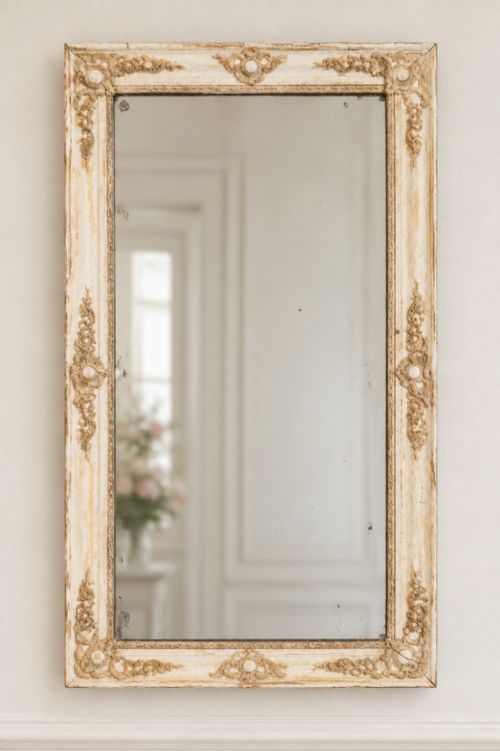
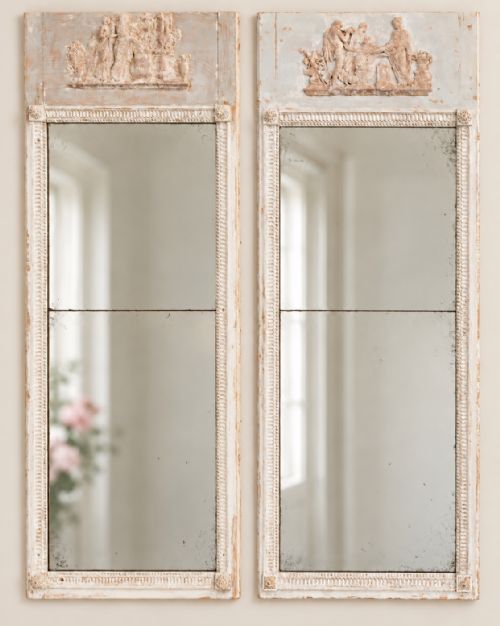
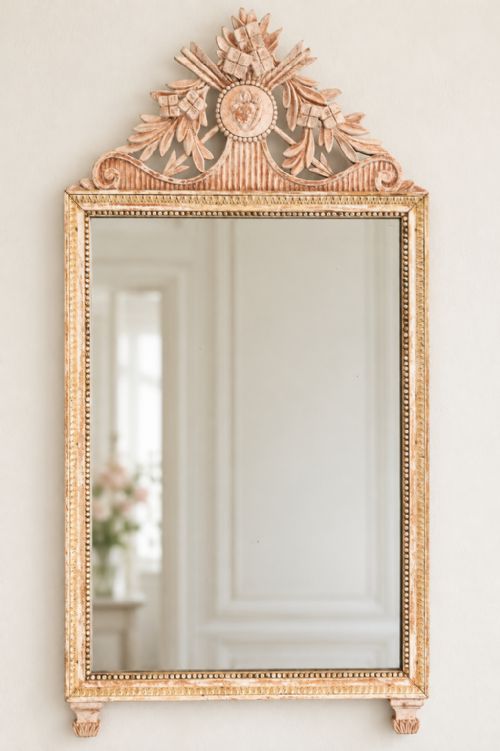
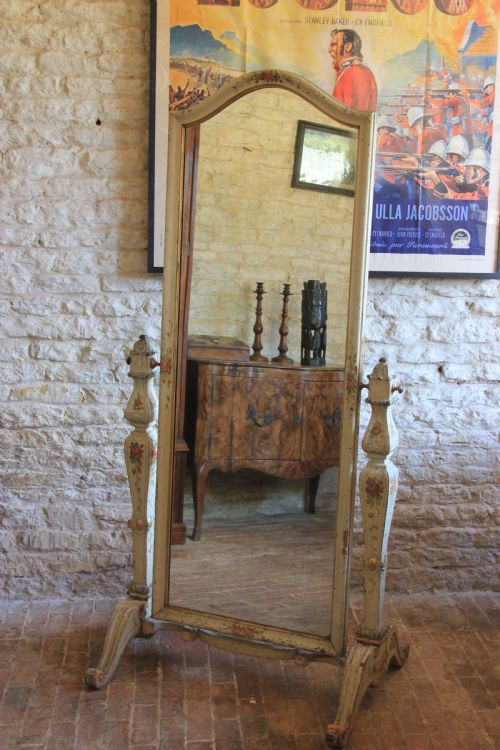
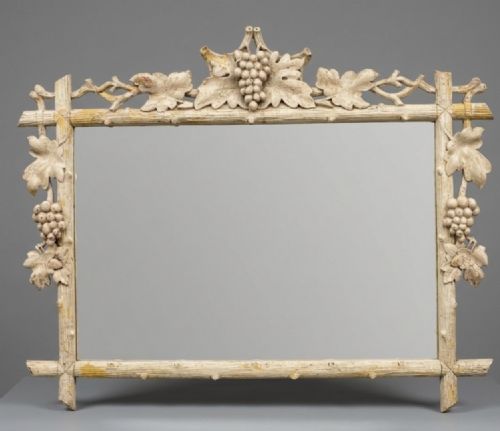
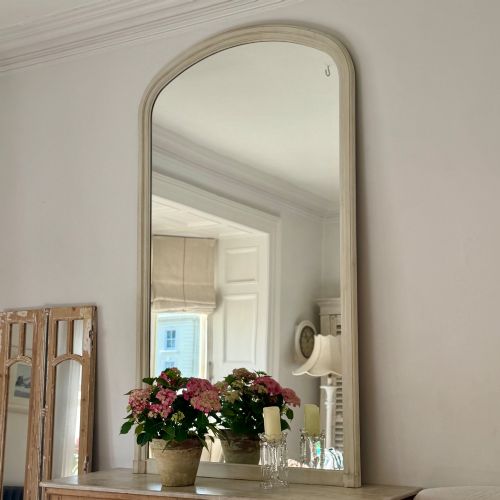
When searching for a white wood mirror, collectors encounter painted overmantle mirrors, large wall mirrors, and architectural trumeau panels originating mostly from the nineteenth century. These pieces combine wooden frames finished in white paint with carved details, often accented by parcel gilt or gesso layers.
The selection ranges from French bistro and provincial styles to English Victorian overmantle designs intended to sit above a fireplace. Formats include arched tops, shaped frames, and column-framed structures designed to command attention in a room.
Origins span English workshops and French ateliers, with occasional Italian examples featuring marginal glass plates or intricate carved decoration. Each piece serves as a functional looking glass while carrying the patina of decades of domestic use.
How they were made
Craftsmen built the underlying structures using carved wood, oak, or pine, shaping frames into arches, rectangles, and complex moulding profiles. Many surfaces received an application of gesso to provide a smooth base for fine detail work before painting.
Finishes relied on layers of paint, sometimes combined with parcel gilt highlights to accentuate the carved motifs on the frame. Original mirror plates, often showing minor foxing or age spots, were fitted into the rabbet behind the wooden surrounds.
White Wood Mirror Retail Price Guide 2026
Typical asking prices for white wood mirror among the pieces listed under this phrase on Sellingantiques today, from the lower quarter to the upper quarter. They describe what is for sale here now, not the wider market.
Materials recorded across the inventory include carved wood, gesso, paint, gold leaf, brass, and original glass plates.
What varies in quality
The standard of a white wood mirror depends on the depth and crispness of the hand-carved woodwork beneath the paint layers. Finer examples retain their original gesso ornamentation and mirror plates, while simpler pieces show softer contours and later overpainting.
Proportion and scale dictate the visual impact of the piece, with larger overmantle and architectural formats demanding precise joinery to remain stable over time. The integrity of the painted surface, including natural distress and patination, distinguishes superior items from heavier modern restorations.
The White Wood Mirror Glossary
- Overmantle mirror
- A large mirror specifically designed to be hung on the wall directly above a fireplace mantelpiece. These pieces often feature horizontal proportions to match the width of the hearth below.
- Gesso
- A plaster-like mixture applied to wooden frames to create a smooth surface for carving and gilding. It allows for crisp, intricate relief details before the final paint layer is applied.
- Parcel gilt
- A decorative technique where specific raised portions of a frame are gilded with gold leaf while the rest of the surface is painted. This creates contrast against the surrounding white wood finish.
- Trumeau mirror
- An architectural wall mirror paired with a painted or carved panel, originating in France. They are designed to fit flush into the wall paneling of a room.
- Marginal mirror
- A mirror style featuring a central glass plate surrounded by smaller, bevelled border mirror segments held within the frame. This technique adds complexity and extra facets of reflection.
White Wood Mirror: Frequently Asked Questions
Where should I hang a large overmantle mirror?
These mirrors traditionally sit above a fireplace mantelpiece to reflect light and anchor the room's main focal point. They also function effectively on large living room walls opposite windows to maximise natural illumination.
Ensure the wall fixings are secured firmly into studs or masonry due to the substantial weight of antique wooden and gesso frames.
How do I care for the painted finish?
Dust the carved wooden frame gently with a dry, soft cloth to prevent dirt accumulation in the recessed details of the gesso. Avoid chemical cleaners and excess moisture, which can damage aged paint layers and original gilding.
If the glass needs cleaning, apply a mild glass cleaner directly to a cloth rather than spraying the mirror surface, protecting the surrounding wood.
Are the mirror plates original?
Many nineteenth-century pieces retain their original glass plates, which often display characteristic foxing, minor silver loss, and subtle distortions. These age marks confirm the authenticity and period of the object.
Some mirrors have received replacement glass over the centuries to maintain a clearer reflection for daily use.
What is the difference between English and French styles?
English nineteenth-century pieces often lean towards architectural overmantle designs with robust carved wood and gesso frames intended for formal reception rooms. French variants frequently showcase lighter provincial proportions, arched bistro styles, or refined trumeau panels.
Both traditions utilise white and painted finishes, but French examples tend to emphasise asymmetrical curves and delicate decorative motifs.