



White Pottery Milk Jug
These white pottery milk jug examples range from Georgian creamware to Victorian ironstone, offering practical charm and traditional utility for the table.
White Pottery Milk Jug
When you search for a white pottery milk jug, you are looking at utilitarian vessels used historically for serving dairy at the table. These range from simple creamers to larger pitchers produced across several British ceramic traditions.
The pieces on this page span the eighteenth and nineteenth centuries, taking in Georgian and Victorian periods. You will encounter forms such as cow creamers, faceted jugs, and graduated sets in regional earthenware and ironstone.
Origins include Staffordshire potteries alongside Leeds, Liverpool, and Welsh kilns. Most examples combine domestic utility with decorative transfer printing, lustre, or hand-painted patterns typical of their era.
How they were made
Potters shaped these vessels using earthenware, creamware, pearlware, and ironstone ceramic bodies. These clay mixtures provided the durable foundation required for daily kitchen and dining use.
Glazes seal the porous ceramic bodies, often enhanced with enamel colours, metallic lustre, or blue and white transfer printing. These decorative techniques applied pictorial scenes, botanical motifs, and oriental designs onto the surface before firing.
White Pottery Milk Jug Retail Price Guide 2026
Typical asking prices for white pottery milk jug among the pieces listed under this phrase on Sellingantiques today, from the lower quarter to the upper quarter. They describe what is for sale here now, not the wider market.
Cows on the tea table poured cream from their mouths while a fly painted inside a jug startled unsuspecting drinkers.
What varies in quality
The refinement of the ceramic body also distinguishes standard utility items from superior production. Thinner, more uniform walls in creamware and pearlware indicate greater skill in the kiln.
Livesley Powell & Co·Mason's Ironstone·Leeds Pottery·Herculaneum
The White Pottery Milk Jug Glossary
- Creamware
- A refined earthenware with a pale yellowish or cream-coloured glaze, developed in Yorkshire during the eighteenth century. It replaced heavier salt-glazed stonewares for table use.
- Pearlware
- An improved earthenware introduced in the late eighteenth century featuring a bluish glaze that pooled in recesses to create a whiter overall appearance. It served as a popular canvas for transfer printing.
- Ironstone
- A dense, heavy ceramic patented in the nineteenth century for its durability and resistance to chipping. It formed the body of many robust domestic jugs.
- Lustreware
- Pottery decorated with a metallic film that produces an iridescent sheen when fired. Potters used copper, silver, and gold solutions to achieve these reflective surfaces.
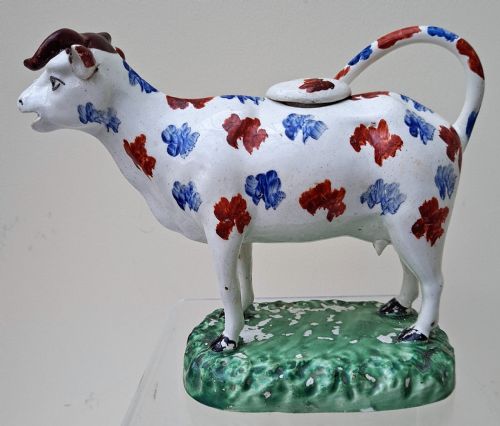
- Cow creamer
- A hollow ceramic vessel modelled as a cow with a milk-pouring orifice on its back, filled through a hole underneath. These whimsical pieces were popular in Georgian and Victorian parlours.
White Pottery Milk Jug: Frequently Asked Questions
How do I date an old milk jug?
Examine the ceramic body, glaze colour, and decorative style to determine age. Creamware and pearlware typically point to the eighteenth or early nineteenth century, while ironstone is more common in Victorian pieces.
Shape and manufacturing marks also help narrow the period. Graduated sets and transfer-printed botanical motifs frequently align with nineteenth-century Staffordshire production.
Can I use these antique jugs daily?
Many of these vessels remain structurally sound enough for holding milk or cream on the table. Earthenware and ironstone bodies are durable, though older glazed surfaces require gentle hand washing.
Consider the presence of historical hairline cracks or crazing before putting a piece into active service. Purely decorative forms like figural creamers are better suited for display.
What is the difference between pearlware and creamware?
Creamware has a warm, ivory-toned glaze designed to mimic Chinese porcelain warmth. Pearlware uses a cobalt additive in the glaze to create a bluish tint that reads as whiter to the eye.
Pearlware generally dates from the late eighteenth to the mid-nineteenth century. Creamware emerged slightly earlier and dominated Georgian dining tables.
How were cow creamers used?
Cow creamers served as novel containers for dispensing milk or cream at tea and breakfast tables. A lid or opening on the back allowed the vessel to be filled, while the mouth acted as a spout.
These whimsical pieces were particularly popular in Welsh and Staffordshire potteries during the Georgian and Victorian eras. Guests poured cream directly from the animal's mouth into their cups.