




White Porcelain Table Clock
A white porcelain table clock brings sculptural elegance to a mantelpiece, combining decorative ceramic form with precise timekeeping.
White Porcelain Table Clock
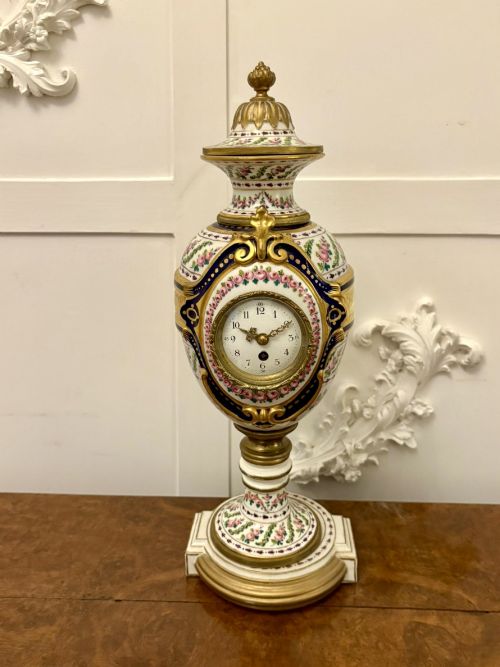
A white porcelain table clock serves as both a functional timepiece and an ornate decorative object for the interior. These pieces range from substantial urn shapes to delicate boudoir models, often ornamented with gilt bronze mounts.
Most examples originate from the nineteenth century, reflecting Victorian tastes as well as continental European porcelain traditions. The forms draw heavily on French Rococo Revival and Neoclassical styles, frequently incorporating figural elements like putti.
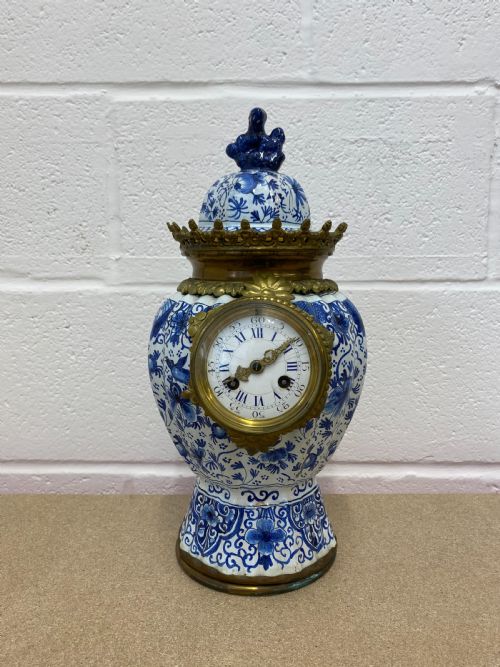
Buyers will also encounter related ceramic variants including Dutch Delftware and Chinese blue and white bracket clocks. Each version demonstrates distinct regional aesthetic priorities within the broader category of mantel timepieces.
Materials and construction
Makers utilised hard-paste porcelain and bisque porcelain alongside ceramic bodies, shaping them into elaborate urns, miniature longcase forms, and architectural mantel cases. These ceramic structures were frequently painted by hand and sometimes left unglazed for a matte biscuit finish.
Gilt bronze and brass mounts were engineered to fit snugly against the porcelain bodies, adding structural support and ornamental flourish in the French Neoclassical and Rococo manners. Enamel dials and protective glass covers completed the functional clock face assemblies.
Assessing quality and craftsmanship
The sophistication of the hand-painted decoration and the crispness of the porcelain moulding define the upper tier of these clocks. Superior pieces display intricate detail in figural elements like putti and delicate floral motifs.
The integration between the ceramic body and the gilt bronze or brass mounts indicates the standard of manufacture. Better examples feature finely chased metalwork that complements rather than overpowers the porcelain base.
The White Porcelain Table Clock Glossary
- Bisque porcelain
- Unglarded ceramic material fired once to create a matte, marble-like surface texture. This finish highlights fine sculptural detail on nineteenth-century clock cases.
- Gilt bronze
- Metal alloy treated with a gold coating to provide a rich decorative trim. It frequently frames porcelain clock dials and reinforces structural joints.
- Putti
- Depictions of chubby male infants, often winged, used as decorative motifs. They appear frequently in sculptural porcelain groups on nineteenth-century mantel clocks.
- Hard-paste porcelain
- A durable ceramic composition fired at high temperatures using kaolin and petuntse. It forms the robust body of many continental European table clocks.
- Rococo Revival
- A nineteenth-century design movement favouring asymmetrical curves, scrollwork, and naturalistic ornamentation. This style heavily influences French porcelain clock cases.
White Porcelain Table Clock: Frequently Asked Questions
What periods do these clocks come from?
These decorative timepieces largely date from the nineteenth century, encompassing the Victorian era and periods around eighteen-fifty through to eighteen-ninety.
They reflect European and Asian manufacturing traditions of the time, including French, German, and Chinese influences.
How were porcelain table clocks used?
They served primarily as functional timekeepers for domestic drawing rooms, boudoirs, and grand parlours. Beyond telling time, they functioned as high-status decorative ornaments that displayed the owner's taste.
Their ornate forms meant they were placed prominently on mantelpieces, brackets, and console tables.
How do I care for a porcelain clock?
Keep the ceramic body clean by dusting gently with a soft, dry cloth to protect any hand-painted details. Avoid using harsh chemical cleaners on the porcelain or the gilt bronze mounts.
Ensure the mechanical movement is serviced periodically by a professional horologist to maintain accurate timekeeping.
How do I distinguish different styles?
Examine the decorative motifs and overall shape of the clock case for stylistic clues. Rococo Revival pieces feature flowing, asymmetrical scrolls and figural putti, while Neoclassical designs emphasise symmetry and classical urn forms.
Materials also help identify origin, such as Dutch Delftware employing distinctive blue and white tin-glazed earthenware.