

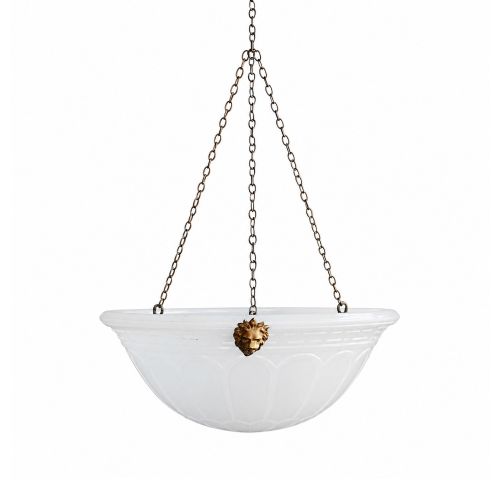


White Pendant Light
These white pendant light fixtures combine functional illumination with period character, offering brass, glass, and chrome designs for any interior space.
White Pendant Light
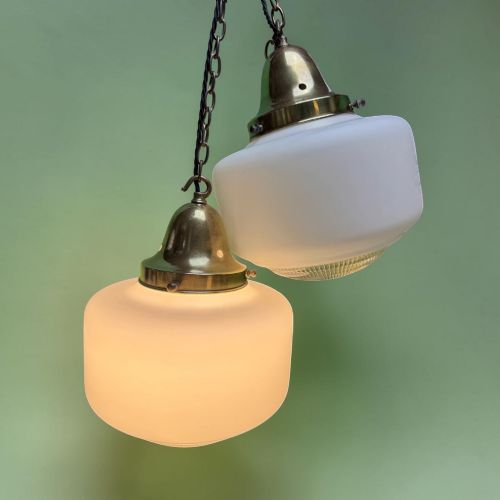
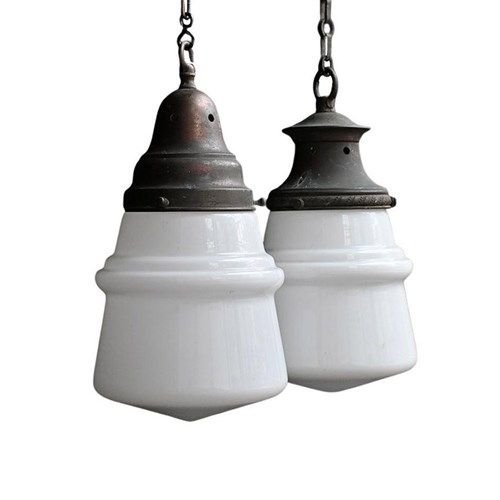
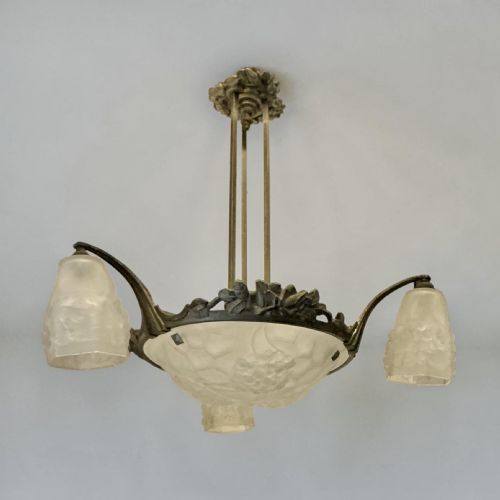
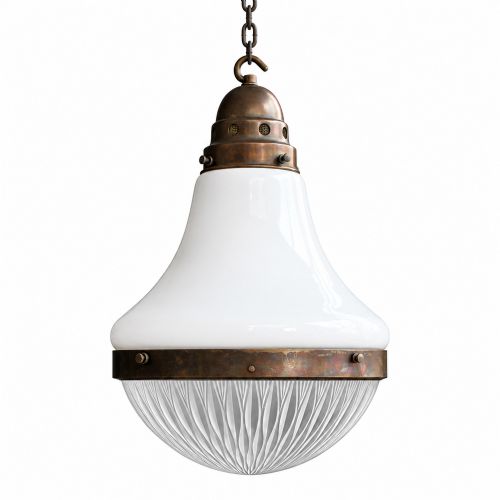
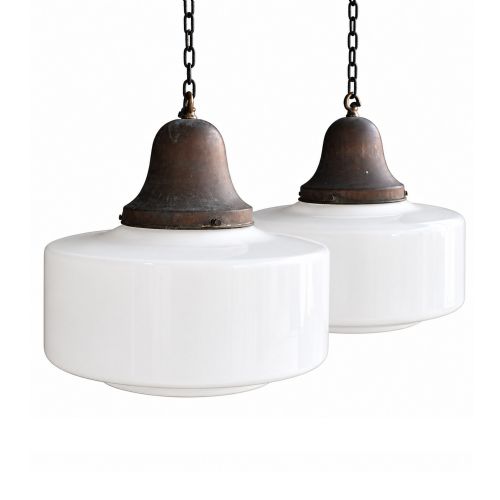
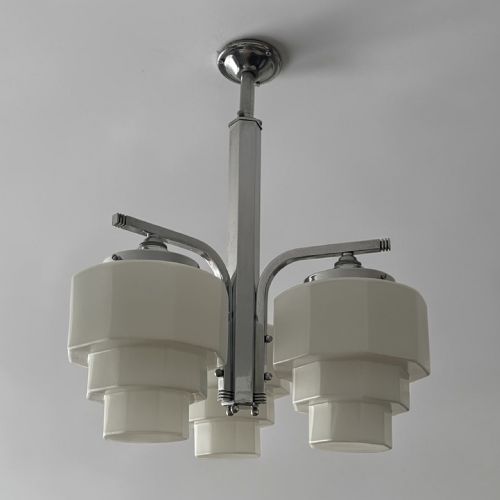
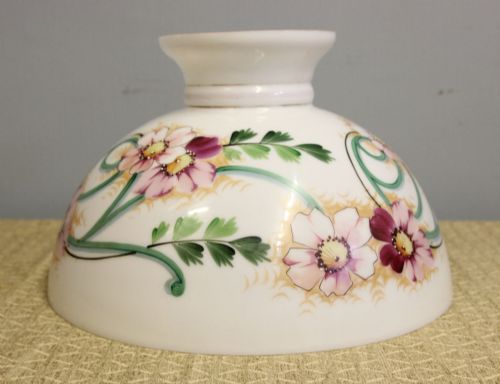
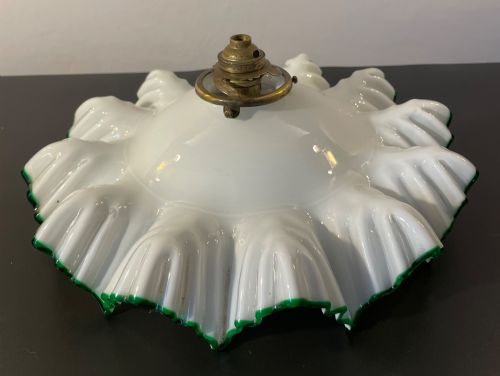
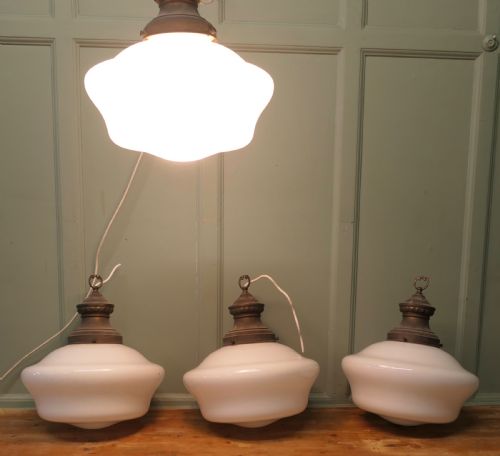
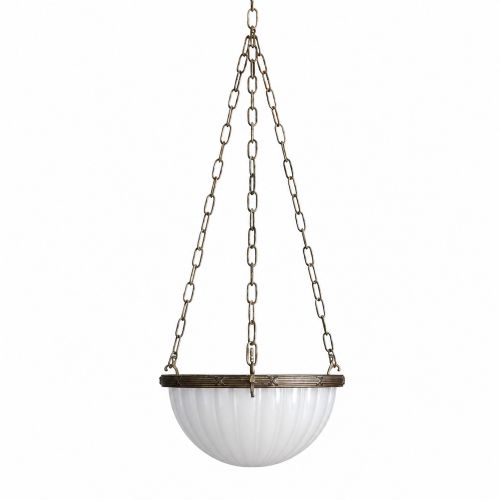
When searching for a white pendant light, buyers encounter hanging ceiling fixtures spanning the Victorian era through the mid-20th century. These pieces include industrial factory lights, church fixtures, chapel lamps, and decorative art deco glass shades designed to diffuse brightness evenly across a room.
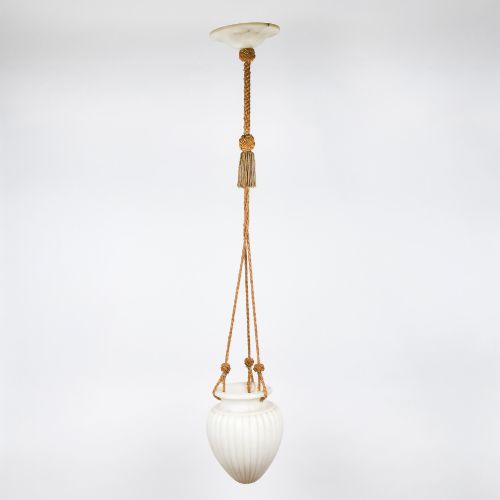
The selection on this page relies heavily on early 20th-century and 1930s forms, featuring opaline, moonstone, and alabaster materials. Buyers are most likely to meet spherical, conical, and bowl-shaped pendants hung from brass, chrome, or metal suspensions.
Beyond standard domestic lighting, the category encompasses specialised commercial and institutional pieces such as pharmacy lights and trade sign fixtures. These objects bring utilitarian heritage and straightforward white glass forms into modern residential settings.
How they were made
The manufacture of these lights depends on the combination of moulded glass and durable metal hardware. Makers utilised opaline, frosted, and opalescent glass to soften glare, pairing the shades with cast brass, copper, or chrome galleries and suspension chains.
Techniques range from industrial metal spinning for workshop shades to hand-blown opaline and moonstone glass production that yielded dense, milky white finishes. Alabaster elements were carved directly from stone to achieve a translucent, marbled effect when illuminated from within.
White Pendant Light Retail Price Guide 2026
Typical asking prices for white pendant light among the pieces listed under this phrase on Sellingantiques today, from the lower quarter to the upper quarter. They describe what is for sale here now, not the wider market.
Some fixtures on this page spent their early lives illuminating French chapels, English pharmacies, and bustling industrial workshops before finding their way into domestic homes.
What varies in quality
Quality in these hanging fixtures rests in the weight and purity of the glass alongside the integrity of the original metal mountings. Superior examples display thick, evenly distributed opaline or moonstone layers that diffuse light without grey patches or thin spots.
The sophistication of the hardware separates standard production items from finer pieces. Original brass galleries, finely cast details, and matched components demonstrate superior workshop execution compared to later replacements or simplified utility fittings.
Degué·Jefferson
The White Pendant Light Glossary
- Opaline glass
- A milky, semi-translucent white glass popular in lighting throughout the Victorian and art deco periods. It diffuses light smoothly while maintaining a bright appearance.
- Moonstone glass
- A specific type of translucent white glass with a soft, iridescent sheen resembling the gemstone. It creates a gentle, glowing effect when lit from behind.
- Gallery
- The metal ring or collar at the top of a lampshade that secures the glass to the suspension fitter. Galleries are frequently cast in brass or bronze.
- Alabaster
- A fine-grained mineral carved into solid bowls and dishes for hanging lights. It provides natural veining and a heavy, stone-based translucency.
White Pendant Light: Frequently Asked Questions
How do I hang a heavy pendant light?
These fixtures require secure anchorage into ceiling joists using appropriate hooks or brackets connected to the internal wiring box. Due to the weight of thick glass shades and brass galleries, professional installation ensures structural safety.
Weight distribution matters significantly for larger institutional pieces like church lights and pharmacy pendants. Ensuring the chain and ceiling rose bear the full load protects both the antique hardware and the ceiling structure.
What rooms suit an industrial pendant light?
Industrial white pendant lights fit well in kitchens, utility spaces, and open-plan dining areas where direct, downward illumination is useful. Their simple metal and glass construction pairs effectively with both modern and traditional interior schemes.
Grouping multiple industrial fixtures together creates balanced task lighting over work surfaces or islands. The neutral white shades prevent the fittings from dominating the surrounding decor.
How do I clean antique opaline glass?
Wash the glass shades gently in warm water using a mild detergent and a soft cloth. Avoid abrasive sponges or harsh chemical cleaners that can damage the surface finish of the glass.
Remove the shade from the metal gallery before cleaning to prevent moisture damage to old brass or chrome fittings. Dry the glass thoroughly before reassembling the fixture.
What is the difference between opaline and alabaster?
Opaline is a manufactured glass created to produce a milky white, translucent appearance with smooth surfaces. Alabaster is a natural stone carved into solid bowls, featuring distinctive mineral veining and a heavier physical weight.
While both materials diffuse light effectively, opaline offers a uniform glow, whereas alabaster displays unique geological patterns when illuminated. Alabaster fixtures generally require more robust ceiling suspensions due to the weight of the stone.