



White Painted Stick Stand
A white painted stick stand brings architectural utility and crisp, monochrome charm to an entrance hall, offering sturdy storage for walking sticks and umbrellas.
White Painted Stick Stand
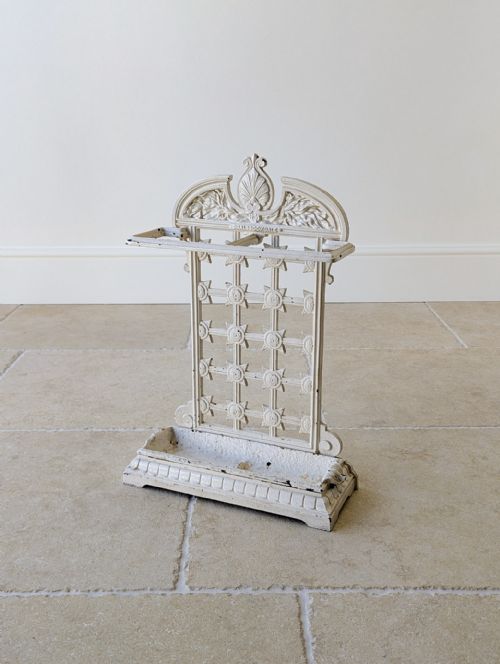
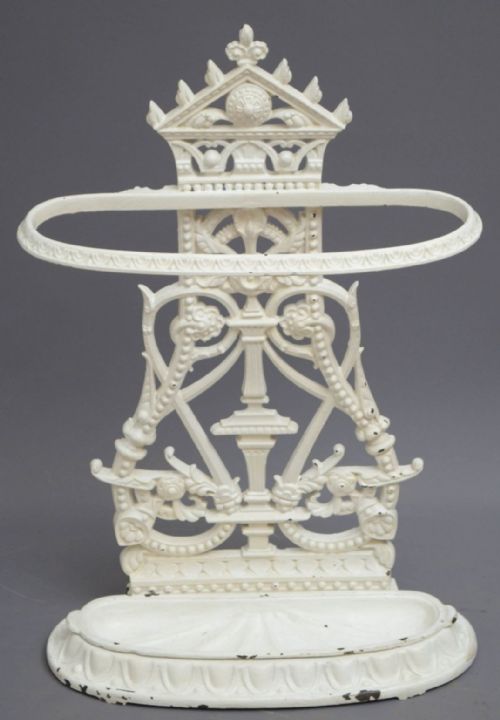
A white painted stick stand is a practical entrance hall furnishing designed to hold walking sticks, canes and umbrellas. These pieces combine robust construction with decorative painted surfaces to suit period interiors.
The white painted stick stand examples recorded here span the Victorian and nineteenth-century periods, alongside related nineteenth-century candlesticks and candle holders. Most surviving instances take the form of heavy cast-iron umbrella and stick stands featuring built-in drip pans and divided loops.
Victorian examples display considerable stylistic variety, ranging from plain utility pieces to ornate Gothic Revival designs. Buyers encounter sturdy hall furniture that balances domestic utility with robust metalwork.
Materials and construction methods
Cast iron serves as the primary structural material for these stick stands, shaped through foundry casting to create intricate openwork patterns, structural loops and heavy bases. Makers applied protective coats of paint directly onto the metalwork, which over time developed layers of historic white or pale finishes.
Other materials recorded in the evidence include carved wood and porcelain, demonstrating that nineteenth-century makers utilised diverse media for domestic holders and stands. Metal prickets, enamel and gold gilt details appear on related candlesticks and decorative holders from the same eras.
White Painted Stick Stand Retail Price Guide 2026
Typical asking prices for white painted stick stand among the pieces listed under this phrase on Sellingantiques today, from the lower quarter to the upper quarter. They describe what is for sale here now, not the wider market.
Listings feature nineteenth-century cast iron, carved wood and porcelain.
Distinguishing quality in period stands
Quality in a white painted stick stand rests upon the crispness of the original foundry casting and the complexity of the design. Finer pieces exhibit sharp relief in their decorative motifs, clean structural lines and substantial weight that ensures stability in a busy hallway.
The integrity of the painted surface also influences character, where older layered paint surfaces retain historic depth. Simpler utility stands rely on functional strength, whereas elaborate Gothic Revival and portico forms showcase ambitious architectural detailing.
Coalbrookdale·Ridgway
The White Painted Stick Stand Glossary
- Stick stand
- A piece of hall furniture designed to hold walking sticks, canes and umbrellas upright. They typically incorporate a base tray to catch water from wet items.
- Cast iron
- An iron-carbon alloy poured into moulds to create solid, heavy objects. It allows for intricate openwork patterns and provides the necessary weight for hall stands.
- Gothic Revival
- An architectural and decorative style drawing inspiration from medieval forms. Pieces in this taste feature pointed arches, quatrefoils and structural verticality.
- Portico stand
- A stick stand design referencing classical architectural porticoes with columns or pilasters. These formal hall furnishings command visual presence in entrance spaces.
White Painted Stick Stand: Frequently Asked Questions
What periods do these stick stands come from?
The recorded pieces belong primarily to the nineteenth century and the Victorian era. They reflect the industrial capabilities and domestic tastes of that period.
Foundry production during the nineteenth century allowed for durable iron hall furniture that survived decades of daily use in entrance halls.
How were these stands used originally?
They stood in entrance halls and reception rooms to keep walking sticks and wet umbrellas organised. The integrated base caught drips from rain to protect entrance flooring.
Wealthy and middle-class households alike utilised these furnishings to maintain orderly hallways for arriving visitors.
How do I care for a painted iron stand?
Keep the metal dry and clean surfaces gently with a soft cloth to protect the painted finish. Avoid harsh modern chemical cleaners that might strip historic paint layers.
Regular dusting preserves the painted surface while maintaining the character developed over generations of domestic use.
How can I tell a Victorian stand apart?
Victorian stands typically utilise heavy cast iron with distinct foundry marks, openwork lattice designs, or Gothic Revival architectural motifs. Their robust weight and construction methods reflect nineteenth-century manufacturing standards.
Stylistic cues such as umbrella loops and integral drip trays point directly to the functional requirements of nineteenth-century hall design.