





White Painted Buffet
A white painted buffet brings functional storage and timeless regional character into a room, spanning rustic English country styles and continental painted pieces.
White Painted Buffet
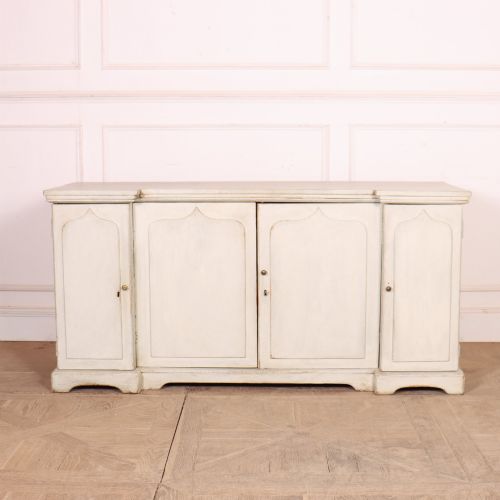
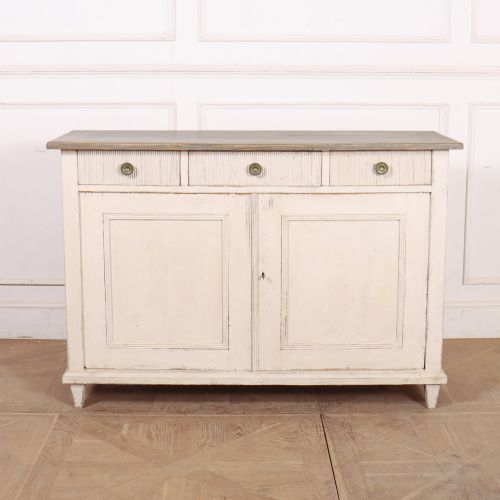
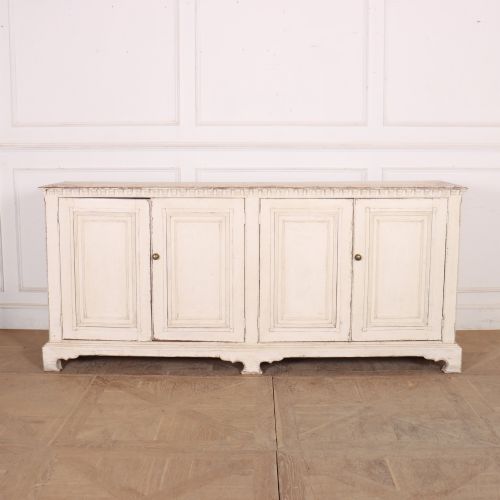
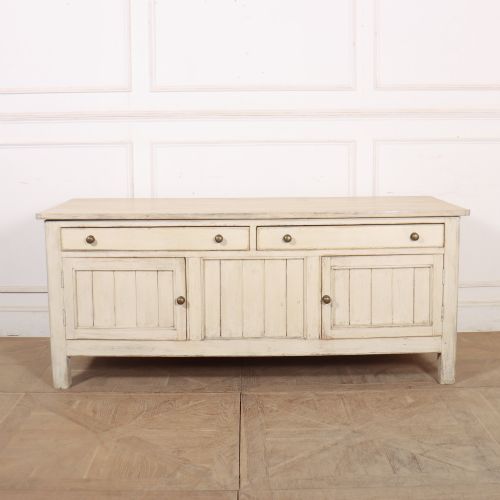
When you search for a white painted buffet, you encounter a selection of nineteenth-century storage furniture encompassing English dresser bases, Scottish vernacular pieces, and continental enfilades. These items serve primarily as sideboards, side cabinets, and cupboards designed for utilitarian storage in dining spaces and hallways.
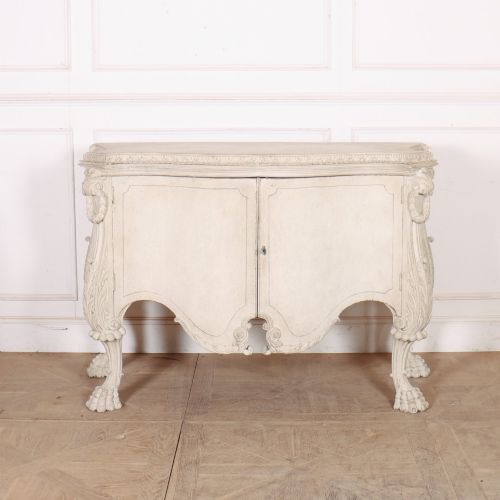
The most frequent examples found in this category include nineteenth-century English painted dresser bases with potboards, alongside continental painted buffets and cabinets dating from 1860 to 1890. Regional variations stretch across English country, French provincial, Italian rococo and neoclassical, and Scandinavian country traditions.
Forms range from breakfront dresser bases and oak buffets de corps to small hand-painted cupboards. Each object displays the distinct proportions of its period, whether through the linear restraint of Scottish vernacular joinery or the ornate curves of Italian workshops.
Materials and construction methods
Construction relies primarily on solid woods such as pine and oak, finished with painted surfaces or left as painted wood, complemented by brass and metal hardware. Artisans built these pieces using traditional joinery appropriate to nineteenth-century vernacular and revival furniture.
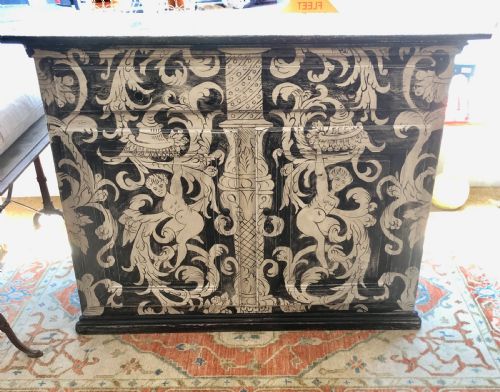
Surface treatments involve historical paint applications, with certain twentieth-century and contemporary artist-painted works utilising bespoke hand-painted decoration over nineteenth-century carcases. The combination of timber framing and applied paint creates the distinct layered textures visible across English, French, Italian, and Swedish pieces.
White Painted Buffet Retail Price Guide 2026
Typical asking prices for white painted buffet among the pieces listed under this phrase on Sellingantiques today, from the lower quarter to the upper quarter. They describe what is for sale here now, not the wider market.
One nineteenth-century French buffet hides playful painted grotesque motifs beneath its classical proportions.
Assessing quality in painted storage
Quality differentiates itself through the integrity of the timber carcase and the historical authenticity of the painted surface. Pieces retaining their original structural joinery and untouched regional paintwork hold distinct advantages over heavily restored examples.
The finesse of regional craftsmanship dictates the overall calibre, distinguishing the robust simplicity of Scottish vernacular and English country work from the refined carving of Italian neoclassical or French Renaissance revival pieces.
Melissa White
The White Painted Buffet Glossary
- Dresser base
- The lower section of a traditional dining room storage unit, frequently featuring drawers and cupboards beneath a flat top. These items served daily domestic needs in country houses.
- Enfilade
- A long sideboard or buffet designed for formal dining rooms, common in continental European interiors. It typically incorporates a succession of cabinet doors along a single frontage.
- Potboard
- An open slatted lower shelf incorporated into the base of a dresser for storing heavy kitchen pottery. This structural feature is characteristic of English country furniture.
- Buffet de corps
- A substantial two-part cupboard or sideboard originating in France, constructed from heavy timber such as oak. It provides extensive storage across upper and lower compartments.
- Vernacular
- Furniture built by local tradesmen using regional traditions and readily available materials rather than following high-style metropolitan fashions. This style defines much nineteenth-century country joinery.
White Painted Buffet: Frequently Asked Questions
What is a white painted buffet used for?
These pieces provide substantial storage for tableware, linens, and provisions in dining rooms, kitchens, and hallways. Their flat upper surfaces also serve as display areas for ceramics and decorative objects.
Historically, variations like dresser bases and enfilades functioned as the central workhorses of domestic service and food preparation. Today, they integrate easily into modern interiors while retaining their practical utility.
How do I date a nineteenth-century buffet?
Dating relies on examining construction techniques, timber types, and wear patterns across the carcase. Nineteenth-century pieces often display hand- cut joints and period-specific hardware such as brass handles.
Stylistic indicators, including regional painting traditions and revival motifs, further narrow the decade of manufacture between 1860 and 1890.
Are these pieces English or continental?
The selection includes both English country pieces and continental European examples from France, Italy, and Sweden. English items frequently take the form of dresser bases and potboards.
Continental pieces encompass French buffets de corps, Italian side cabinets, and Swedish cupboards, each displaying distinct regional joinery and painted finishes.
How do I care for antique painted wood?
Maintain the surface by dusting gently with a dry or slightly damp cloth, avoiding harsh modern chemical cleaners that might strip historical paint layers. Keep the wood away from direct heat sources and extreme humidity fluctuations to prevent warping.
Allow the natural patina of the painted wood to settle without aggressive polishing, preserving the integrity of the original finish.