






White Metal Jardiniere
A white metal jardiniere brings sculptural utility to garden rooms and terraces, holding potted plants with robust industrial elegance.
White Metal Jardiniere
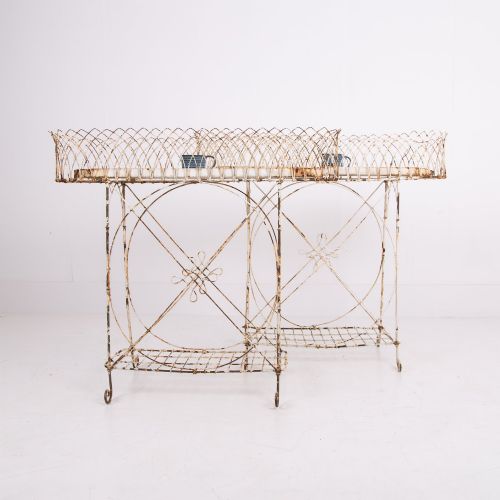
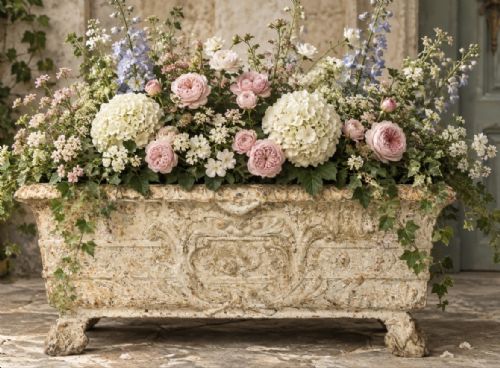
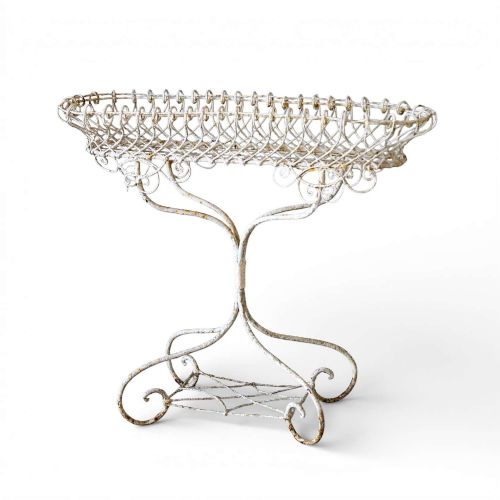
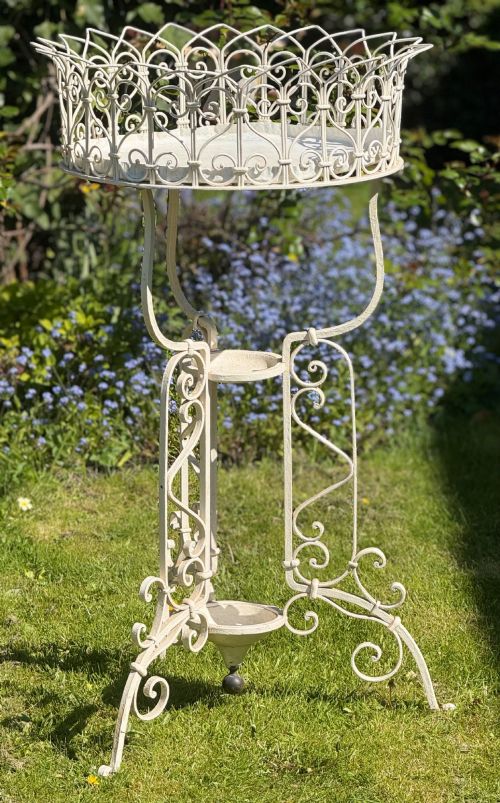
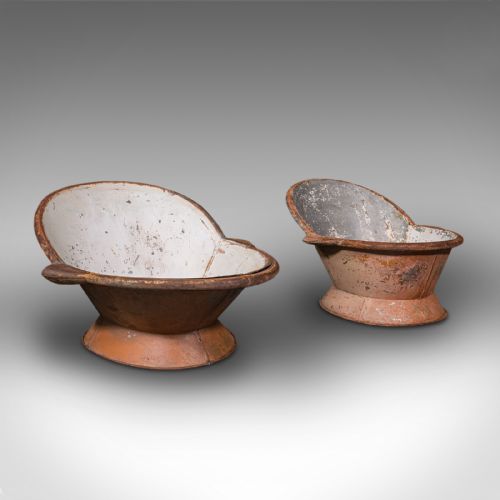
A white metal jardiniere encompasses sturdy garden planters, plant stands, and decorative urns designed to support botanical displays. These pieces draw from nineteenth-century forms, including Victorian wirework tiers, Georgian stands, and robust cast iron vessels.
Origins span English and French workshops, utilising durable metals shaped into round tiers, urns, and rectangular troughs. Each white metal jardiniere reflects the practical garden architecture of its respective period.
Materials and construction methods
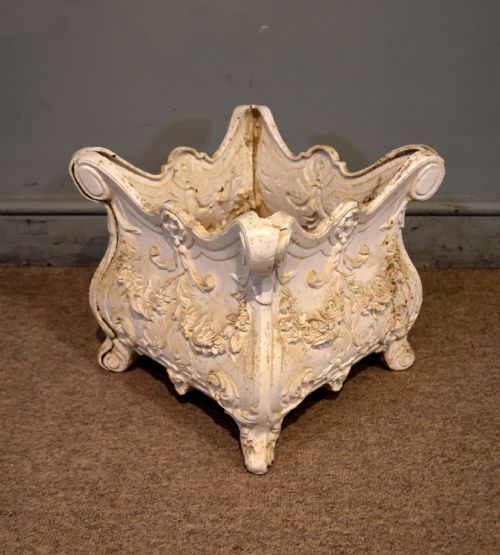
Makers shaped heavy metal using casting and forging techniques, employing cast iron and wrought iron for structural strength. Foundry work produced intricate decorative details on urns and plant stands, while wirework construction involved bending and soldering iron wire into open lattice baskets.
Surface treatments included protective coats of paint over metal, zinc, and tin to withstand outdoor elements. Artisans combined wood elements or wire tiers with metal frames to create multi-level garden planters.
White Metal Jardiniere Retail Price Guide 2026
Typical asking prices for white metal jardiniere among the pieces listed under this phrase on Sellingantiques today, from the lower quarter to the upper quarter. They describe what is for sale here now, not the wider market.
Listings feature nineteenth century pieces incorporating cast iron, wrought iron, zinc, and wirework materials across various styles.
Assessing quality in metal planters
Superior examples exhibit deliberate craftsmanship in decorative scrollwork, balanced proportions, and substantial metal thickness. Lesser items show simpler construction with less refined joins and standard industrial fabrication.
The integrity of the material structure and the surviving traces of original paint finishes distinguish finer antique vessels from purely utilitarian replacements. Quality rests on the harmony between structural utility and decorative flourish.
Coalbrookdale
The White Metal Jardiniere Glossary
- Jardiniere
- An ornamental pot or stand for holding plants or flowers. These vessels often sit on elevated legs or tiered bases.
- Wrought iron
- Iron that has been heated and shaped with tools by a blacksmith. This material provides strength and flexibility for scrollwork.
- Wirework
- Metal strands formed into open mesh or lattice designs. Victorian gardeners utilised this technique for lightweight tiered plant stands.
- Cast iron
- Molten iron poured into a mould to create rigid objects. Foundries used this method to produce heavy garden urns and planters.
- Chinoiserie
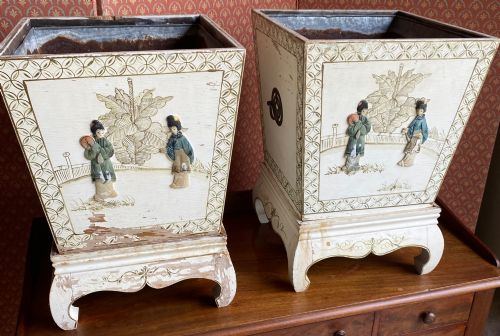
- European artistic style reflecting Chinese motifs and decorative patterns. Painted planters occasionally incorporate these ornamental themes.
White Metal Jardiniere: Frequently Asked Questions
What is a white metal jardiniere?
A white metal jardiniere is an ornamental plant holder or stand constructed from painted or galvanized metals. These vessels serve to elevate and display botanical arrangements in interior and exterior spaces.
Historically utilised in nineteenth-century gardens and conservatories, these pieces combine structural metalwork with decorative garden design.
How were antique plant stands used?
Antique plant stands and jardinieres supported potted ferns, flowering plants, and garden ornament in domestic settings. Multiple tiers allowed gardeners to arrange foliage at varying heights.
Terraces, verandas, and garden rooms frequently housed these heavy metal pieces to organise plant displays effectively.
How do I care for antique metal planters?
Preserving antique metal planters involves monitoring surface finishes and protecting the material from sustained moisture accumulation. Gentle cleaning removes garden debris without disturbing aged paint layers.
Placing protective saucers inside the baskets prevents direct soil contact and reduces internal corrosion on iron and tin surfaces.
How do I date a wirework jardiniere?
Dating wirework relies on examining construction methods, gauge of wire, and overall design complexity. Victorian examples frequently feature intricate lattice baskets supported by multi-tiered frames.
Comparative analysis with documented nineteenth-century garden furniture helps narrow the period of manufacture.