



White Garden Chairs
White garden chairs bring enduring metalwork and timber forms to outdoor seating, offering the robust construction and classic periods buyers seek.
White Garden Chairs
White garden chairs encompass sturdy metal and timber seating designed for outdoor use, emerging across nineteenth-century periods and later decades. Buyers encounter everything from single armchairs to complete dining sets and daybeds.
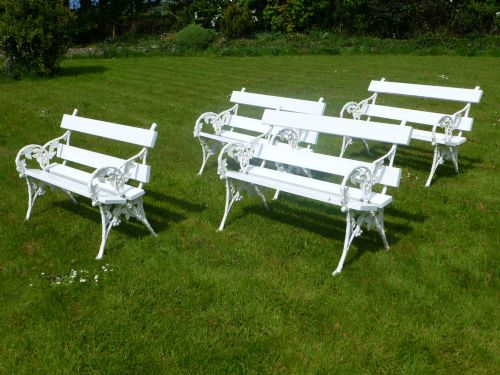
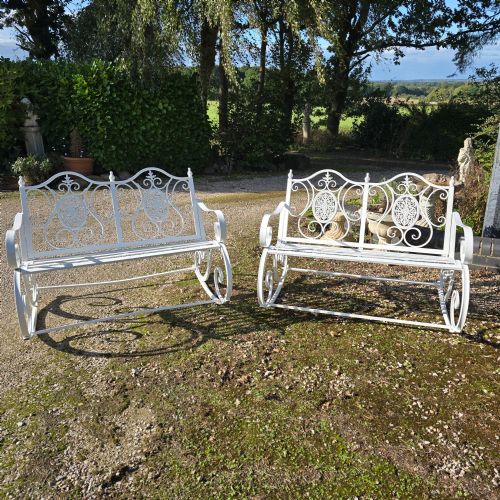
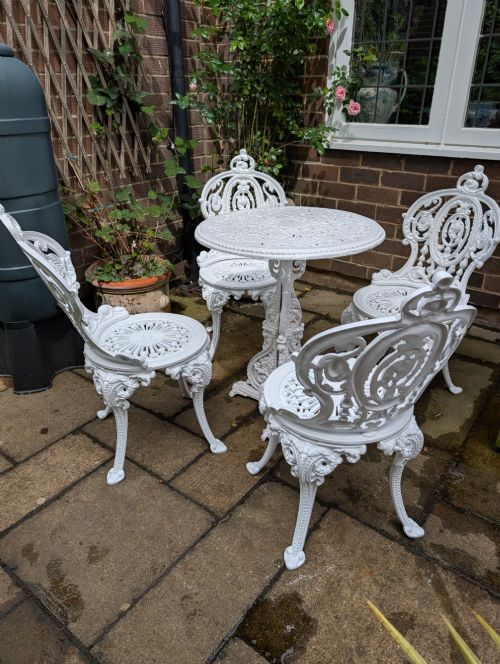
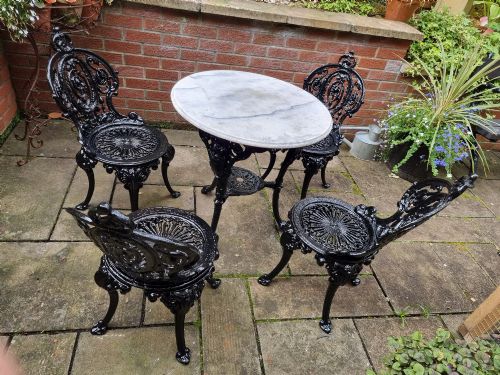
The versions most commonly met on this page span Victorian cast iron examples, French bistro sets, and twentieth-century interwar pieces. Many feature intricate openwork patterns such as blackberry and leaf motifs or gothic arches.
Makers utilised resilient materials to withstand exterior conditions while maintaining decorative appeal. These pieces suit lawns, terraces, and conservatories alike.
How they were made
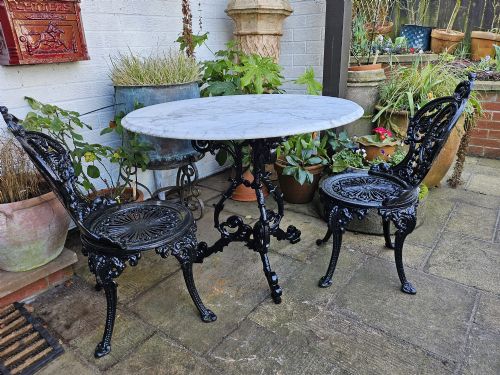
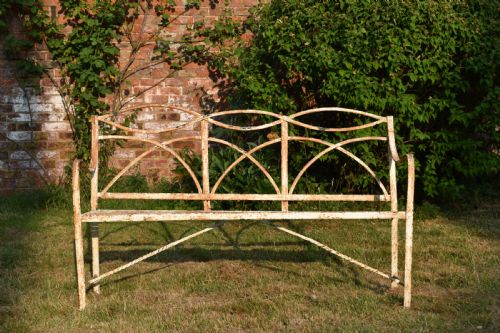
Construction relies heavily on cast iron and wrought iron, shaped into robust frames capable of supporting detailed ornamentation. Foundries cast molten iron into intricate moulds to produce complex foliage and strapwork designs.
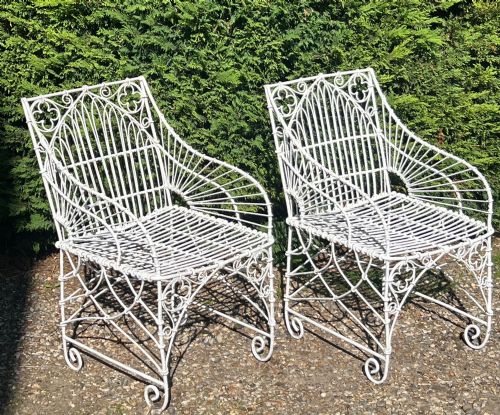
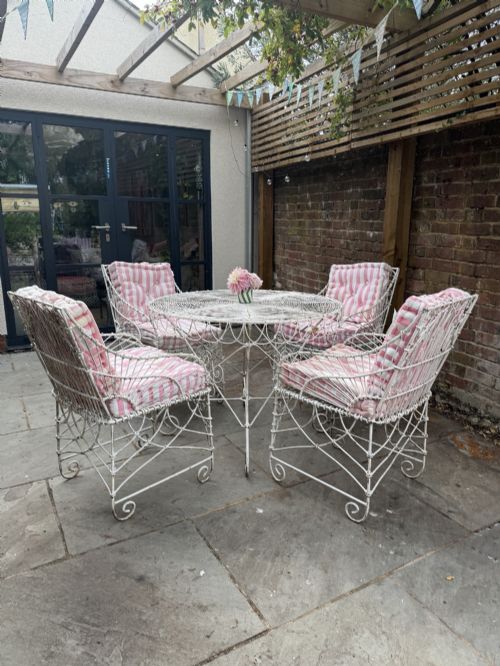
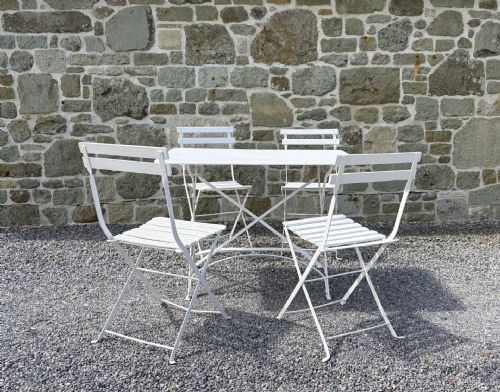
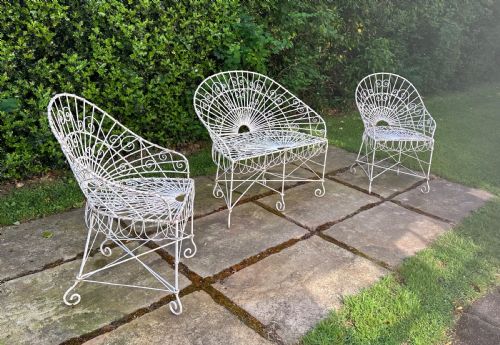
Timber and wirework also feature prominently, particularly in French bistro and wirework garden furniture from the late nineteenth and early twentieth centuries. Artisans combined wood elements with metal supports to create balanced tables and chairs.
Paint finishes traditionally protected these metal surfaces from rust while providing the characteristic white appearance seen across the inventory. Marble tops occasionally appear on associated tables, adding weight and refined texture.
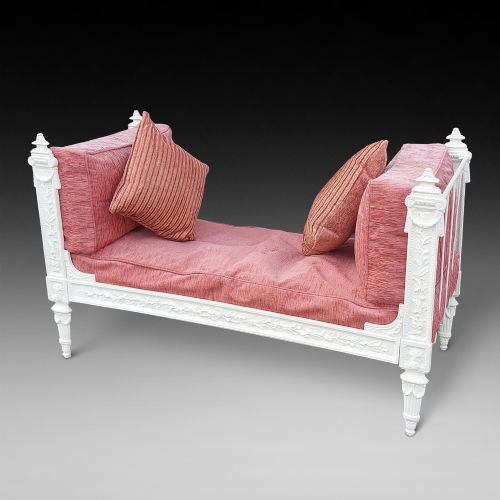
Object forms range from single garden seats and daybeds to complete dining sets and polo club chairs.
What varies in quality
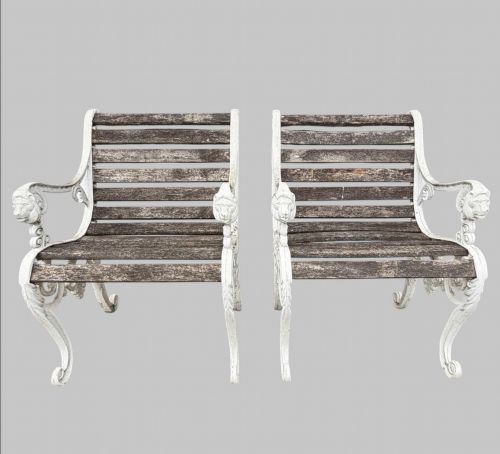
Quality rests in the crispness of the iron casting and the depth of the decorative detail. Finer pieces display sharply rendered motifs, such as lion masks or botanical patterns, without the blurring common in later or secondary castings.
Structural integrity also separates standard items from the finest examples, particularly in the joining of wirework and the preservation of original cast components. Complete sets retaining their matching tables or benches command greater interest among collectors.
Falkirk Foundry·Christopher Dresser
The White Garden Chairs Glossary
- Cast iron
- Molten iron poured into a mould to create rigid, highly decorative furniture components. This material forms the backbone of heavy nineteenth-century garden seating.
- Strapwork
- Flat metal bands interlaced to form geometric or linear decorative patterns. This technique appears on Regency and later iron garden benches.
- Wirework
- Metal strands bent and welded into open, airy structural forms for chairs and tables. Popular in the late nineteenth century, it offers resilience combined with visual lightness.
- Bistro set
- A small table accompanied by matching chairs, designed for compact outdoor spaces. Originating in France, these sets often combine metal frames with wooden slats.
White Garden Chairs: Frequently Asked Questions
How do I care for antique metal garden chairs?
Keep the paint layer maintained to prevent moisture reaching the iron underneath. Store them under cover during harsh winter months.
Regular gentle cleaning removes atmospheric dirt without damaging the historical surface. Avoid abrasive cleaners that strip the protective coating.
Were these chairs originally painted white?
Many iron and wirework pieces received protective paint coatings from the outset to prevent rust. White was a popular choice for reflecting sunlight and brightening garden settings.
Later restorations often applied fresh coats in matching tones. Examining underlying paint layers reveals the historic colour palette.
How can I tell Victorian cast iron from later pieces?
Victorian castings typically exhibit sharper relief work and heavier metal gauge. Maker marks and registration numbers often appear on the underside of authentic examples.
Later revivals emulate these styles but frequently lack the distinct weight and depth of nineteenth-century work. Comparing joint construction helps confirm the period.
Can I leave iron garden furniture outside all year?
Cast and wrought iron withstand outdoor elements well due to their heavy metal mass. However, extreme frost can affect vulnerable joints or trapped moisture.
Moving them to a shed or using breathable covers during the coldest months preserves the ironwork. Timber components especially benefit from winter storage.