



White Daybed
A white daybed brings a bright, versatile resting place to a room, moving easily between seating and sleeping.
White Daybed
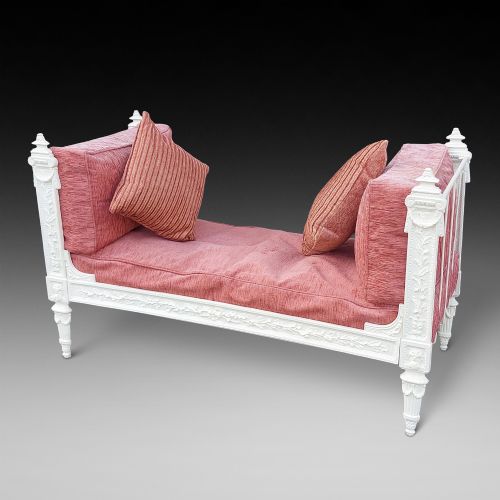
A white daybed combines the function of a seat and a bed, drawing on forms from the eighteenth century through to the early twentieth century. These pieces appear in styles such as Victorian, Gustavian, French country, and Surrealist, reflecting diverse origins across Britain and continental Europe.
Pieces span several distinct periods, featuring nineteenth-century ironwork, eighteenth-century painted woodwork, and early twentieth-century garden or revival pieces. Each form serves as a practical daytime lounger or an occasional guest bed.
How they were made
Makers utilised cast iron and brass for structural rigidity, particularly in nineteenth-century single beds and daybeds. These metal components were often painted white to create a clean, uniform appearance.
Wood construction relies on pine and other timber, finished with traditional paint layers or left as painted wood. Upholstered variants incorporate fabrics such as calico, velvet, and general textiles over internal padding.
White Daybed Retail Price Guide 2026
Typical asking prices for white daybed among the pieces listed under this phrase on Sellingantiques today, from the lower quarter to the upper quarter. They describe what is for sale here now, not the wider market.
A Surrealist day bed waits patiently for an eccentric slumber.
What varies in quality
The distinction between standard and superior pieces rests on the integrity of the original frame and the retention of early paint surfaces. Original painted finishes on eighteenth-century Swedish pieces hold greater appeal than later re-paintings.
Structural refinement shows in the casting detail of ironwork and the joinery of wooden daybeds and settles. Pieces retaining their original brass mounts and unaltered proportions stand apart from heavily restored examples.
The White Daybed Glossary
- Daybed
- A form designed for both lounging and sleeping. It functions as a sofa by day and a bed by night.
- Gustavian
- The Swedish interpretation of neoclassical style, characterised by restrained carving and pale painted finishes. This aesthetic emerged in the late eighteenth century.
- Chaise longue
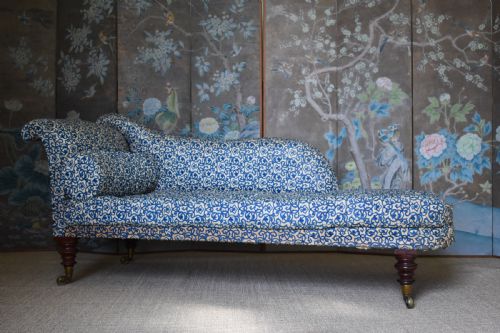
- An upholstered sofa in the shape of a chair with a long seat for reclining. Many nineteenth-century examples feature buttoned upholstery.
- Settle bench
- A wooden wooden bench with high backs and solid sides intended to block drafts. Older examples often feature original painted surfaces.
- Empire Revival
- A nineteenth-century revival of the grand neoclassical style associated with the French Empire. It employs classical motifs and symmetrical forms.
White Daybed: Frequently Asked Questions
What is a white daybed used for?
These pieces serve dual functions as daytime seating and occasional sleeping quarters for guests. They fit well in studies, spare bedrooms, and drawing rooms.
Their narrow profile allows them to occupy less floor space than a standard bed while providing a comfortable spot for reading or resting.
How do I date a cast iron daybed?
Dating relies on examining the construction methods of the metal frame and the style of any decorative brass details. Victorian examples typically display heavier iron castings and distinct joint techniques compared to later revival pieces.
Paint layers also offer clues, though many functional pieces have been refinished over the decades of their use.
Are painted wooden daybeds fragile?
Pine and other structural timbers used in these pieces provide robust support for daily sitting and lying. The durability depends on the soundness of the underlying joinery rather than the surface paint.
Original painted finishes require gentle care to preserve the surface texture and prevent chipping from heavy impact.