



White Ceramic Tableware
White ceramic tableware encompasses historic serving pieces, complete dinner services and individual plates shaped from earthenware, porcelain and ironstone across centuries.
White Ceramic Tableware
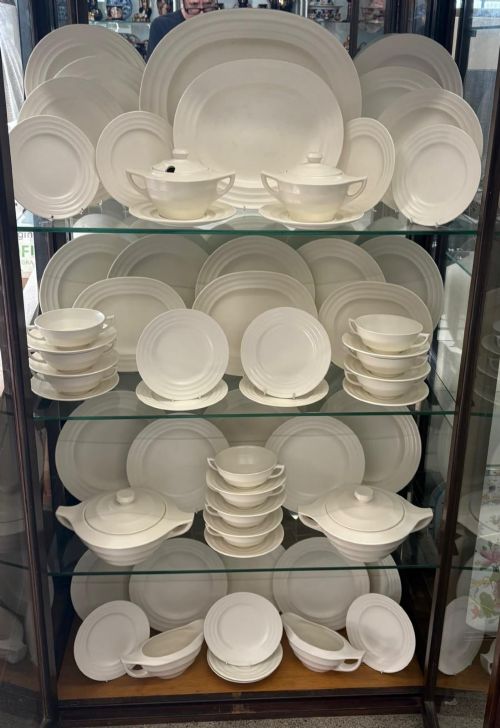
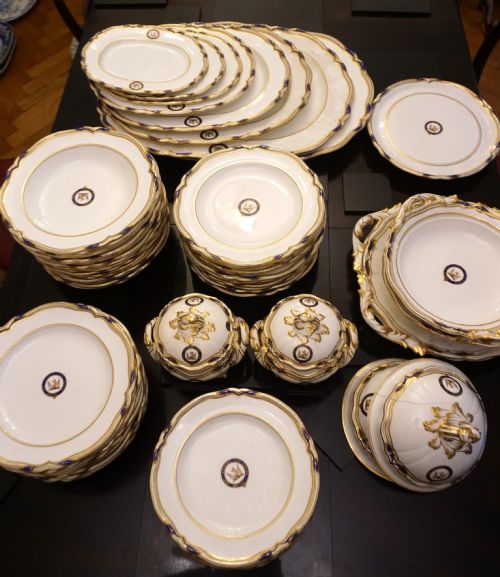
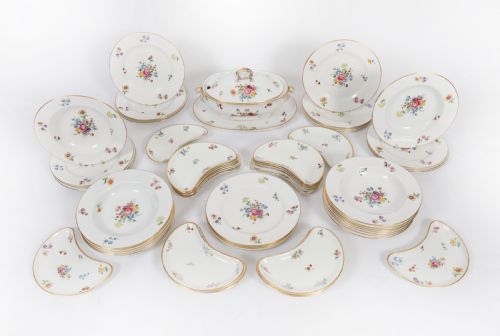
White ceramic tableware covers a broad range of domestic and formal items designed for dining and food service. Buyers searching this phrase encounter everything from grand dinner services and extensive sets down to single platters, tureens, sauceboats and decorative plates.
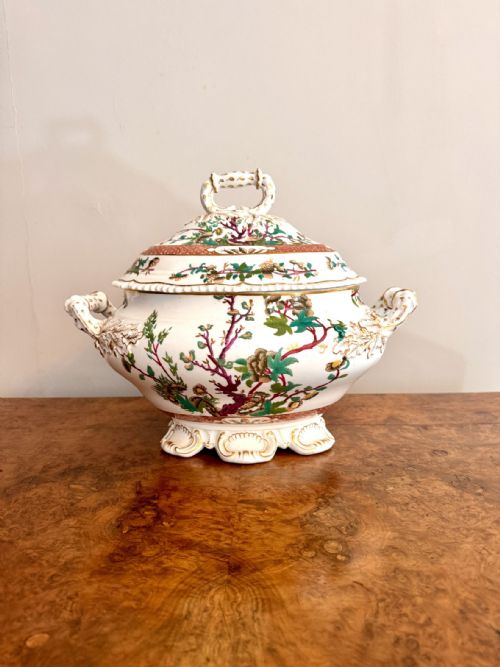
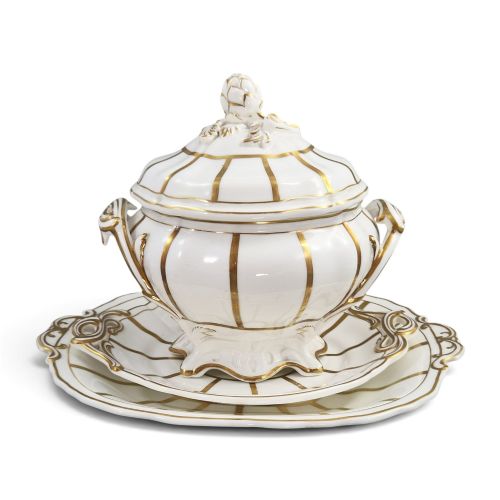
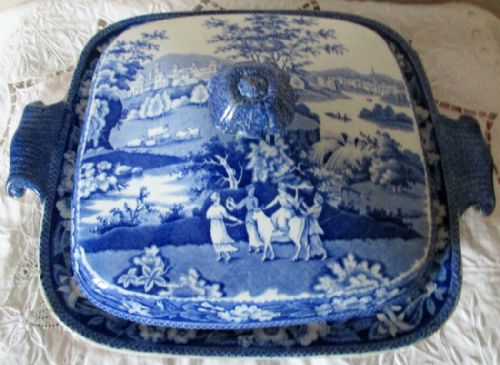
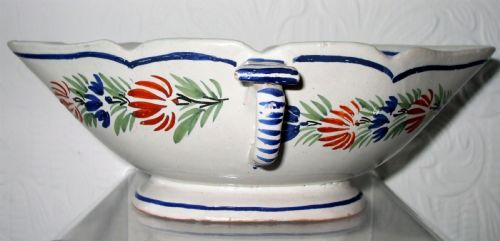
The pieces span multiple centuries, originating from English factories, European potteries and Asian kilns. Common forms include vegetable tureens, meat platters, cheese dishes, dessert services and specialised items like egg drainers and custard cups.
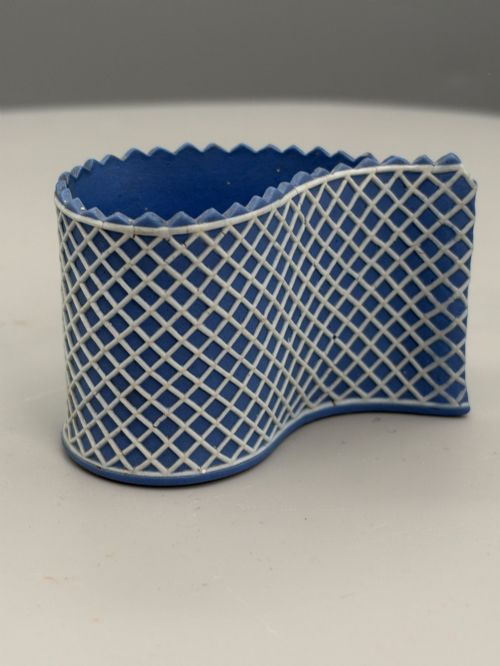
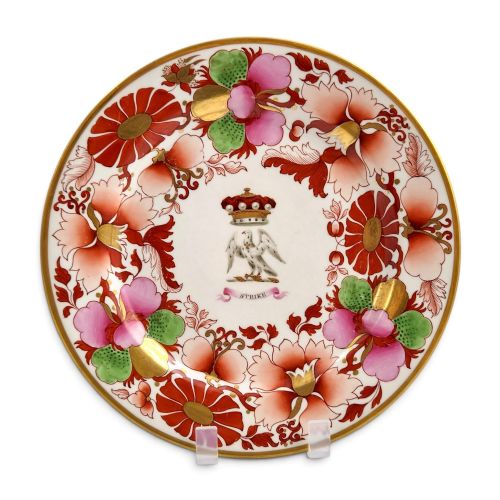
Surviving examples reflect diverse aesthetic movements, taking shapes from Georgian neoclassicism and Victorian robustness through to twentieth-century minimalism. Transfer printing, armorial decoration and hand-painted motifs frequently appear across the glazed surfaces.
Materials and production methods
Makers utilised various clay bodies including soft-paste porcelain, bone china, ironstone and earthenware, each glazed to create a durable white or off-white ground. These foundational ceramics provided a smooth canvas for subsequent transfer printing, hand-painting or gilding.
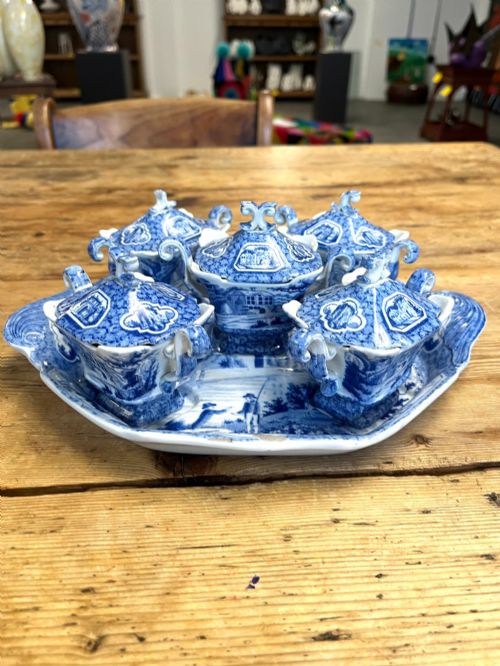
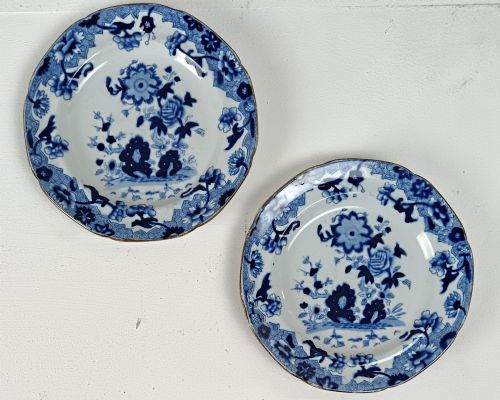
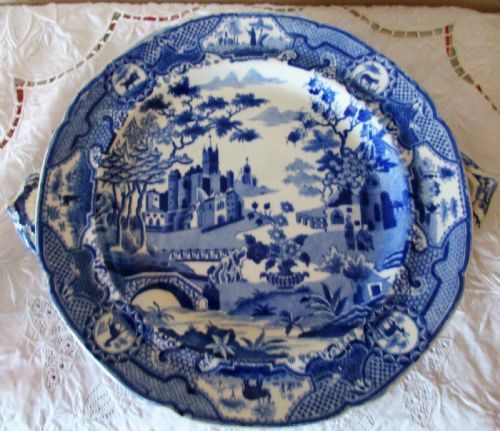
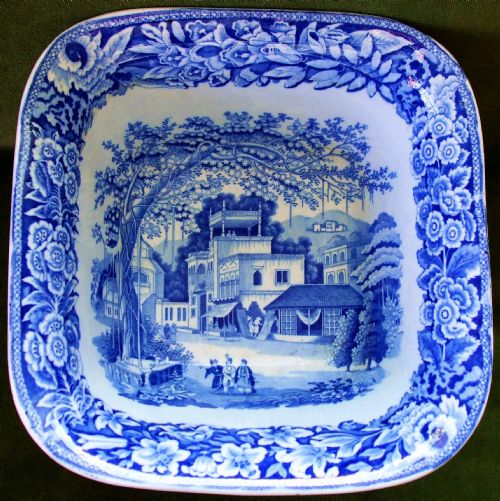
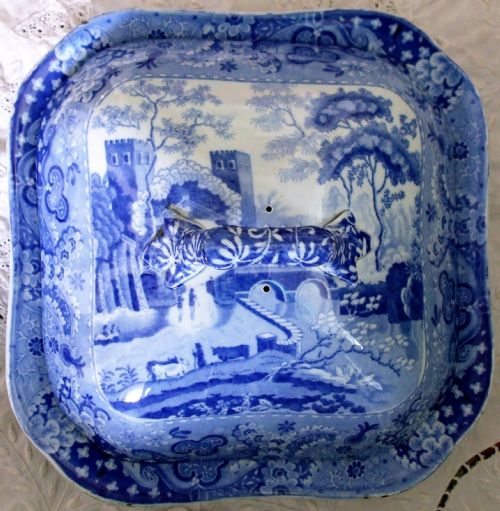
Decoration often involved blue and white transfer printing, where intricate designs such as pastoral scenes or oriental patterns were applied via tissue paper from copper plates. Enamel colours, gold leaf and gilt highlights were frequently added over the glaze before a final firing fixed the ornamentation.
White Ceramic Tableware Retail Price Guide 2026
Typical asking prices for white ceramic tableware among the pieces listed under this phrase on Sellingantiques today, from the lower quarter to the upper quarter. They describe what is for sale here now, not the wider market.
Listings feature items spanning from the eighteenth century to the twentieth century, created in earthenware, porcelain and ironstone.
Distinctions in quality and execution
Quality rests upon the refinement of the ceramic body, the crispness of the moulded details and the precision of the glaze. Finer wares display thin, even potting and translucent bodies, whereas utilitarian ironstone and earthenware prioritize sturdy thickness for daily service.
Artistic execution further separates standard items from exceptional pieces, seen in the registration of transfer prints, the delicacy of hand-painted enamelling and the inclusion of raised gilding or armorial crests. Complete services retaining matching elements and original ladles or covers hold distinct advantages over pieced-together sets.
Spode·Wedgwood·Flight Barr and Barr·Davenport·Caughley·Bow·Worcester·Masons·Doulton·Kuznetsov
The White Ceramic Tableware Glossary
- Earthenware
- A porous pottery body fired at lower temperatures, requiring a vitreous glaze to achieve impermeability to liquids. It forms the base for many traditional utility pieces and transfer-printed plates.
- Porcelain
- A fine, dense ceramic made from kaolin and petuntse, fired at high temperatures until vitrified and translucent. Soft-paste and bone variations appear frequently in historic dining services.
- Ironstone
- A heavy, durable earthenware patent-registered in the nineteenth century to imitate porcelain. It offers exceptional strength for large platters, meat dishes and soup tureens.
- Transfer printing
- A mechanical decorating technique using engraved copper plates to transfer ink designs onto paper and thence onto the ceramic body. This process allowed consistent, detailed ornamentation across large dinner services.
- Tureen
- A deep covered vessel designed for serving soups, sauces or vegetables at the table. These pieces often include matching ladles and resting stands.
White Ceramic Tableware: Frequently Asked Questions
How do I date antique tableware?
Dating relies on factory backstamps, ceramic body composition and stylistic markers typical of periods like the Georgian or Victorian eras. Examining the potting technique and glaze characteristics also helps narrow the decade of production.
Matching patterns against known factory production windows provides further chronological clarity.
Can I use antique plates for daily dining?
Many historic earthenware and ironstone pieces were engineered for robust service, though older soft-paste porcelains require careful handling. Modern detergents and dishwashers can damage delicate enamel and gilding over time.
Hand-washing is recommended to preserve the integrity of the glaze and any historic decoration.
What is ironstone ceramics?
Ironstone is a heavy, durable type of earthenware developed in the nineteenth century to provide a strong alternative to porcelain. It resists chipping and staining better than standard earthenware.
Dinner services and large platters frequently utilised this material for everyday practicality.
How are transfer printed patterns identified?
Transfer-printed patterns display single-colour ink motifs transferred from engraved copper plates onto the ceramic surface. Common subjects include landscape views, botanical studies and oriental scenes.
Makers often named these patterns, allowing collectors to trace specific designs to particular factories.