




White Ceramic Cherub
White ceramic cherub figures and vessels bring sculptural charm to a room, ranging from delicate Georgian biscuit porcelain to ornate Victorian centrepieces.
White Ceramic Cherub
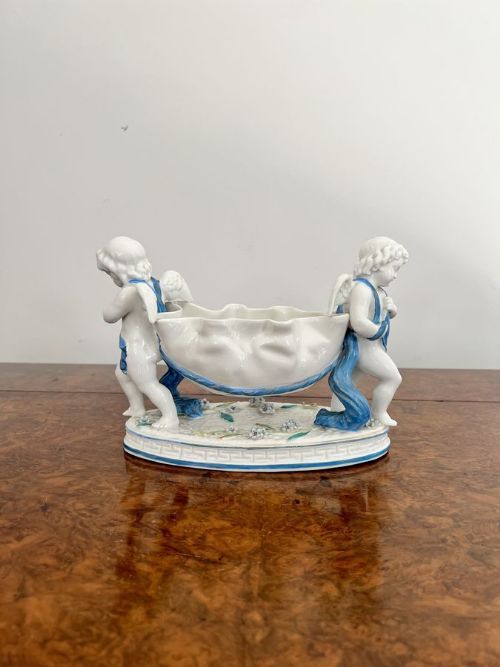
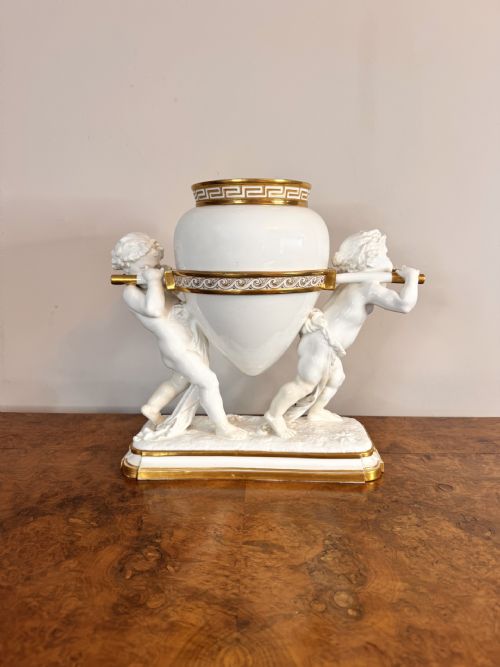
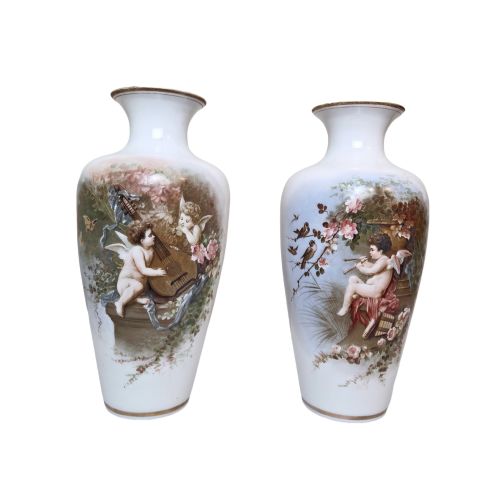
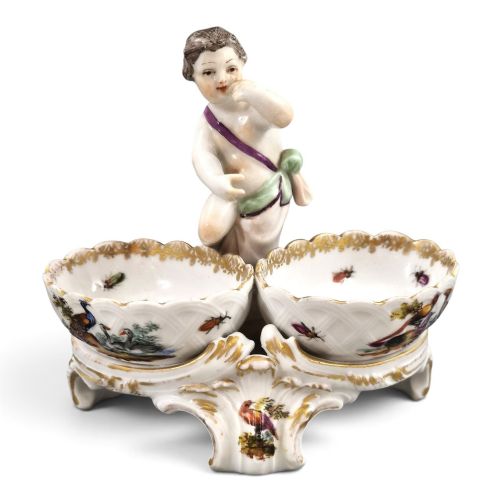
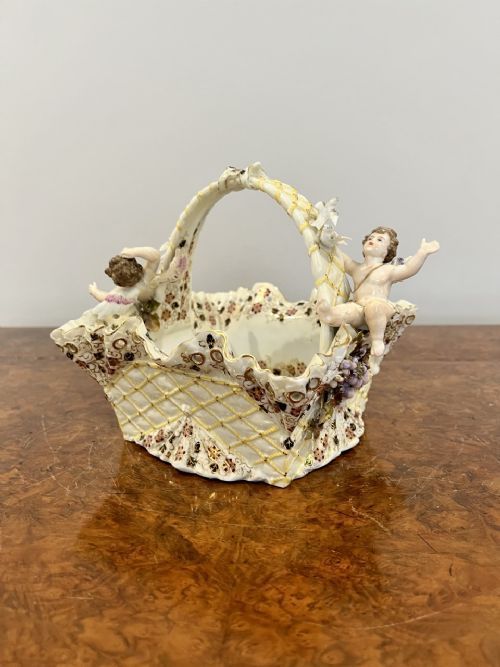
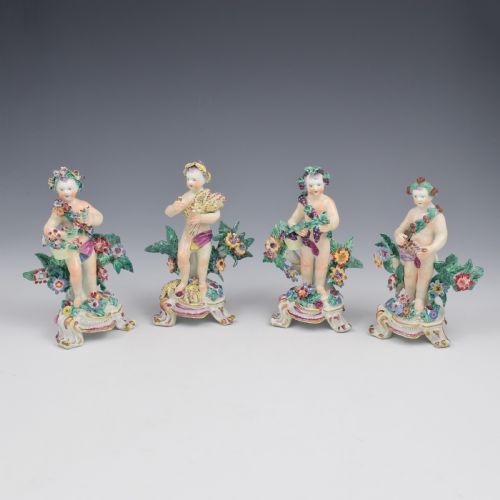
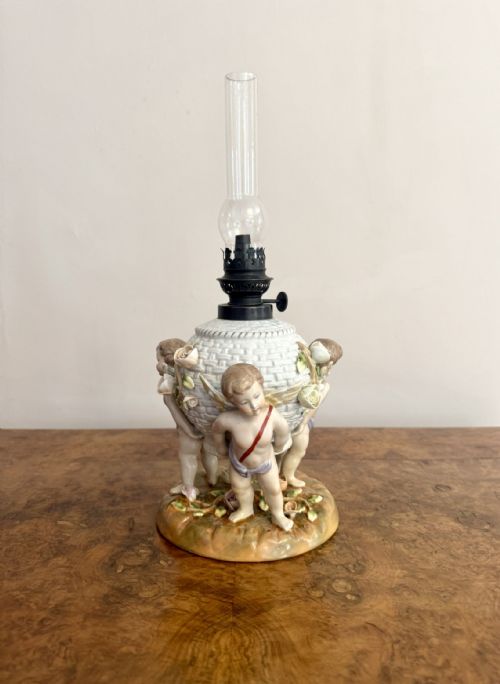
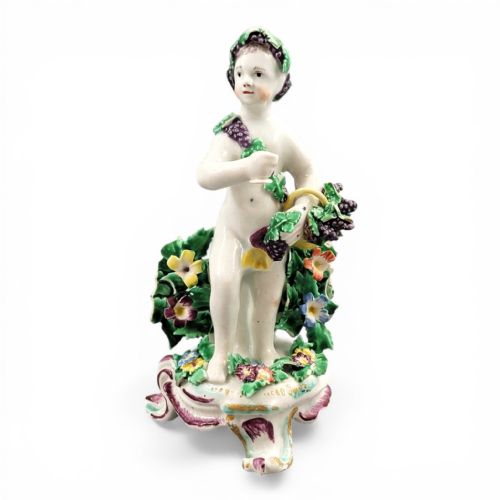
A white ceramic cherub search encompasses figures, putti, lamps, apothecary jars and centrepieces created across the eighteenth, nineteenth and early twentieth centuries. Buyers seeking this phrase encounter continental porcelain figures, English earthenware drug jars and elaborate German centrepieces adorned with modelled winged figures.
The objects stem from notable ceramic traditions including Meissen, Bow, Derby, Chelsea and Sitzendorf, alongside majolica and faience wares. Many pieces incorporate gilt bronze, gold leaf or hand-painted details that complement the principal white ceramic body.
How they were made
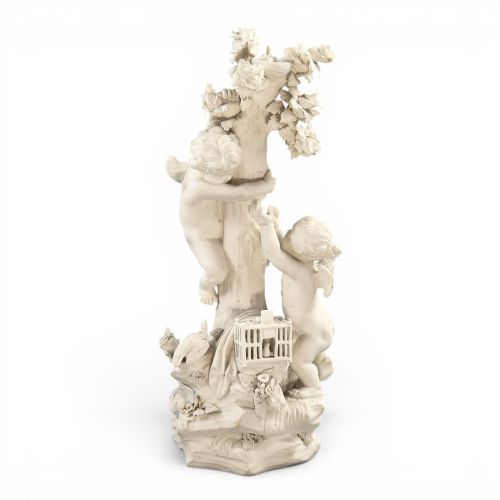
Makers utilised porcelain, earthenware, tin glaze and faience, shaping bodies through moulding or slip casting before applying lead or tin glazes. Biscuit porcelain remained unglazed to mimic carved marble, while other wares received glossy white or coloured enamels.
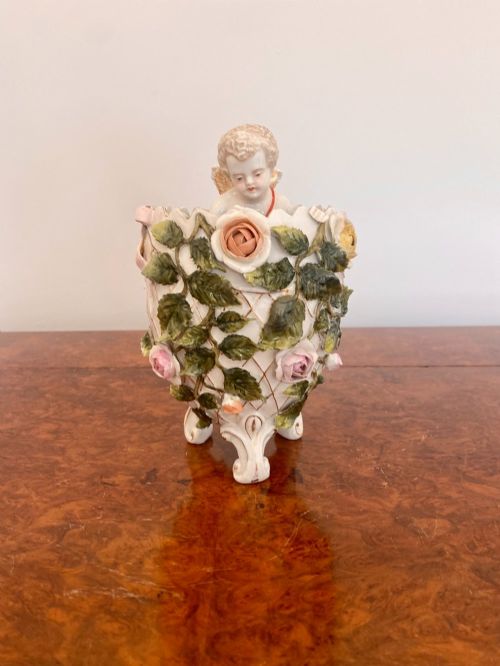
Artisans embellished forms with applied roses, gold leaf, enamel painting and gilt bronze mounts. Complex centrepieces and oil lamps combined multiple fired ceramic sections with metalwork fittings.
White Ceramic Cherub Retail Price Guide 2026
Typical asking prices for white ceramic cherub among the pieces listed under this phrase on Sellingantiques today, from the lower quarter to the upper quarter. They describe what is for sale here now, not the wider market.
Some nineteenth-century cherubs double as go-to-bed candlesticks, ensuring cherubic company even when the lights go out.
What varies in quality
Quality rests upon the crispness of the modelling in the cherub's form and the fineness of applied details like floral garlands. Superior pieces exhibit delicate hand-painting, well-defined facial expressions and clean firing without distortion.
Maker attribution and factory marks elevate certain works, distinguishing standard production items from master modeller output such as pieces designed by Paul Scheurich or Karl Tutter.
KPM Berlin·Sitzendorf·Derby·Bow·Meissen·Schierholz·Chelsea·Minton·Volkstedt·Karl Tutter
The White Ceramic Cherub Glossary
- Putto
- A plump, naked child figure, often winged, commonly found in Renaissance and later art. These figures populate many continental and English porcelain groups.
- Biscuit porcelain
- Unglazed porcelain fired once to produce a matte, white finish resembling marble. This technique highlights fine sculptural modelling without glaze interference.
- Albarello
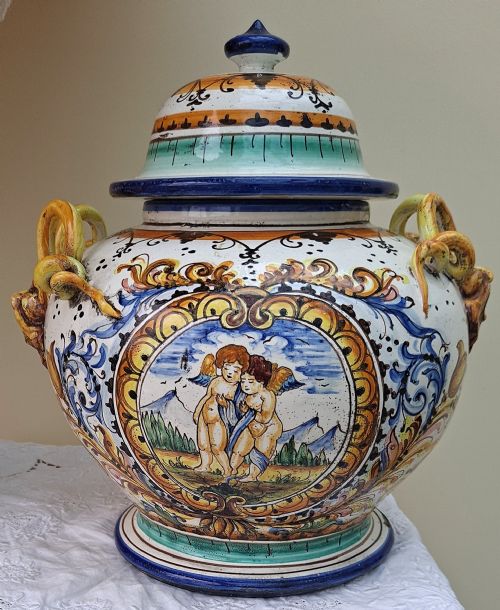
- A cylindrical earthenware jar used by apothecaries to store drugs and ointments. Italian and continental examples frequently feature painted decoration alongside white tin glazes.
- Pate sur pate
- A ceramic technique where a relief design is built up on a coloured body using successive layers of white slip. Minton produced notable examples of this meticulous method.
- Faience
- Tin-glazed earthenware produced in Europe, particularly France and Italy. It provides an opaque white surface suitable for hand-painted ornamentation.
White Ceramic Cherub: Frequently Asked Questions
How were apothecary jars used?
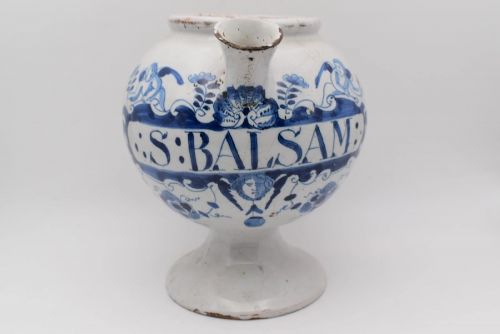
Apothecary jars stored dry or wet medical drugs, herbs, and balsams in pharmacies and dispensaries. Their tin-glazed earthenware bodies kept contents secure.
Decorated with inscriptions and cherub motifs, these jars later transitioned from utilitarian dispensary items into decorative display pieces.
How do I display these pieces?
Place porcelain figures and centrepieces on mantelpieces, side tables, or within glass cabinets where adequate lighting highlights their sculptural forms. Pairing them with complementary mirrors or lamps enhances their visual impact.
Keep pieces away from direct sunlight and high-traffic edges to protect delicate applied floral elements and gilt details.
How do I tell periods apart?
Georgian pieces often feature unglazed biscuit finishes or soft-paste porcelain bodies with simple allegorical themes. Victorian and Edwardian items tend towards heavier rococo revival forms, complex centrepieces, and brighter enamel highlights.
Examining factory marks, paste density, and glazing techniques helps narrow down the manufacturing era of each ceramic object.