



White Armoire Wardrobe
A white armoire wardrobe brings practical scale and painted light into a room, offering robust storage disguised in regional style.
White Armoire Wardrobe
A white armoire wardrobe search uncovers large storage furniture principally formed as linen cupboards, presses, and traditional housekeepers cupboards. These functional vessels span centuries of domestic life, originating from English country houses and continental workshops alike.
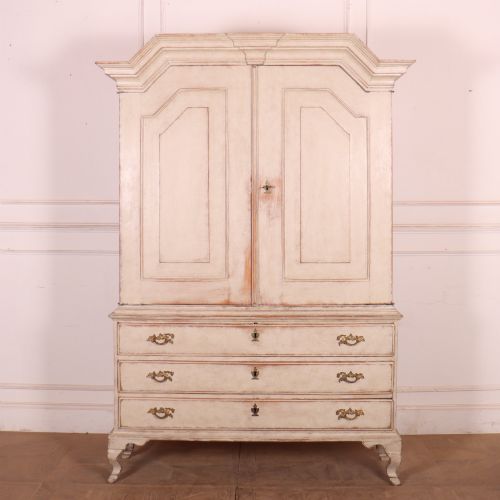
The pieces meeting this description arrive in various regional guises, most frequently appearing as Scandinavian and Swedish painted pine cupboards or English country examples. They balance everyday utility with distinct historical character, standing tall in hallways and bedrooms.
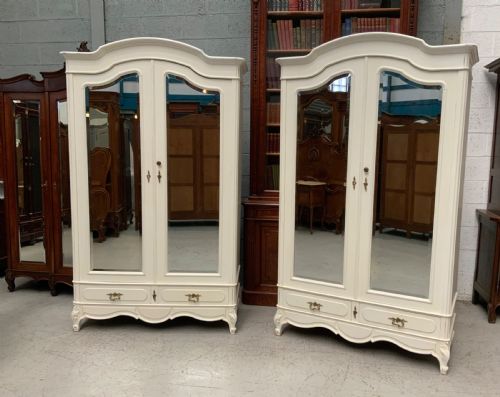
Forms range from single-piece hall wardrobes and Gothic revival designs to symmetrical pairs of French armoires. Each piece serves as a commanding focal point while concealing generous internal space behind panelled doors.
How they were made
Construction relies primarily on solid pine and painted wood, worked by regional carpenters using traditional joinery methods suited to domestic service. Timber surfaces receive layers of historic paint finishes, often applied over decades to maintain appearance and protect the wood.
Metal components such as iron and brass hardware secure the heavy doors and support internal shelving or hanging space. Glass panels occasionally feature in upper sections, adding visual lightness to these substantial wooden structures.
White Armoire Wardrobe Retail Price Guide 2026
Typical asking prices for white armoire wardrobe among the pieces listed under this phrase on Sellingantiques today, from the lower quarter to the upper quarter. They describe what is for sale here now, not the wider market.
Listings feature pine and painted wood constructions across the 18th century, 19th century, and early 20th century, including Gustavian and Gothic revival styles.
What varies in quality
Quality differentiates itself through the integrity of the original painted surface and the proportion of the timber frame. Pieces retaining their early layered paintwork hold greater historical honesty than later resprays.
The sophistication of regional styling defines the upper tier, from Gustavian restraint to elaborate Gothic revival detailing. Superior examples demonstrate balanced proportions and well-preserved hardware that complements the scale of the cupboard.
The White Armoire Wardrobe Glossary
- Armoire
- A large freestanding cupboard or wardrobe, traditionally used for storing clothes. These tall pieces often feature double doors and generous internal depth.
- Linen Cupboard
- A tall storage piece designed specifically for household textiles and bedding. They frequently incorporate internal shelving behind sturdy wooden doors.
- Housekeepers Cupboard
- A utilitarian storage cabinet historically used by domestic staff to organise provisions and household goods. These sturdy pieces emphasise practical capacity over delicate ornamentation.
- Pine
- A softwood commonly utilised across 18th and 19th-century cabinet making. It provides a stable, workable base for painted furniture.
- Gustavian
- A Swedish neoclassical style popularised under the reign of Gustav III. It is characterised by lighter painted finishes and restrained classical motifs.
White Armoire Wardrobe: Frequently Asked Questions
What is a white armoire wardrobe?
A white armoire wardrobe is a large freestanding storage piece, encompassing linen cupboards, presses, and housekeepers cupboards finished in paint. These pieces provide substantial internal capacity while serving as architectural elements within a room.
They reflect diverse regional traditions, from English country workshops to Scandinavian and French provincial ateliers.
How were these cupboards used historically?
Historically, these large cabinets served as the primary storage vessels for household textiles, garments, and domestic provisions. Housekeepers cupboards organised household inventory, whilst bedroom wardrobes held clothing before built-in closets became common.
Their robust construction ensured they could withstand heavy daily use in busy domestic environments.
How do I live with a painted pine wardrobe?
Living with a painted pine wardrobe involves appreciating its generous scale and anchoring presence in a bedroom or hallway. Ensure the room has stable humidity levels to protect the historic timber and paint layers.
Position the piece away from direct heat sources to prevent movement in the pine boards.
How do I tell periods and regional styles apart?
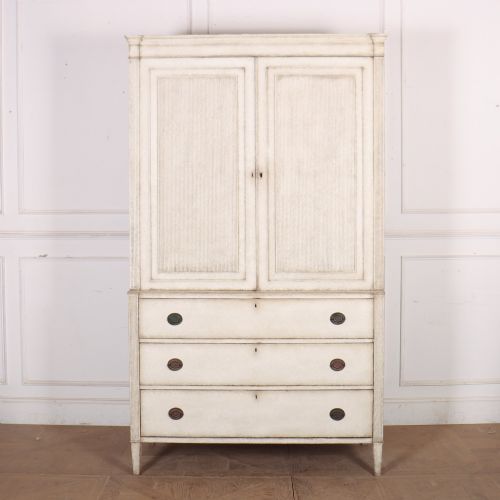
Distinguishing periods and styles relies on examining the paint finish, timber preparation, and decorative motifs. Scandinavian and Gustavian pieces often display softer white or grey-white palettes with neoclassical mouldings, whereas English country examples utilise simpler panel construction.
Georgian and 19th-century pieces further differentiate themselves through distinct cornice details and hardware choices.