


Whitby Yorkshire Art
Whitby Yorkshire art brings the historic North Yorkshire coast and its distinctive maritime scenes into focus through works from the nineteenth and twentieth centuries.
Whitby Yorkshire Art
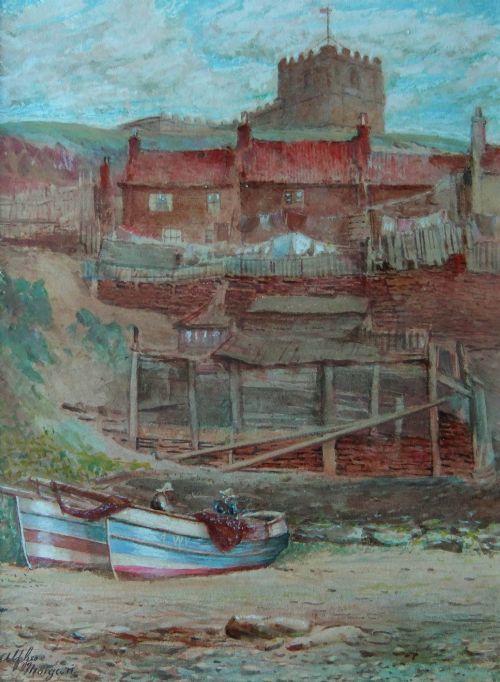
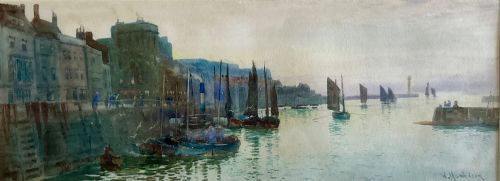
Whitby Yorkshire art comprises original works depicting the harbour, abbey, and surrounding landscape, dominated by watercolours alongside a smaller selection of oil paintings. These pieces capture local landmarks such as St Mary's Church, the East Cliff, and Tate Hill Pier, recorded by artists working across different decades.
The version most commonly met on this page is the traditional British watercolour, often signed and executed on paper during the late nineteenth or early twentieth centuries. Painters focused closely on the town's maritime character, documenting fishing dockyards, coastal views, and town streets like Flowergate and Henrietta Street.
Represented periods span from the Victorian era through the Edwardian period and into the nineteen-thirties, reflecting stylistic movements including British Impressionism and marine realism. The selection preserves a detailed visual record of the Yorkshire coast through the eyes of regional and visiting artists.
How they were made
The works rely primarily upon watercolour pigment applied to paper, capturing light and atmospheric conditions along the coast through transparent washes. Artists also employed oil paintings on canvas, utilising richer pigments to depict moorland scenes, harbour views, and marine settings.
Framed paintings frequently incorporate gilt wood surrounds that complement the traditional character of the works, preserving both watercolours and oils safely behind glass or in open mountings. Technique centred on direct observation of the Yorkshire landscape, balancing detailed architectural elements like the abbey with fluid depictions of the sea and sky.
The listings show watercolours and oil paintings created across the nineteenth and twentieth centuries, employing paper, canvas, and gilt wood.
What varies in quality
Quality separates through the artist's handling of coastal light and atmosphere, distinguishing rapid topographical records from deeply observed impressionistic studies. Masterly control of watercolour wash and pigment density brings genuine vitality to the harbour scenes and architectural details.
The strength of composition and the clarity of the historical view further divide the works, as certain painters capture the specific topography of the fishing dockyard and abbey with exceptional precision. The integrity of the surviving paper, pigment stability, and the presence of original framing elements also contribute to the standing of individual pieces.
Alfred G. Morgan·William Matthison·Tom Clough·George Weatherill·George Hamilton Constantine·James Thomas Watts·Frederick William Booty·Frederick Williamson·Albert Robert Quinton·William Kay Blacklock·Rowland Henry Hill·Julian Drummond·Harry Wanless·Thomas Clavering Alder·Walter Emsley·Frank Rousse·John J. Hamer·Donald Wood·Walter Meegan·A. G. Stevens·R. J. S. Bertram·James Watson·William Henderson
The Whitby Yorkshire Art Glossary
- Watercolour painting
- A work created using water-soluble pigments on paper, allowing for delicate washes and luminous effects that suit coastal and marine subjects.
- Marine realism
- An artistic style focused on accurate, detailed depiction of the sea, ships, coastal architecture, and maritime working life.
- Diptych paintings
- A pair of artistic pieces painted on two separate panels or sheets designed to be displayed together as a single matched work.
- British Impressionism
- A painting approach characterised by visible brushstrokes, an emphasis on light in its changing qualities, and plein air observation.
Whitby Yorkshire Art: Frequently Asked Questions
What subjects appear in Whitby Yorkshire art?
The works focus primarily on the historic harbour, Whitby Abbey, local piers, and surrounding Yorkshire coastal landscapes. Scenes often capture maritime activity, fishing vessels, and narrow town streets.
Artists also recorded moorland views and neighbouring coastal locations such as Scarborough and the River Esk.
Which periods do these paintings represent?
The selections span from the nineteenth century through the Edwardian era and into the nineteen-thirties. Victorian pieces sit alongside works created around nineteen hundred and the interwar decades.
Styles shift gradually from traditional realism towards British Impressionism and marine realism as the twentieth century progresses.
Are these pieces original works?
The listings consist entirely of original paintings rather than modern reproductions. Artists executed these watercolours and oils directly by hand on paper or canvas.
Many examples retain signatures from their creators alongside period framing in gilt wood.
How should I display watercolours safely?
Watercolour paintings require protection from direct sunlight to prevent the pigments and paper from fading over time. Displaying them away from moisture-prone areas helps preserve the paper and mount.
Utilising conservation-grade glass and framing further safeguards the delicate medium from environmental damage.