


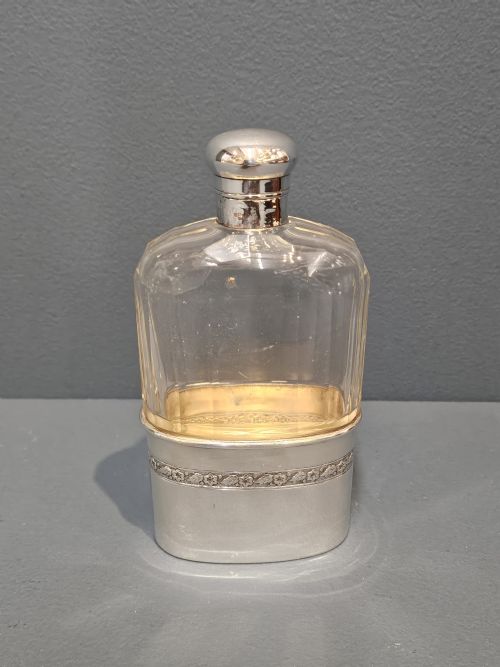
Whisky Decanter with Silver
These whisky decanter with silver pieces bring together cut glass vessels and precious mounts for your home bar.
Whisky Decanter with Silver
A whisky decanter with silver combines clear glass, cut crystal, or coloured glass bodies with sterling silver or silver plate collars, mounts, and labels. You will most commonly encounter Edwardian, Victorian, and Art Deco examples, alongside noggins, tots, and larger table decanters.
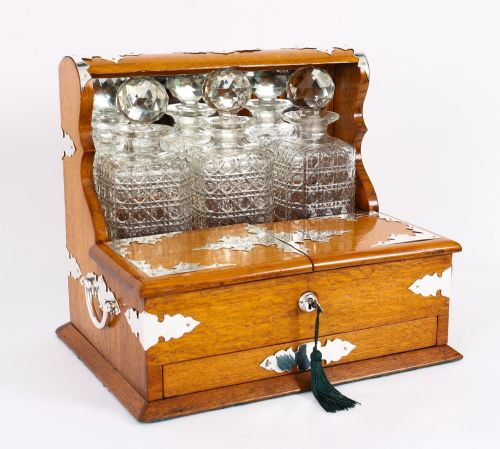
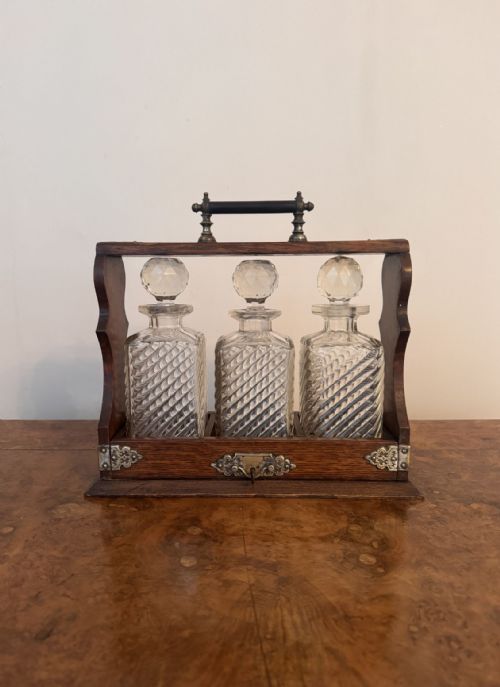
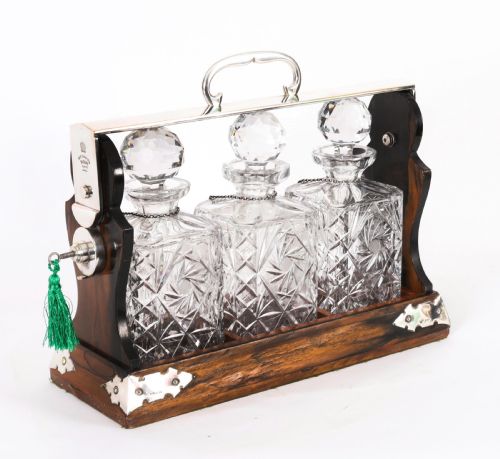
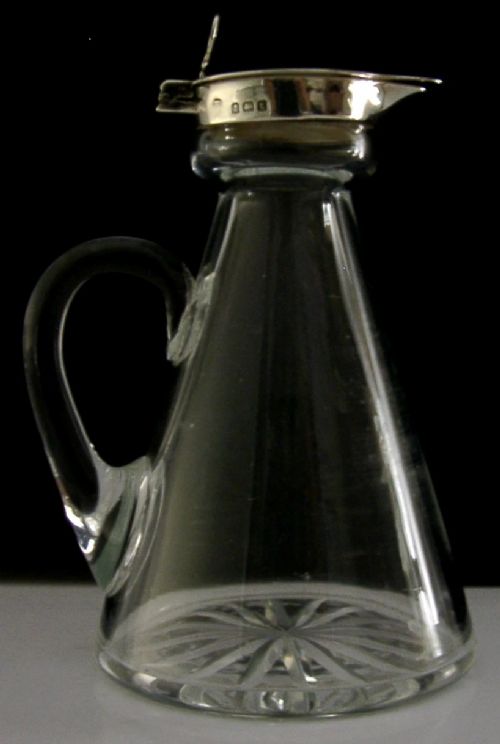
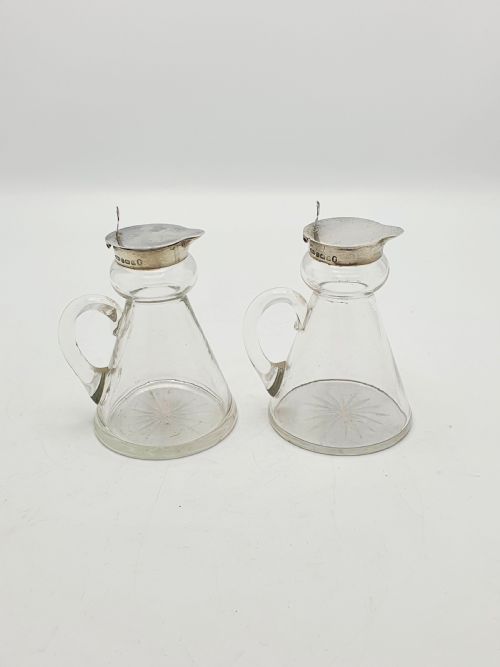
The selection ranges from single tots and noggins designed for individual pours to multi-bottle tantalus sets and drinks trays holding matched vessels. Many feature star-cut bases, glug-glug bodies, or novelty forms such as the Scottish thistle.
Makers and silversmiths added collars and pouring lips to protect the glass rim while providing a secure fixture for stoppers fitted with cork. These vessels served after-dinner drinks in drawing rooms and smoking rooms across the late nineteenth and early twentieth centuries.
How they were made
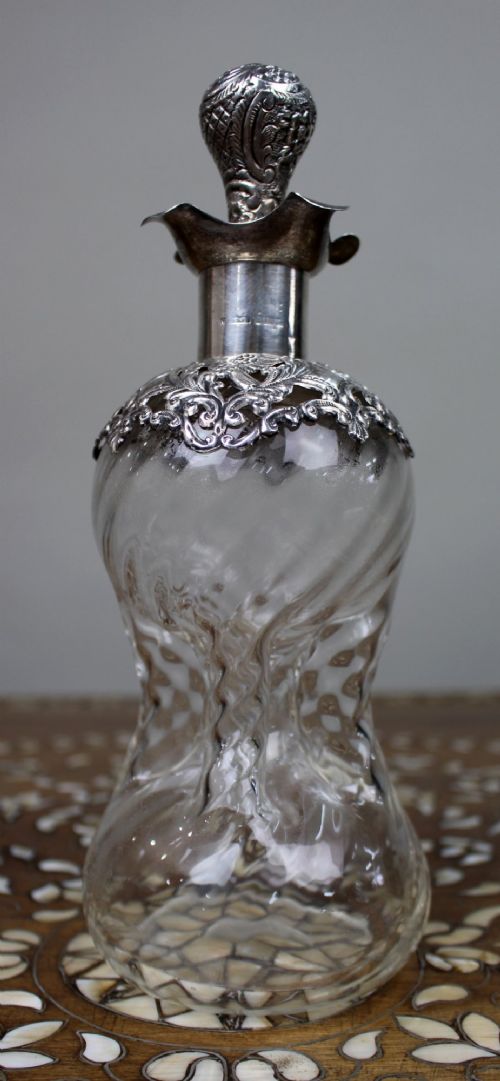
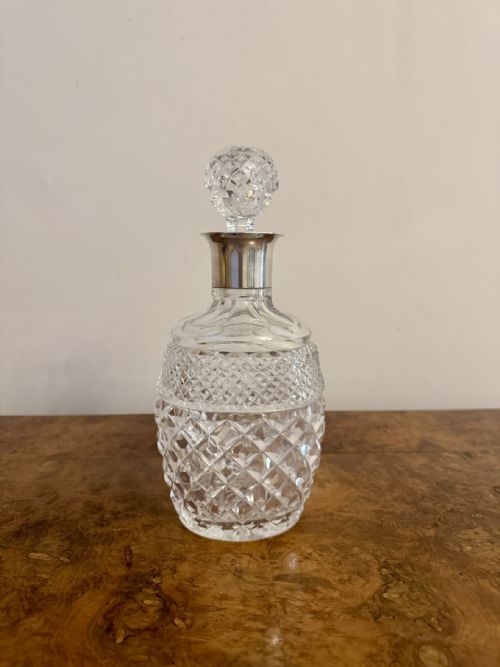
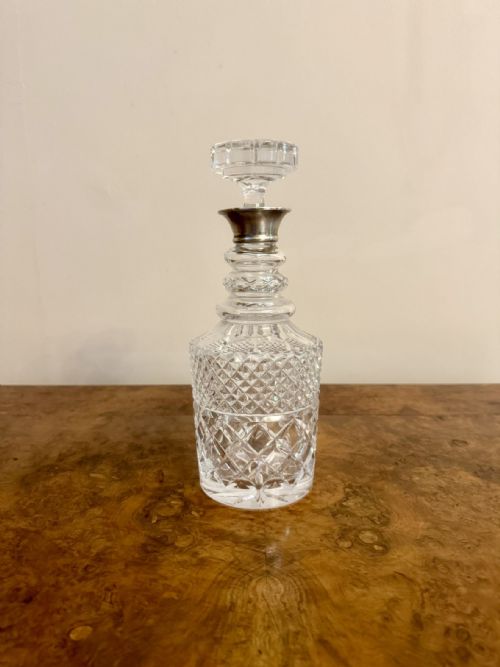
Glass bodies were mouth-blown and often finished with deep brilliant-cut patterns, flat cutting, or moulded flutes. Workshops then fitted shaped sterling silver or silver plated collars, securing them directly around the neck of the bottle.
Silversmiths stamped hallmarks onto the metal mounts to record the assay office, year, and maker, while separate silver labels hung by chains to identify the contents. Cork stoppers were mounted to glass or silver tops to create an airtight seal for the spirits inside.
Some decanters take the form of a Scottish thistle, letting you pour your evening dram from a prickly bloom.
What varies in quality
The weight and depth of the cut glass distinguish finer pieces, with crisper facets and heavier crystal bases offering a better hand-feel. Superior metal mounts use thicker gauges of sterling silver rather than thin silver plate over base metal.
Maker attribution elevates certain examples, particularly those bearing the marks of established firms like Hukin and Heath or Elkington. The presence of matching silver labels, original stoppers, and clear, legible hallmarks completes the standard of the piece.
Hukin & Heath Ltd·Elkington·Taylor & Perry
The Whisky Decanter with Silver Glossary
- Noggin
- A small vessel or flask designed for a single measure of spirits, typically fitted with a handle and a silver collar. These small decanters were popular for bedside or desk use.
- Tantalus
- A wooden frame, often in oak, holding decanters securely behind a locking bar to prevent unauthorized access to the liquor. The bottles must be unlocked by the owner before pouring.
- Sterling Silver
- An alloy containing a high proportion of pure silver, stamped with hallmarks to guarantee its standard. It forms the collars, mounts, and bottle labels on finer decanters.
- Glug Glug Decanter
- A vessel with a folded or looped neck design that creates a characteristic gurgling sound when liquid is poured. This form appeared frequently during the Edwardian period.
- Silver Plate
- A thin layer of silver fused or electroplated onto a base metal foundation. It appears on trays, novelty mounts, and labels across various nineteenth and twentieth-century items.
Whisky Decanter with Silver: Frequently Asked Questions
Can I store whisky in them?
These vessels are suitable for serving whisky during dining or social gatherings. The ground glass stoppers and corks maintain a seal for short-term containment.
For long-term spirit storage, check that the cork remains pliable and intact. Decanted whisky should be consumed within a reasonable timeframe to prevent evaporation.
What is a noggin?
A noggin is a small, handled decanter holding a single generous measure of spirits. They appeared frequently in domestic settings during the Edwardian and George V periods.
These compact vessels often sit on small trays alongside a matching glass and a labeled silver collar.
How do I date the silver?
Examine the silver collar or mount for stamped hallmarks indicating the assay office, standard mark, and date letter. These punch marks provide the exact year the metal mount was tested and registered.
Compare the maker's mark against historical records to confirm the workshop of origin. The style of the glass body and cutting patterns also help corroborate the production period.