

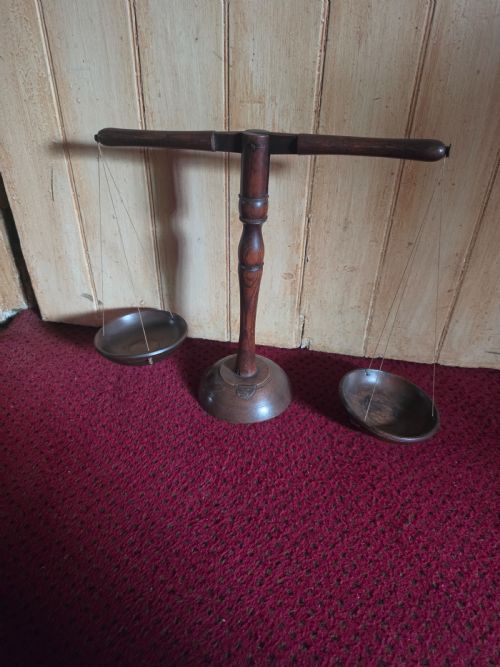


Welsh Wooden Treen
Welsh wooden treen gathers domestic utility and vernacular carving into dense fruitwood, sycamore, and oak forms made for daily hearth and dairy use.
Welsh Wooden Treen
Welsh wooden treen encompasses everyday domestic objects shaped from local timbers by rural makers during the eighteenth and nineteenth centuries. These pieces range from dairy bowls and spoon racks to intricately carved lovespoons and grain scoops, reflecting the practical needs and courtship traditions of Welsh rural communities.
The versions most commonly met on this page belong to the Georgian and Victorian periods, often fashioned in pale sycamore or rich fruitwood. Forms such as chip-carved lovespoons with heart inlays and turned bowl stands show the distinct decorative character found in Welsh folk art and vernacular craftsmanship.
How they were made
Makers utilised locally available hardwoods such as sycamore, fruitwood, beech, and oak, turning bowls and salt cellars on lathes while shaping spoons and scoops by hand with knives and gouges. Sycamore provided a clean, pale surface suitable for dairy vessels, whereas fruitwood and cherrywood offered a dense grain that took fine chip-carving for lovespoons and snuff boxes.
Assembly methods relied on simple yet robust joinery, complemented occasionally by applied paint on utility scoops or framed paper details in bespoke love tokens. Tool marks remain visible across many surfaces, recording the direct interaction between the maker's hand and the timber.
Welsh Wooden Treen Retail Price Guide 2026
Typical asking prices for welsh wooden treen among the pieces listed under this phrase on Sellingantiques today, from the lower quarter to the upper quarter. They describe what is for sale here now, not the wider market.
The listings show a predominance of eighteenth and nineteenth-century domestic pieces shaped from sycamore, fruitwood, and oak.
What varies in quality
Quality rests in the crispness of the carving and the preservation of the original surface patina. Crisp chip-carving on lovespoons and well-defined turnings on bowl stands indicate a practiced hand, whereas worn details or clumsy alterations diminish the integrity of the piece.
The balance of the form and the natural ageing of the timber determine the visual weight of an object. Dense fruitwoods and sycamores that have darkened gracefully through handling display greater depth than dry or bleached timbers.
The Welsh Wooden Treen Glossary
- Treen
- Small, handmade wooden articles used for domestic and personal purposes. The term derives from the old word for tree.
- Lovespoon
- A traditionally carved wooden spoon presented as a token of affection or courtship. These often feature intricate motifs such as hearts, chains, and geometric chip-carving.
- Vernacular
- Architecture and objects built or made by local craftsmen using traditional methods and local materials, without academic design input.
- Chip carving
- A technique where small chips are removed from a wooden surface with a knife to create geometric or freehand patterns.
Welsh Wooden Treen: Frequently Asked Questions
How were lovespoons used?
Lovespoons were carved by young men as tokens of affection and presented to women they wished to court. The intricacy of the carving demonstrated the maker's skill and devotion.
Over time, these objects evolved into decorative wall hangings rather than eating utensils, incorporating symbols like hearts and inlaid details.
How do I care for wooden treen?
Wooden treen requires stable environmental conditions away from direct heat sources and strong sunlight to prevent the timber from drying out and splitting. Gentle cleaning with a dry cloth maintains the historic surface.
Applying occasional specialist wax helps preserve the natural sheen and patina accumulated through centuries of handling.
How do I date Welsh treen?
Dating relies on tool marks, timber choice, style, and any inscribed dates or names associated with the piece. Eighteenth-century examples often display robust utility forms, while nineteenth-century items frequently show refined chip-carving.
Comparing construction methods with dated comparative pieces helps narrow the period of origin.