



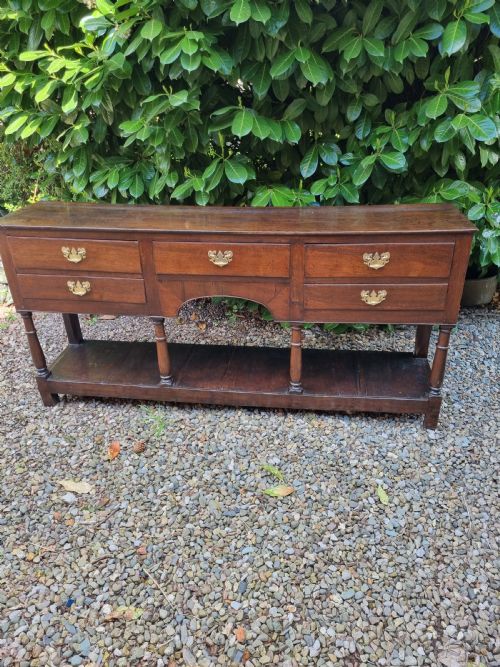
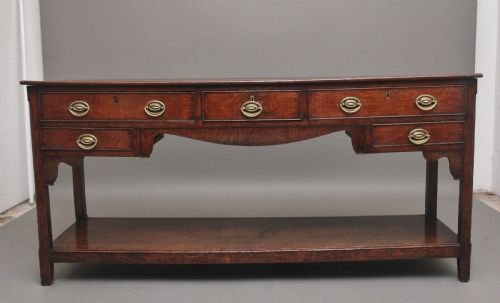


Welsh Oak Potboard Server
These welsh oak potboard server pieces offer the sturdy utility and regional character that collectors prize in vernacular furniture.
Welsh Oak Potboard Server
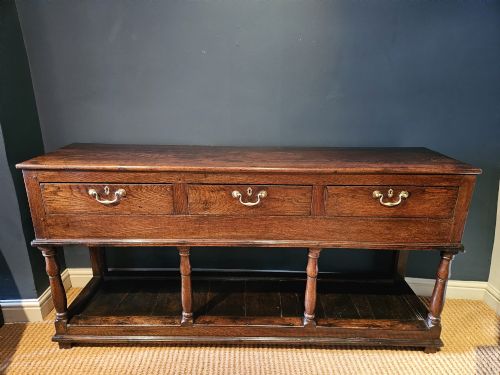
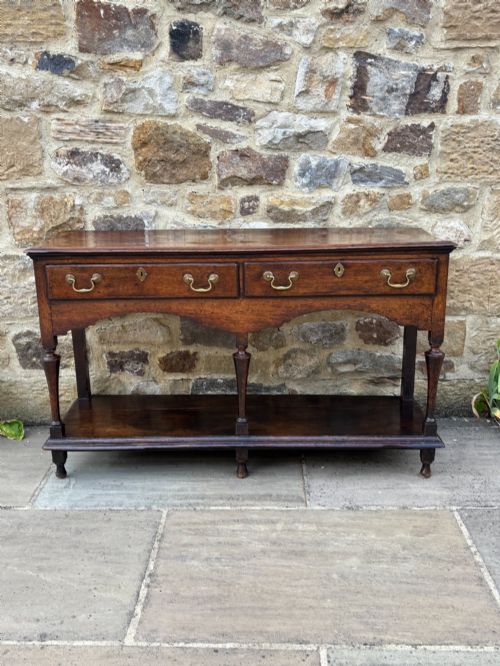
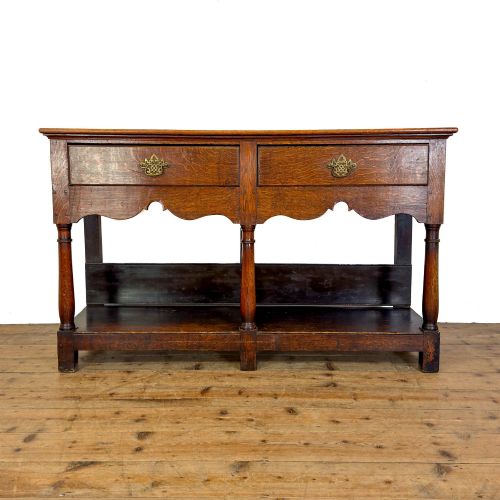
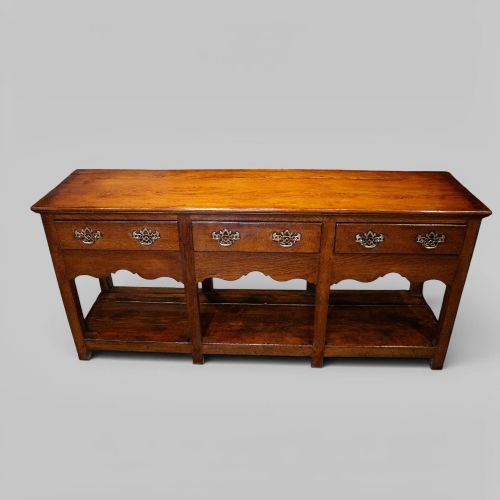
A welsh oak potboard server typically appears as a low dresser base designed for working rooms rather than formal parlours. The listings show forms spanning the eighteenth century through to the nineteenth century, encompassing Georgian, Regency, and Victorian periods.
Makers shaped these utilitarian boards in regional workshops across Wales and England, applying vernacular styles such as Georgian Country and Welsh Vernacular. Buyers encounter configurations featuring single cupboards, numerous drawers, and the signature open lower shelf known as a potboard.
The objects serve as functional sideboards or dresser bases, showcasing traditional joinery developed for domestic storage and food preparation. Surviving examples reflect both modest country craftsmanship and more elaborate regional variations with geometric carvings.
Materials and construction
Timbers consist primarily of solid oak, selected for durability and finished with simple hand tools to achieve smooth operational surfaces. Cabinetmakers constructed the main framework using pegged mortise and tenon joints to withstand heavy daily use.
Hardware details incorporate brass fittings on drawers and doors, providing subtle contrast against the dark timber grain. Lower potboards are integrated directly into the structural legs, creating an open platform beneath the main storage level.
Listings feature oak construction combined with brass hardware, spanning the eighteenth and nineteenth centuries in Georgian, Regency, and Victorian styles.
Assessing quality and proportion
Gradations in quality rest upon the handling of timber thickness, the crispness of hand-cut drawer dovetails, and the retention of original surface patination. Superior examples maintain balanced proportions across smaller footprints without replacement boards in the top or base.
Decorative restraint distinguishes finer vernacular items, where occasional geometric carvings enhance the structural facade rather than cluttering the profile. Wear patterns should appear honest and consistent with decades of domestic service rather than forced or chemically altered.
The Welsh Oak Potboard Server Glossary
- Potboard
- The lower open shelf built into the base of a dresser for storing heavy pots and pans. This platform defines the lower structure of the furniture.
- Vernacular
- Everyday furniture made by regional craftsmen for local use rather than high-style metropolitan workshops. These items prioritise function and local timber supplies.
- Dresser Base
- The lower section of a kitchen or dining dresser equipped with drawers and cupboards. It functions independently as a sideboard.
- Geometric Carvings
- Shallow linear patterns cut into panels or drawer fronts during the eighteenth century. They provide modest ornamentation without weakening the wood.
Welsh Oak Potboard Server: Frequently Asked Questions
What is a potboard server?
A potboard server is a low wooden sideboard featuring an open shelf near the floor for heavy kitchen utensils. These pieces originated as utilitarian furniture in country houses.
Today they function as practical storage items in dining rooms and kitchens. Their sturdy construction suits everyday placement in modern interiors.
How do I date these pieces?
Dating relies on examining construction methods, drawer joinery, and timber patination across the eighteenth and nineteenth centuries. Earlier examples often display hand-cut dovetails and pegged frames.
Regional stylistic traits also help narrow the period of manufacture. Comparing hardware marks and wood shrinkage provides further clues to age.
How should I clean oak furniture?
Maintain the timber surface by dusting with a dry cloth and applying traditional beeswax sparingly. Avoid modern chemical sprays that can strip the historic finish.
Keep the furniture away from direct heat sources and strong sunlight to prevent timber splitting. Gentle care preserves the natural patination developed over centuries.