




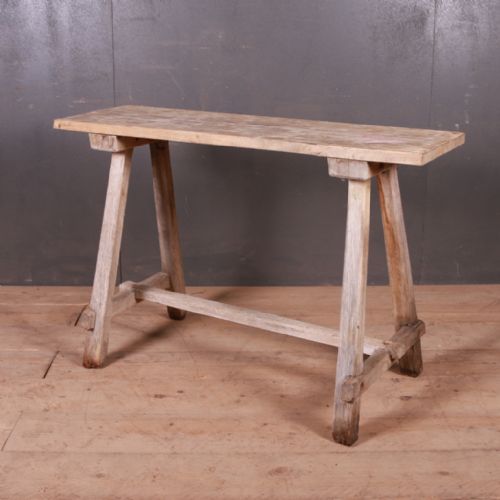
Weathered Wood Table
A weathered wood table brings the tactile warmth of oak, elm and pine into a room with understated rustic character.
Weathered Wood Table
A weathered wood table encompasses dining tables, side tables, console tables and coffee tables shaped by use and time. The selection here leans heavily towards nineteenth century French provincial and primitive country forms, alongside Edwardian and mid twentieth century examples.
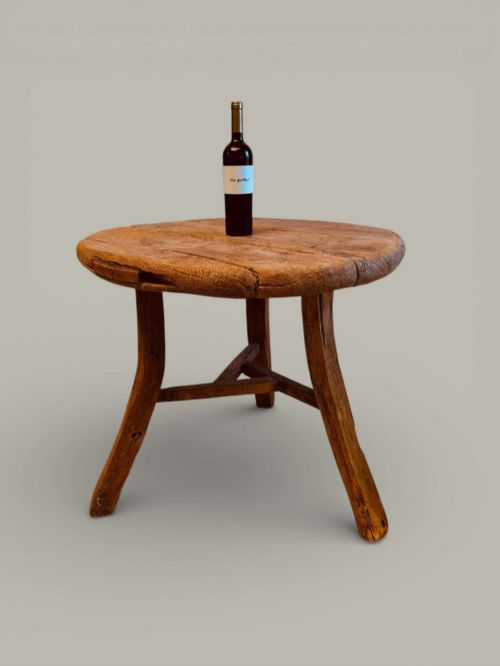
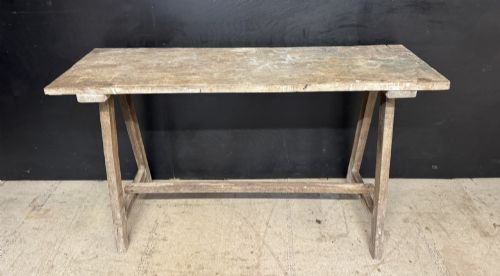
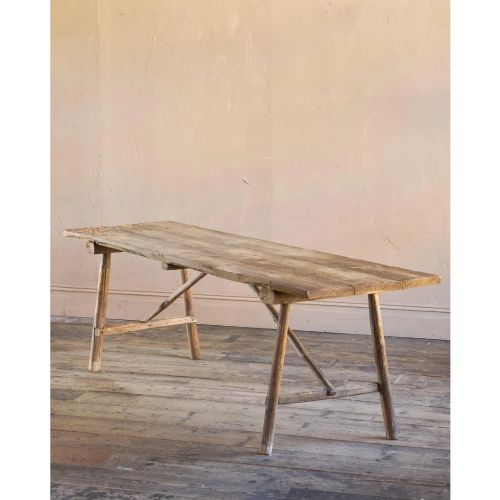
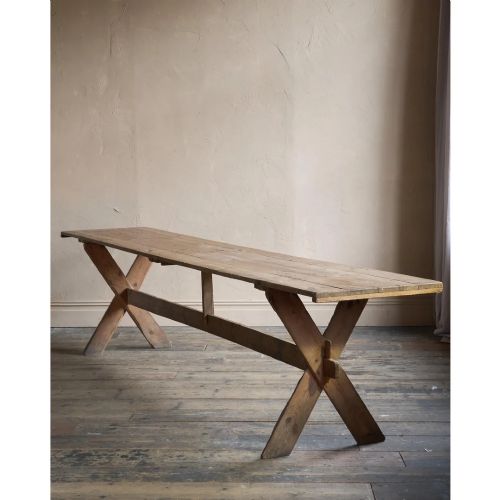
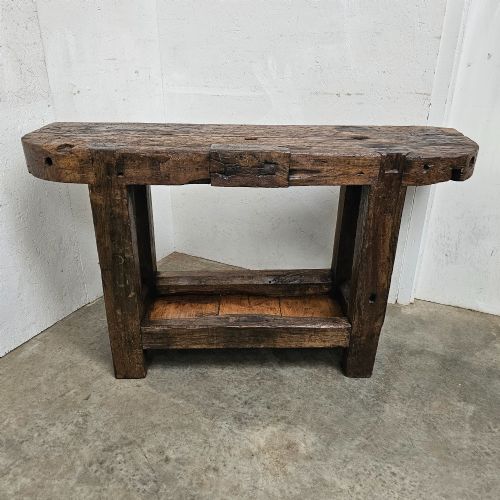
Buyers encounter sturdy trestle tables, circular kitchen tables and work tables fashioned from timber, oak, elm and pine. Many pieces exhibit regional rural styles, from Swedish inspired trestles to French laundry and game blocks.
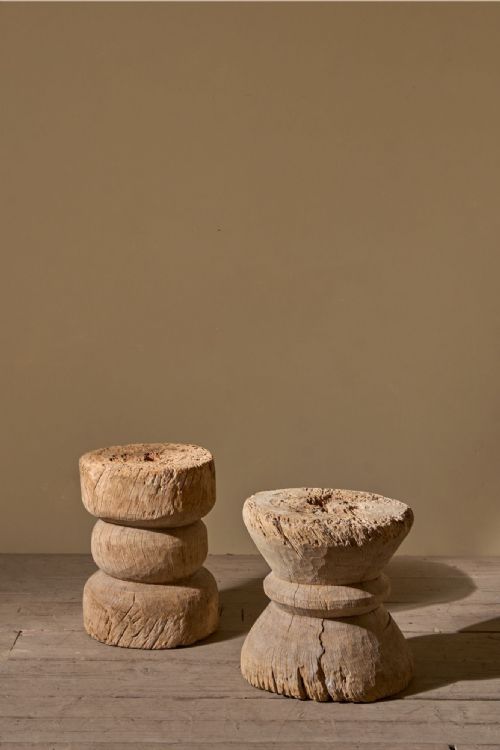
Utility defines these objects, originating as work tables, chopping blocks and wash tables before finding a place in contemporary interiors. Their surfaces display the honest marks of daily labour and aged patination.
Assessing Quality and Character
Quality rests upon the integrity of the timber and the honesty of the surface wear. Superior examples retain their original gnarled legs, substantial timber thickness and uncompromised structural frames without excessive modern intervention.
Proportion and scale dictate the visual success of a piece, particularly in vernacular forms like chopping blocks and trestle tables. The distinction lies between honest utilitarian survival and heavy restoration, with untouched patination commanding the greatest appreciation.
Weathered Wood Table Retail Price Guide 2026
Typical asking prices for weathered wood table among the pieces listed under this phrase on Sellingantiques today, from the lower quarter to the upper quarter. They describe what is for sale here now, not the wider market.
Current listings feature nineteenth century French and Edwardian examples constructed from oak, elm, pine, and poplar.
The Weathered Wood Table Glossary
- Trestle table
- A table comprising two or more support frames connected by a longitudinal beam, frequently seen in French and Swedish vernacular forms.
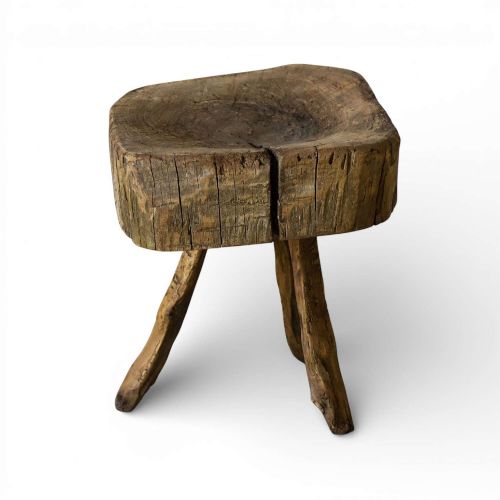
- Chopping block
- A heavy timber block mounted on legs, originally utilised for food preparation and characterised by deep surface scoring and dense grain.
- Vernacular style
- Domestic or utilitarian architecture and furniture built by local craftsmen using traditional methods and regional materials.
- Patina
- The surface sheen and colour acquired by wood through age, handling, waxing and exposure to light over many decades.
Weathered Wood Table: Frequently Asked Questions
How do I clean a weathered wood table?
Dust regularly with a dry cloth and clean occasionally with a barely damp cloth without harsh chemical detergents. Avoid soaking the dry timber to preserve the aged surface.
Apply clear beeswax sparingly if the wood appears parched, buffing gently after application to maintain a natural matte finish.
Can I use a rustic work table for dining?
Many work tables and trestle tables function well as dining furniture provided the height and leg clearance accommodate seating comfortably. Check the dimensions of specific pieces before pairing them with chairs.
Protect vulnerable antique surfaces from moisture and heat using coasters and placemats during daily use.
What is the difference between oak and elm tables?
Oak provides a hard, straight grained surface with pronounced medullary rays that takes on a silvery bleached tone over time. It forms stable structural frames and heavy tabletops.
Elm offers an interlocking, fibrous grain that resists splitting, making it the preferred choice for chopping blocks and solid work surfaces subject to heavy impacts.
How do I date a nineteenth century table?
Examine the underside and joints for hand sawn marks, pegged wooden joinery and hand forged iron nails rather than modern screws. Tool marks reveal the method of initial fabrication.
Assess the uniformity of the timber wear and patination, which deepens naturally around frequent touch points over generations of use.