




Weather Recording Instrument
These weather recording instrument examples trace atmospheric pressure and rainfall across the decades, combining brass mechanics with fitted timber cases to map the daily shift of British skies.
Weather Recording Instrument
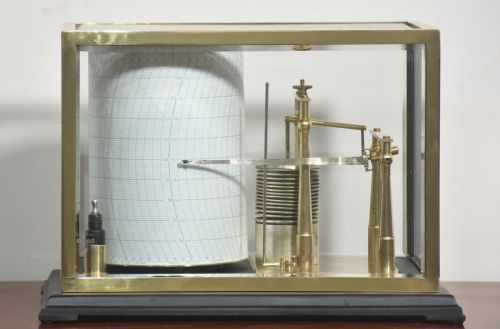
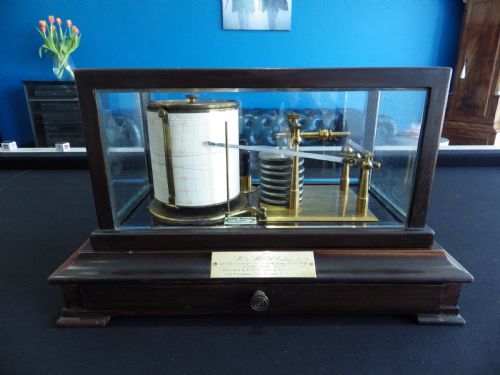
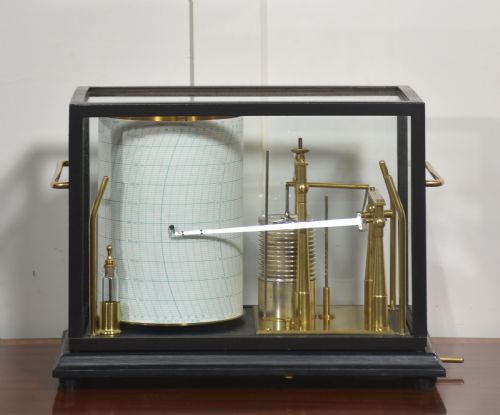
A weather recording instrument traces pressure, rainfall or ambient conditions over time onto paper charts, preserving a continuous daily record of atmospheric movement. When you search for this phrase, you meet mechanical barographs, rain gauges and combined weather stations housed in glazed wooden housings.
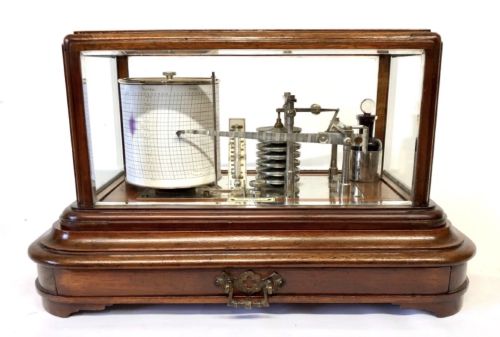
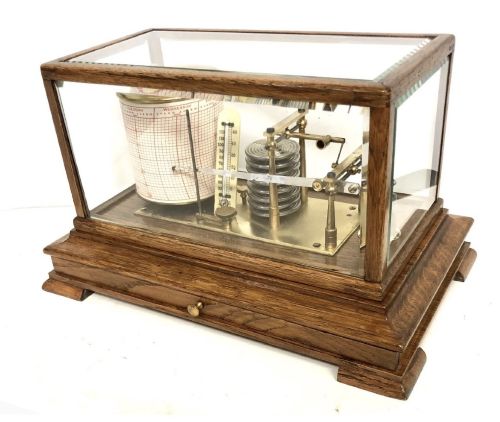
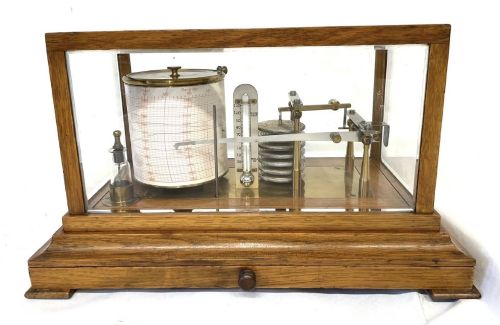
The version most likely to meet you on this page is the oak or mahogany cased barograph from the Victorian, Edwardian or interwar periods. These table pieces use a stack of vacuum drums linked to an inked arm that drifts across a clockwork rotating drum.
Beyond standard barographs, the selection includes recording rain gauges employing tipping bucket mechanisms and wall-mounted apparatus by continental makers. Walnut and light oak cases frequently incorporate thermometer dials and fitted drawers for spare chart papers.
Materials and construction
Casework relies on seasoned timber, primarily mahogany and oak alongside occasional walnut, shaped into five-glass enclosures with bevelled panes and brass carrying handles. These enclosures protect the delicate movement while offering a clear view of the recording arms and clockwork cylinders.
Internal mechanisms combine polished brass plates, steel springs and vacuum chambers connected to pen arms carrying specialised recording ink. Paper charts are printed with graduated pressure lines and days of the week, designed to fit snugly around the rotating brass or metal drums.
Weather Recording Instrument Retail Price Guide 2026
Typical asking prices for weather recording instrument among the pieces listed under this phrase on Sellingantiques today, from the lower quarter to the upper quarter. They describe what is for sale here now, not the wider market.
Railways and shipping lines deployed these delicate brass needles to second-guess the weather before the morning commute.
Distinctions in quality
Quality rests in the precision of the mechanical movement and the reputation of the firm signing the brass bedplate or enamel dial. Makers such as Short and Mason or Negretti and Zambra command attention through superior gear-cutting and reliable clockwork timing.
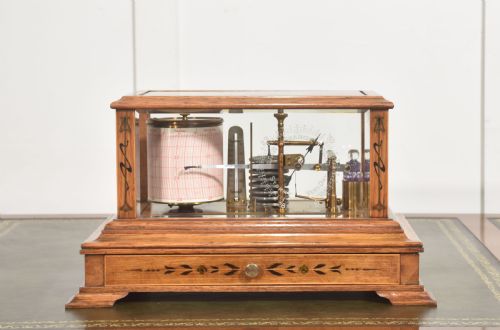
Cabinetwork distinguishes standard utility pieces from exceptional commissions, seen in the thickness of the mahogany, the inclusion of inlaid Art Nouveau banding, and the tight mitres of bevelled glass panes. Original chart drawers complete with maker stamps elevate the integrity of the ensemble.
Short and Mason·Negretti and Zambra·C F Casella·Jules Richard·R Fuess
The Weather Recording Instrument Glossary
- Barograph
- A self-recording barometer that plots atmospheric pressure onto a revolving paper chart over the course of a week. It uses an aneroid metal cell stack to drive the inked pen arm.
- Aneroid
- Containing no fluid, operating instead through the expansion and contraction of sealed metal vacuum chambers against calibrated spring levers. This system replaced heavier mercury columns in portable domestic recording devices.
- Bevelled glass
- Pane edges ground and polished to an angled slope, catching ambient light and framing the internal movement. This detail appears on higher-grade Victorian and Edwardian wooden cases.
- Tipping bucket
- A self-emptying rain gauge mechanism that measures precipitation by alternately rocking two small balancing cups. Each tip triggers an electrical pulse or mechanical marker on a rotating drum.
Weather Recording Instrument: Frequently Asked Questions
How do I change the chart paper on a barograph?
You lift the hinged brass arm clear of the drum before releasing the cylindrical drum from its spindle. The paper chart wraps around the metal cylinder and secures with a small clip or slot.
After sliding the fresh chart into place, you wind the internal clockwork gently and lower the inked nib back onto the paper surface.
What maintenance do these brass mechanisms need?
The mechanical movements require occasional professional cleaning of the gear trains and proper calibration against a reliable local barometer. The ink reservoir on the arm must be kept clean to prevent clogging and ensure a fine, continuous line.
Wood casework benefits from occasional waxing to preserve the finish, while glass panels require standard household cleaning without ammonia near the metal parts.
How can I tell an Edwardian piece from a Victorian one?
Victorian examples often feature heavier mahogany framing, deeper mouldings and maker plates inscribed with nineteenth-century addresses. Edwardian pieces lean towards lighter oak timbers, cleaner lines, and occasional Art Nouveau inlay.
Interwar models introduce simpler utilitarian styling and distinct maker signatures associated with twentieth-century scientific production.
Were these instruments used outdoors?
Most barographs and combined weather stations were designed for indoor domestic or office use, where stable temperatures protected the delicate brass and paper components. Specialised devices like recording rain gauges were built to withstand outdoor conditions.
Keeping a standard mahogany or oak cased barograph indoors prevents moisture damage to the internal steel springs and paper charts.