

Waterfall Shelving
Waterfall shelving offers graduated tiers that step back toward the wall, creating practical display space with distinctive proportions.
Waterfall Shelving
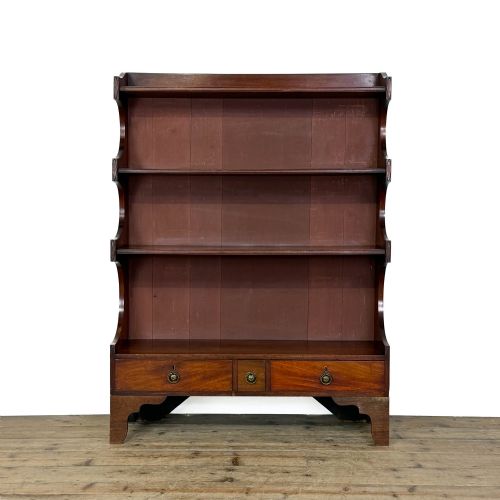
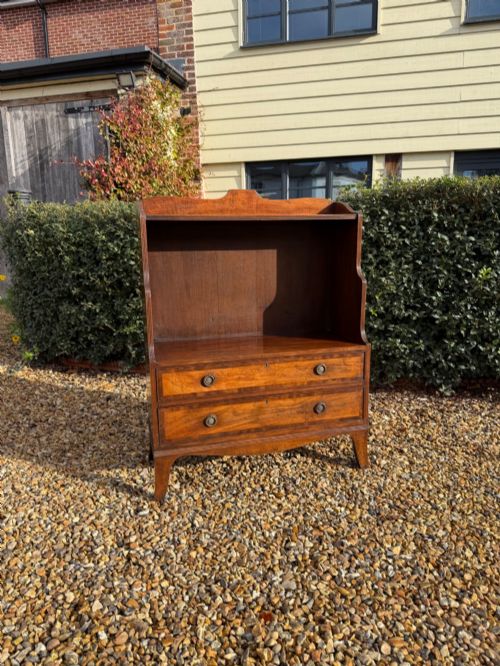
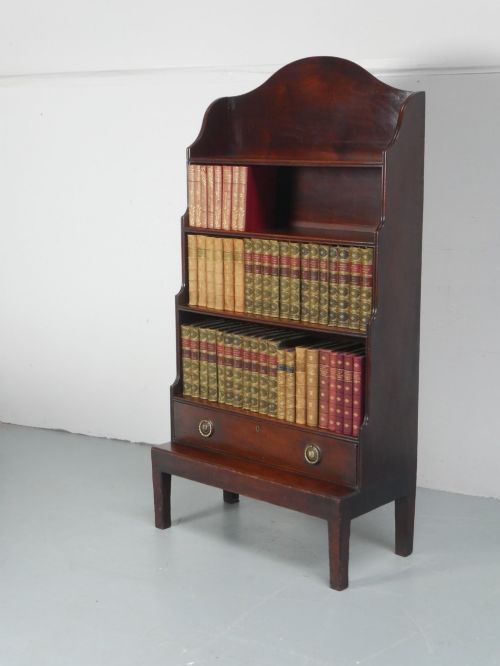
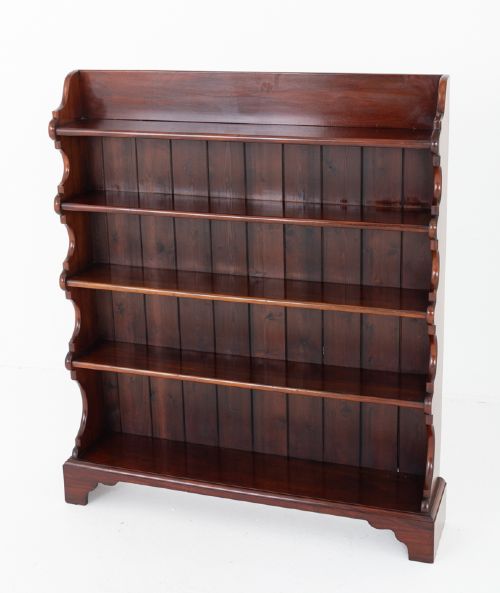
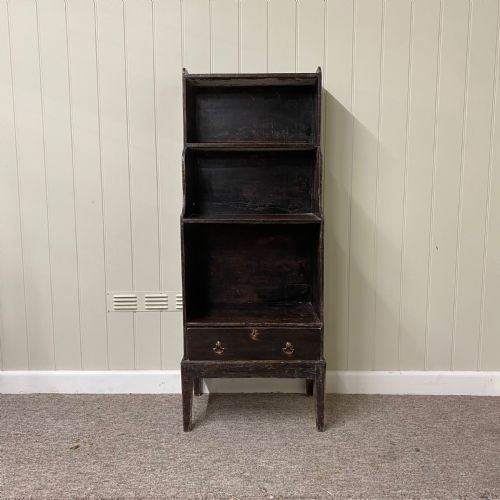
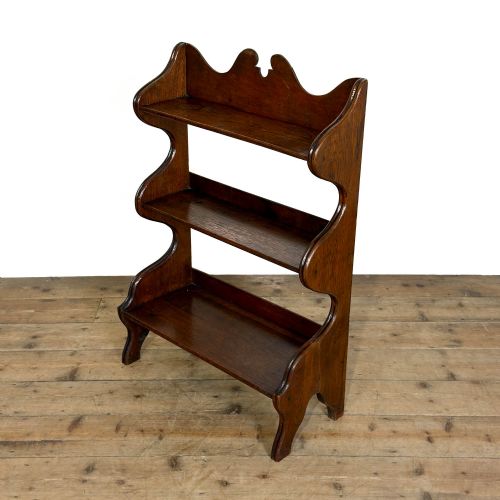
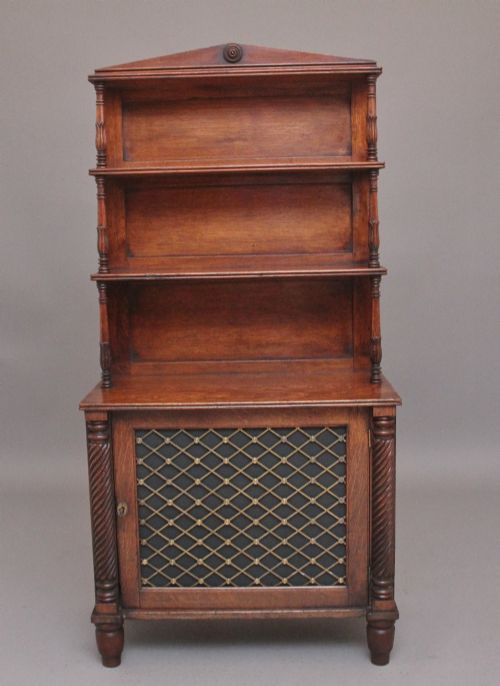
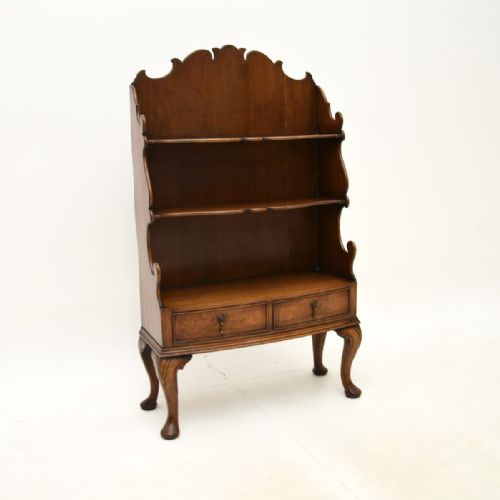
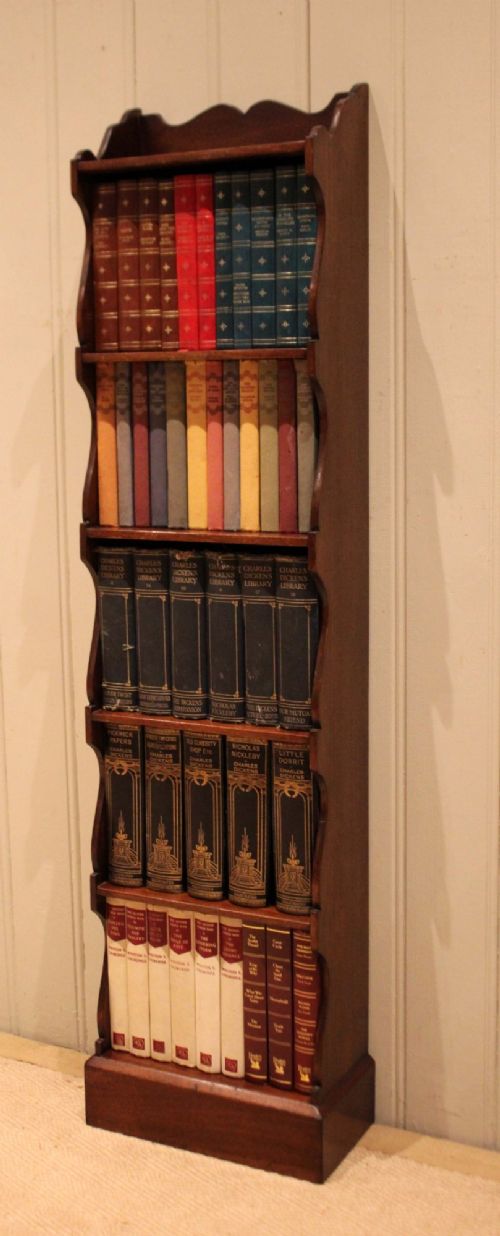
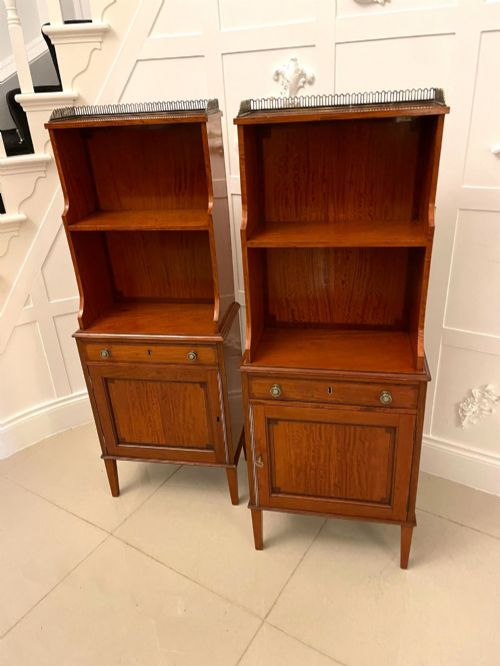
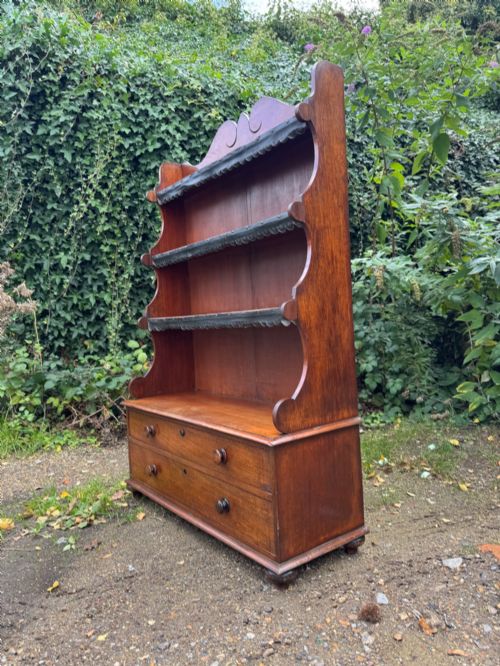
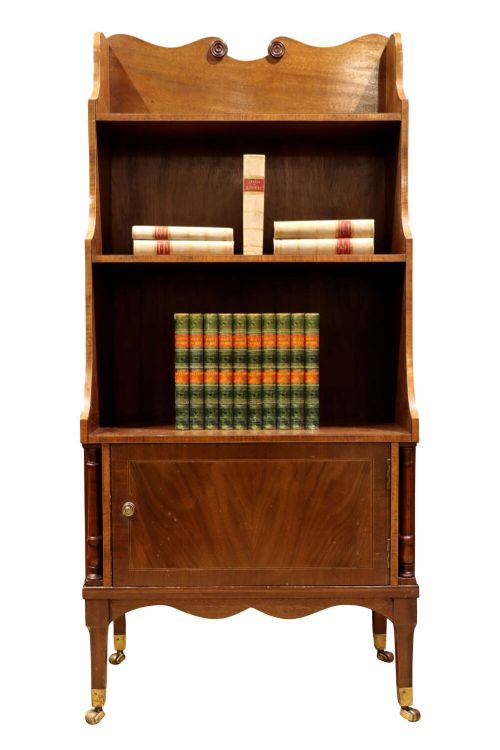
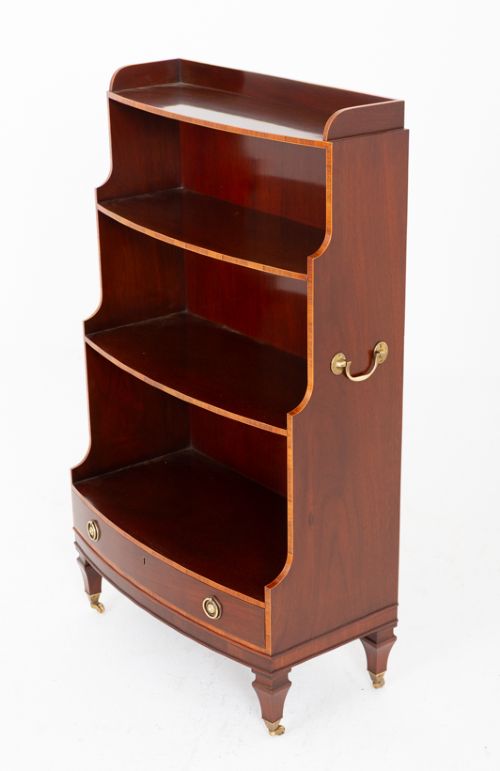
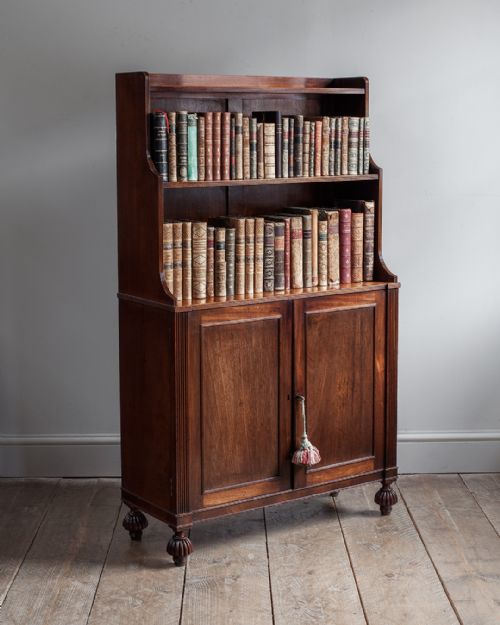
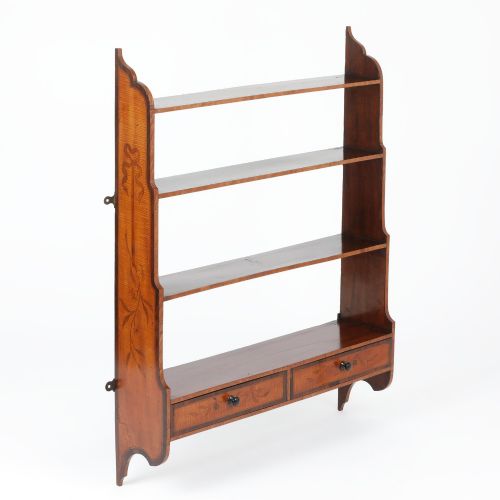
Waterfall shelving encompasses graduated tiered bookcases, wall shelves and freestanding display cabinets designed with receding upper tiers. When you search for waterfall shelving, you encounter open bookcases, hanging shelves and pieces featuring enclosed lower cupboards.
The form appears predominantly in mahogany, satinwood and rosewood pieces dating from the Georgian, Regency and Victorian periods, alongside early twentieth-century examples. Most surviving items rely on traditional cabinet-making timbers rather than lighter modern materials.
Freestanding open library bookcases and smaller wall-mounted shelving units represent the most common configurations on this page. These pieces accommodate books and display objects while occupying minimal floor depth.
Assessing quality and proportion
The distinction between standard utility items and master cabinet work rests upon timber selection and secondary decorative details. Flame mahogany veneers, precise crossbanding and delicate stringing elevate the visual impact of the stepped shelves.
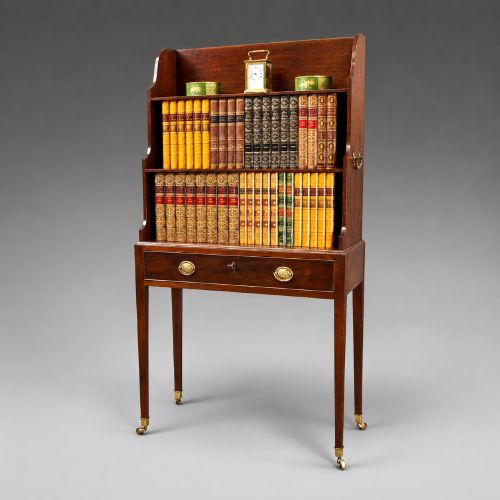
Structural harmony defines the better pieces, where the decreasing depth of each shelf follows a balanced geometric progression. Finer examples often integrate lower cupboards or brass castors, whereas simpler versions remain purely open wall or floor units.
Waterfall Shelving Retail Price Guide 2026
Typical asking prices for waterfall shelving among the pieces listed under this phrase on Sellingantiques today, from the lower quarter to the upper quarter. They describe what is for sale here now, not the wider market.
The inventory includes both wall-mounted shelves and freestanding library bookcases fitted with lower cupboards and brass castors.
Gillows·Shapland & Petter
The Waterfall Shelving Glossary
- Waterfall bookcase
- A tiered shelving unit where each successive shelf is deeper than the one above it. This stepped arrangement creates the characteristic cascade effect from top to bottom.
- Crossbanding
- A narrow strip of veneer laid across the grain of the main surface around the border of a shelf or top. It provides a decorative framing effect common on finer period cabinetry.
- Stringing
- Inlaid lines of contrasting wood used to decorate furniture surfaces. These thin strips outline panels and shelves on Georgian and Regency pieces.
- Etagere
- A piece of furniture consisting of a number of open shelves for displaying small objects. These freestanding stands often share the graduated tier arrangement of waterfall units.
- Breakfront
- A piece with a central section that projects forward from the flanking sides. This architectural layout appears on larger library bookcases and display units.
Waterfall Shelving: Frequently Asked Questions
What is waterfall shelving?
Waterfall shelving refers to open or enclosed tiered storage units where each shelf steps back progressively from bottom to top. This design allows books and display objects to sit visibly on descending tiers.
The stepped profile reduces the visual weight of the furniture against the wall while maintaining substantial storage capacity at the lower levels.
How do I date a waterfall bookcase?
Dating relies upon timber choice, construction techniques, and stylistic markers associated with Georgian, Regency, Victorian, and Edwardian periods. Earlier pieces from the eighteenth and early nineteenth centuries often feature solid mahogany, fine stringing, and hand-cut dovetails in any lower drawers.
Later Victorian and Edwardian examples may include machine-cut elements, satinwood crossbanding, or different secondary woods. Comparing the overall proportions and decorative inlay against known period traits clarifies the era of manufacture.
Are waterfall shelves sturdy enough for books?
Period waterfall bookcases were engineered to hold heavy volumes, particularly larger library editions on their deeper lower shelves. The solid hardwoods used in their construction provide the necessary load-bearing strength.
Wall-mounted versions require secure fixings into solid masonry or studs to support the weight of books safely. Freestanding floor units rely on their wide base and heavier lower cupboards for stability.
Where should I place a waterfall bookcase?
These pieces suit living rooms, studies, and hallways where their shallow upper tiers prevent them from projecting too far into the floor space. Placing them against flat walls lets the stepped profile stand out clearly.
Keeping them away from direct heat sources protects the antique veneers and solid hardwoods from splitting. Freestanding variants with brass castors offer flexibility for repositioning within a room.