



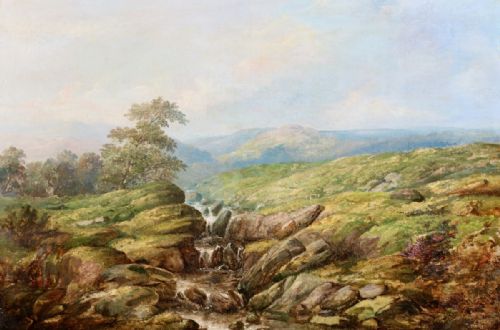


Waterfall Landscape Artwork
Waterfall landscape artwork brings turbulent water and quiet riverbanks into a room through oil on canvas and charcoal.
Waterfall Landscape Artwork
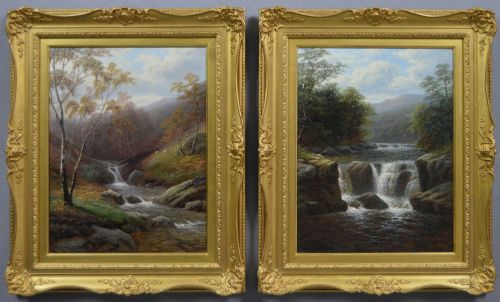
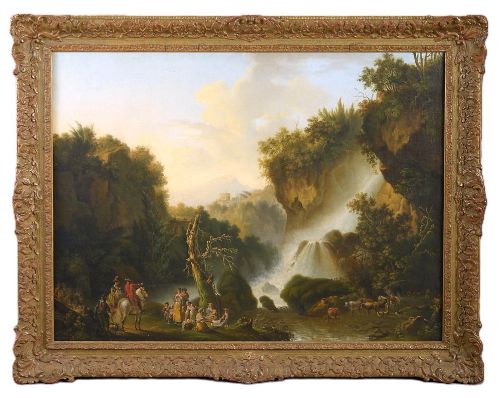
Waterfall landscape artwork captures natural aquatic scenes, predominantly through oil paintings on canvas framed in gilded wood. These pieces emerge from the nineteenth century, including specific dates such as eighteen-ninety and eighteen-seventy alongside broader Victorian periods.
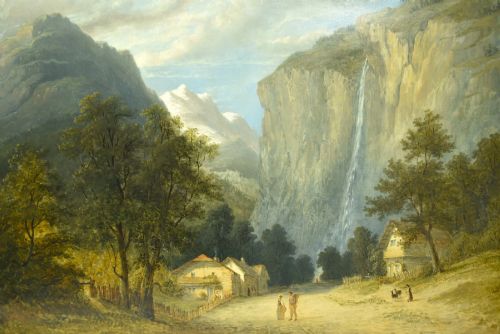
The selection here encompasses British, continental, and Scottish views alongside Swiss and American vistas like Niagara and Staubbach Falls. Canvases range from unsigned works to detailed compositions by named artists working in styles spanning realism and romanticism.
Buyers encounter varied formats, from pairs of wooded glens to large panoramic canvases housed in original gilt frames. Each piece records topography ranging from North Wales to the Scottish Highlands.
How they were made
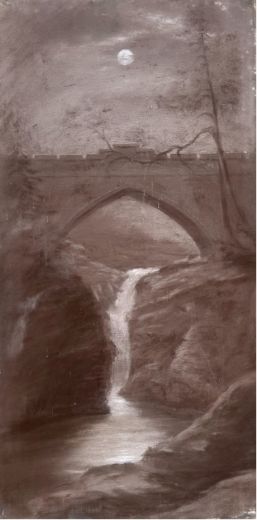
Makers built these pieces using oil pigments applied to canvas support structures, occasionally turning to charcoal on canvas for monochromatic atmospheric effects. Painters manipulated these mediums to capture the translucent movement of falling water and the texture of surrounding rock faces.
Finished canvases found their housing in wooden frames treated with gilt or gilded finishes to complement the tonal palette of the artwork. Original frames remain paired with their canvases, preserving the complete nineteenth-century presentation.
Waterfall Landscape Artwork Retail Price Guide 2026
Typical asking prices for waterfall landscape artwork among the pieces listed under this phrase on Sellingantiques today, from the lower quarter to the upper quarter. They describe what is for sale here now, not the wider market.
Anglers standing patiently near cascading water appear across multiple centuries of landscape painting, seemingly indifferent to the roaring torrent behind them.
What varies in quality
Quality separates through the precision of brushwork and the artist's ability to render the specific weight and motion of falling water. Superior examples manage atmospheric light and shadow convincingly across complex topographical layouts.
The condition and integrity of the original gilded wood frame influence the overall standing of a piece. Finer works display meticulous detail in background elements like distant mountains and staffage figures.
Alexandre Le Bihan·Clarence Henry Roe·William Mellor·John Syer junior·Frederick Richard Lee·James Poole·Peter de Wint
The Waterfall Landscape Artwork Glossary
- Giltwood
- Wood carved and coated with a thin layer of gold leaf or gilt. This material forms the ornate frames typical of nineteenth-century painting presentation.
- Romanticism
- An artistic movement emphasising emotion, individualism, and awe of untamed nature. Works in this style often dramatize the scale of waterfalls and mountains.
- Continental school
- A term designating European artists working outside Britain. These painters brought distinct regional palettes and training to landscape subjects.
- Staffage
- Human or animal figures included in a landscape to provide scale and narrative interest. Anglers and travellers frequently occupy the foreground of these river scenes.
- Realism
- An artistic approach focused on the accurate, unidealised depiction of subject matter. Nineteenth-century practitioners applied this method to specific geographic locations.
Waterfall Landscape Artwork: Frequently Asked Questions
How do I identify a nineteenth-century waterfall painting?
Examine the canvas preparation, stretcher frame construction, and pigment characteristics typical of the period. Stylistic markers such as Victorian naturalism or romanticism also help date the work.
Original framing often provides further clues, as nineteenth-century framemakers utilised specific gilding techniques and moulding profiles that match the canvas era.
Where were these landscape scenes usually painted?
Artists travelled to specific natural attractions known for dramatic topography, including Welsh river glens, Scottish highlands, and Swiss alpine waterfalls. Niagara Falls and Italianate villas also served as primary subjects.
Many painters worked en plein air or made detailed preparatory sketches on location before completing the final oil on canvas composition in the studio.
How should I care for an antique oil painting?
Keep the artwork away from direct sunlight, high humidity, and rapid temperature fluctuations that can cause canvas tension issues and pigment cracking. Maintain a stable indoor environment to preserve both the paint layer and the wooden support.
Dust the surface and the original gilt frame very gently with a soft, dry brush, avoiding any moisture or chemical cleaning agents on the painted area.