
Waterfall Ceiling Fitting
A waterfall ceiling fitting brings cascading tiers of crystal and glass into a room, diffusing overhead illumination with unmistakable theatricality.
Waterfall Ceiling Fitting
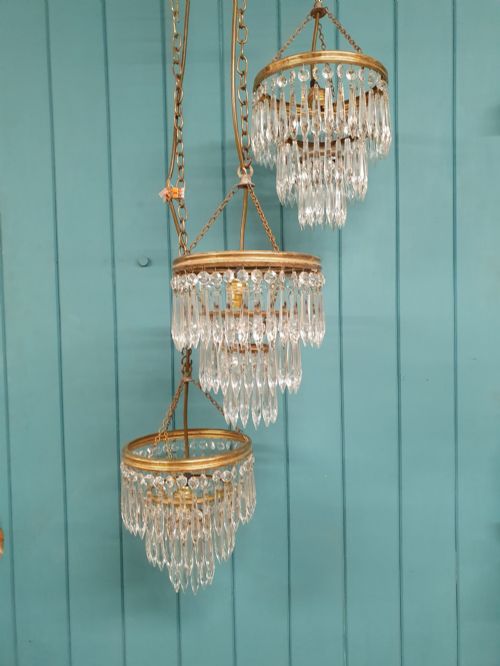
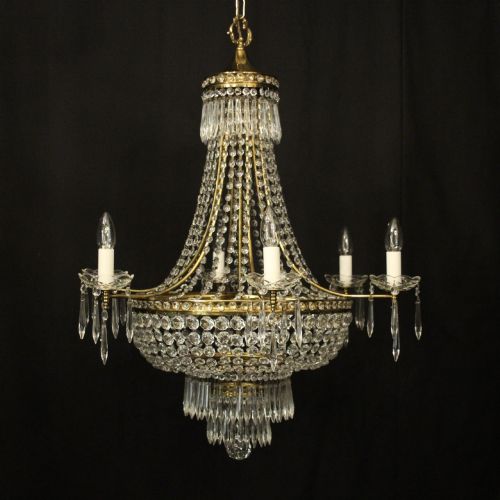
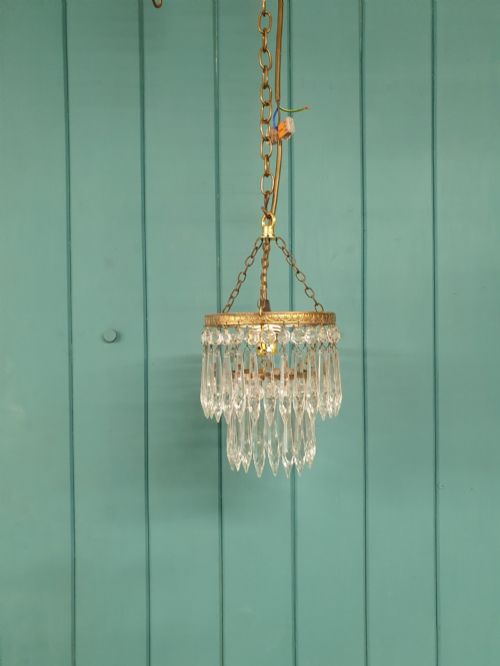
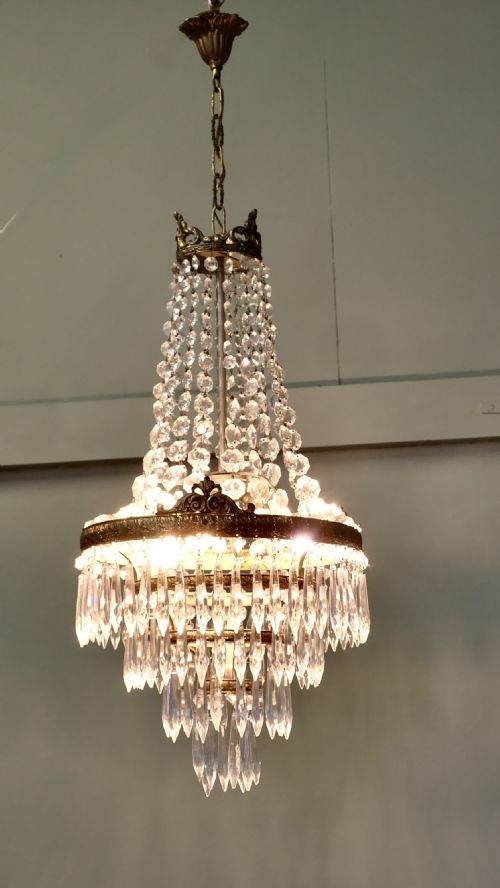
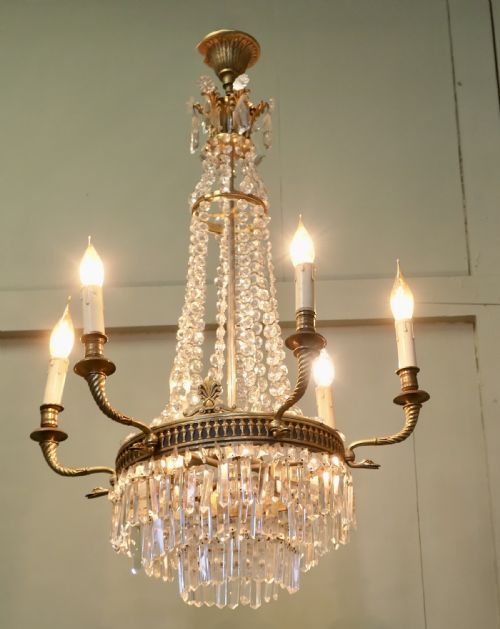
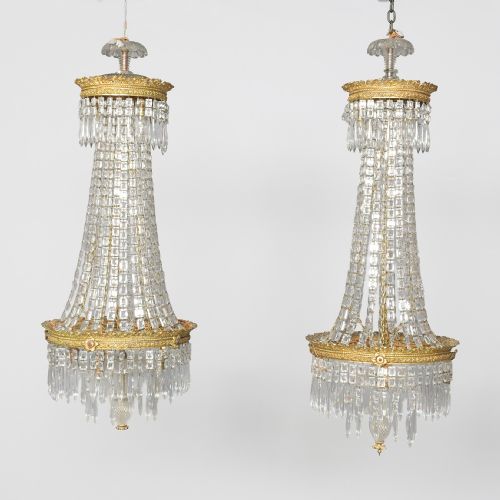
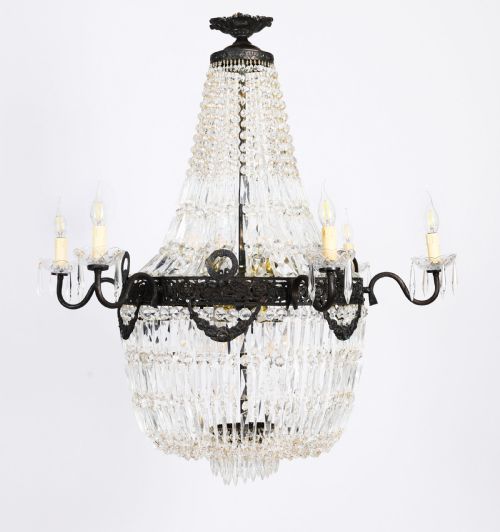
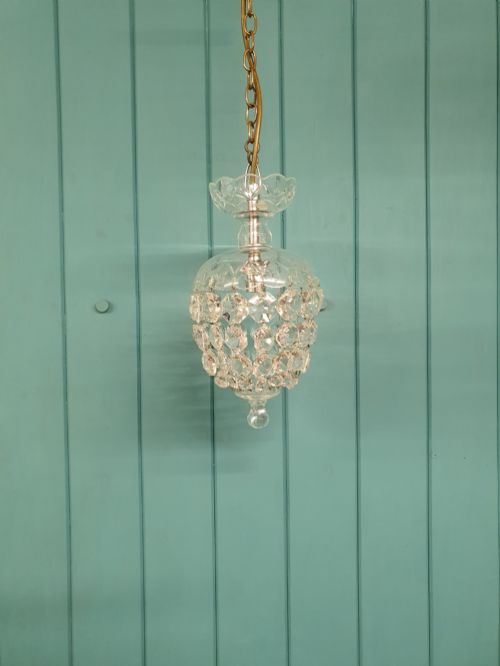
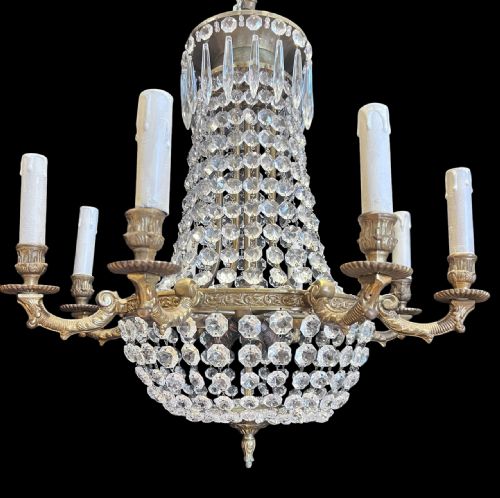
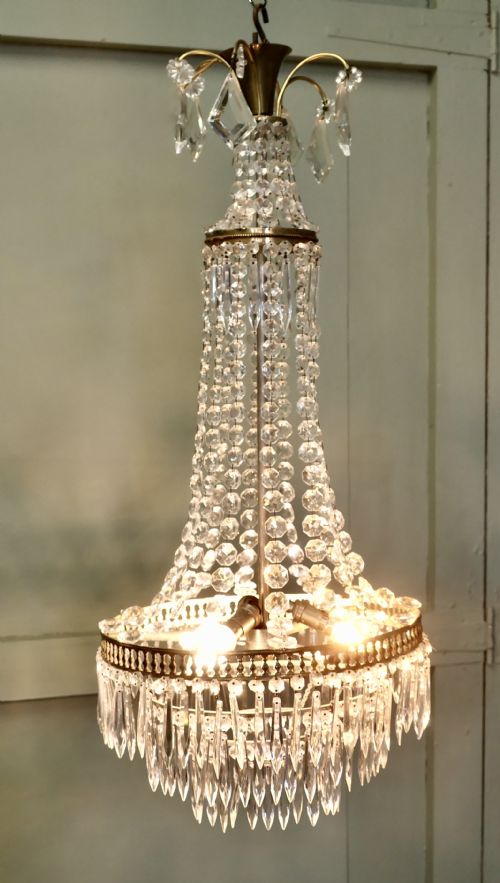
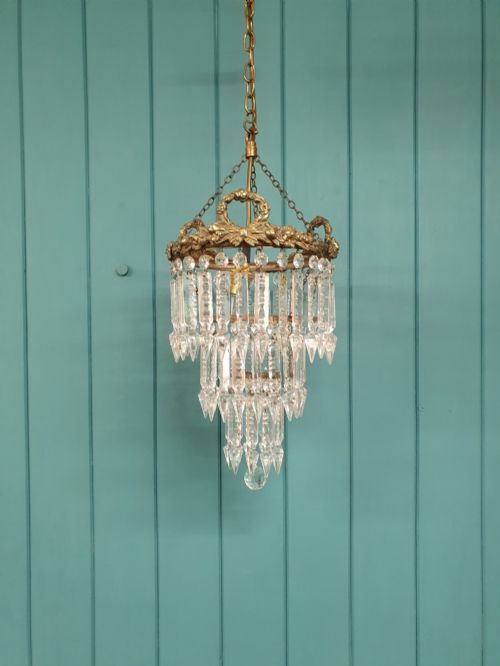
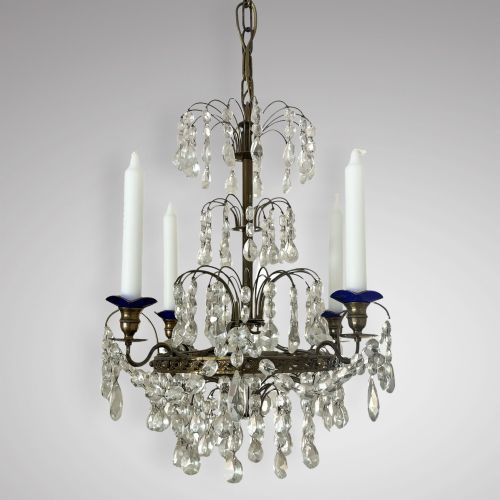
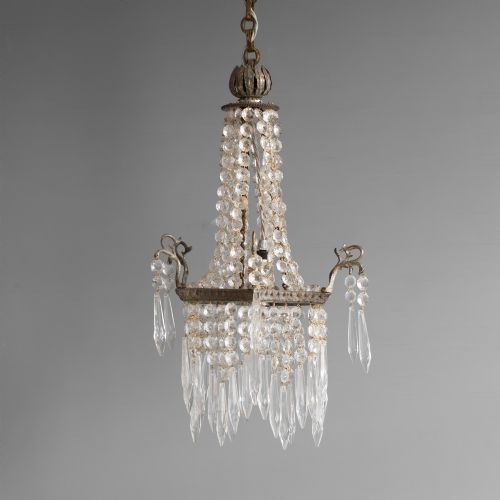
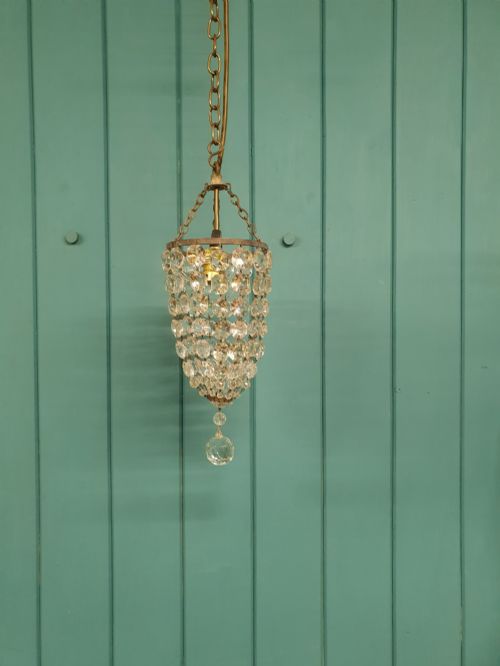
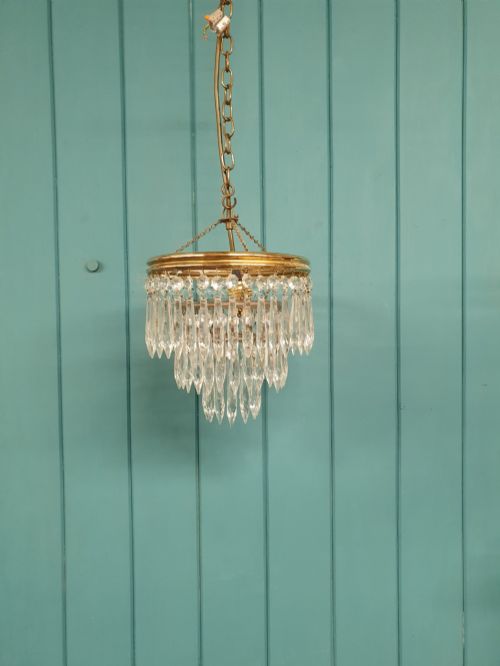
A waterfall ceiling fitting refers to hanging lighting characterised by concentric rings or tiers of crystal drops that cascade downwards in a distinctive waterfall formation. Buyers searching for a waterfall ceiling fitting will encounter a variety of forms spanning the nineteenth and twentieth centuries, including grand French Empire style pieces, delicate multi-tier structures, and compact bag or basket chandeliers.
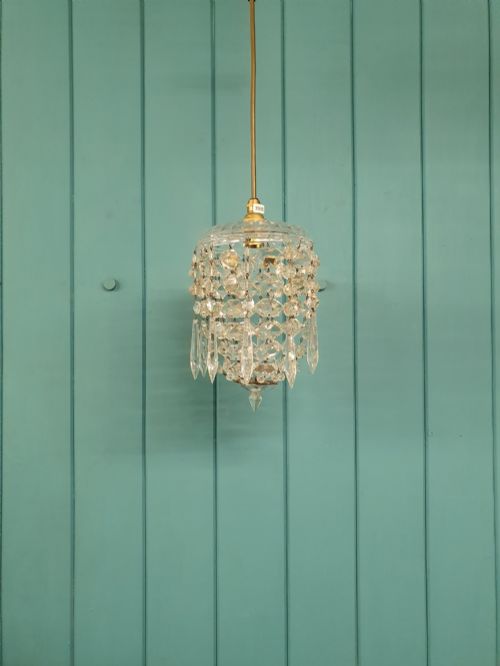
The selection ranges from substantial Edwardian and 1930s examples featuring numerous lights to single-light pendant fixtures and plafonieres. Many pieces demonstrate French influence through gilt brass mounts and tent-and-bag configurations, while others reflect the clean geometric lines of Art Deco or the functional brass framing of the Amsterdam School.
Materials and construction
Construction relies upon a robust structural framework of brass, gilt brass, bronze, or general metal to support the considerable weight of suspended glass elements. Frames are shaped into rings, crowns, or baskets designed to hold dense clusters of components.
The visual impact stems from the integration of cut glass, crystal glass, and cut crystal drops arranged as prisms, beads, lustres, and spikes. These individual glass elements are wired or pinned together in tiers to catch and refract light from the central burners or electric bulbs.
Listings span from the mid-nineteenth century through the 1930s, uniting French Empire designs with Edwardian and Art Deco interpretations.
Judging quality and craftsmanship
Quality in these lighting fixtures is determined by the clarity and depth of the cut crystal and glass components rather than mere scale. Superior pieces utilise finely faceted drops that catch light sharply, suspended from substantial metal mounts rather than lightweight stamped alternatives.
The architectural harmony of the tiers also dictates grade, with finer examples displaying well-proportioned tent sections flowing seamlessly into lower bag or waterfall drops. Integrated detailing such as cast brass mounts, gilt enrichment, and coloured prisms elevates the execution of the piece.
The Waterfall Ceiling Fitting Glossary
- Tent and waterfall
- A lighting configuration where an upper conical section of glass strings feeds down into a cascading lower tier.
- Bag chandelier
- A fixture featuring a flattened or rounded base filled with loose or strung crystal drops enclosed in a net-like arrangement.
- Plafonier
- A ceiling-mounted light fixture that sits flush or very close to the ceiling surface rather than hanging on a long chain.
- Prism
- A geometric cut glass element designed to refract light into spectral colours.
- Lustre
- A glass pendant drop hung from the arms or perimeter of a chandelier to enhance reflection.
Waterfall Ceiling Fitting: Frequently Asked Questions
How do I hang a heavy crystal fixture?
Suspension requires fixing directly into ceiling joists or installing a heavy-duty metal hook capable of supporting the combined weight of metal and glass.
Professional electrical installation is recommended due to the complex wiring hidden within the frame.
What rooms suit a waterfall chandelier?
These fittings find a natural home in high-ceilinged entrance halls, dining rooms, and drawing rooms where their vertical cascade can be fully appreciated.
Smaller single-tier versions or plafoniers adapt well to intimate spaces or bedrooms requiring softer overhead illumination.
How do I clean the crystal drops?
Cleaning involves wiping individual glass elements with a mild solution of warm water and specialised glass cleaner while they remain attached to the frame.
For thorough restoration, delicate drops can be unpinned, washed separately, and restrung onto the brass framework.
How do I identify an Edwardian piece?
Edwardian examples often incorporate delicate brass frames, smaller proportions, and characteristic bag or spike formations dating from the early twentieth century.
Construction details frequently show transitional wiring methods alongside traditional pin-and-wire crystal mounting.