



Waterfall Book Shelves
Waterfall book shelves offer a graduated tiered design that displays volumes clearly, making them a practical choice for any study.
Waterfall Book Shelves
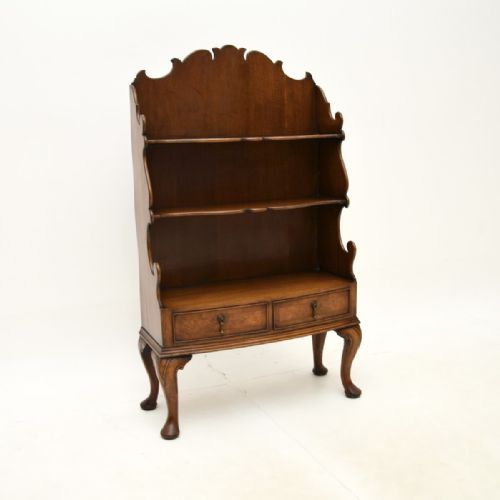
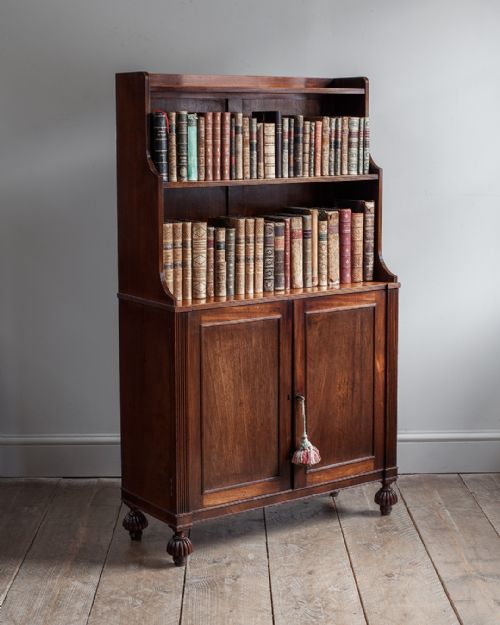
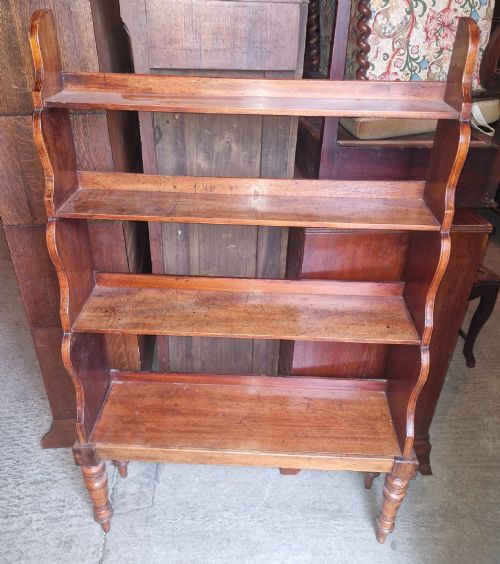
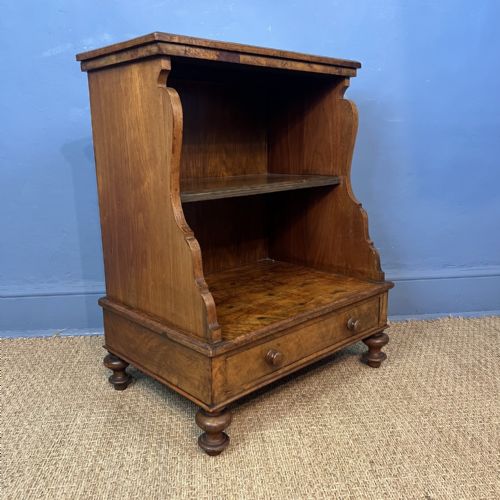
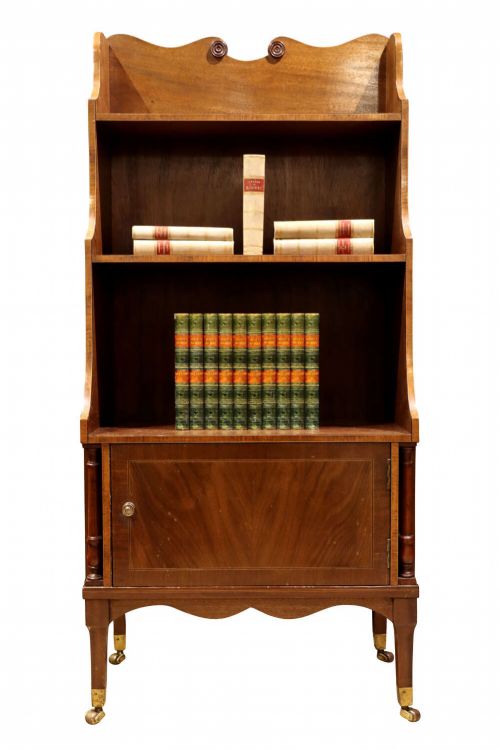
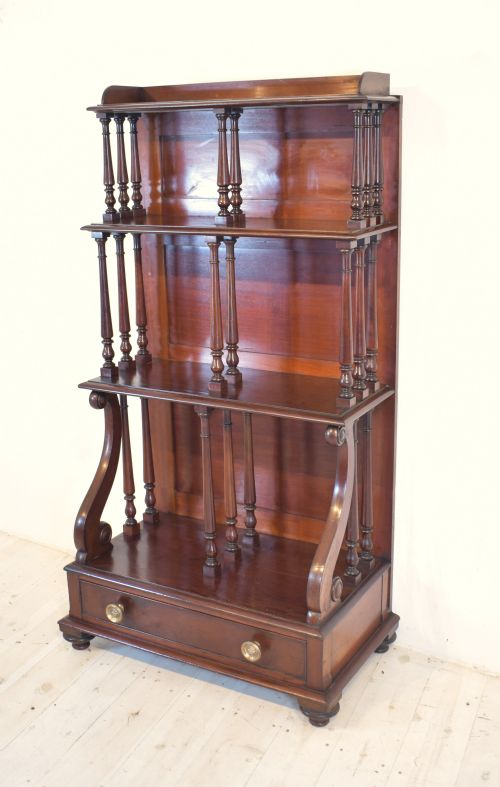
When you search for waterfall book shelves, you encounter stepped open shelving units designed with tiers that recede from bottom to top. These pieces appear frequently in mahogany, burr walnut, oak, and rosewood across the nineteenth and early twentieth centuries.
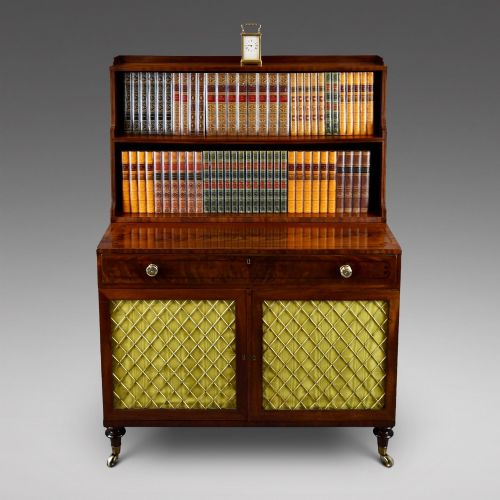
The most common examples on this page date from the Regency and Victorian periods, often taking the form of freestanding open bookcases or low dwarf cabinets. Makers also produced smaller wall-hung versions and pieces fitted with cupboards or castors at the base.
Examples stretch from Georgian styles through Edwardian times, showing graduated shelves that hold books securely while exhibiting the grain of the wood. Such furniture combines compact footprints with considerable display capacity.
Materials and Construction
Cabinet makers utilised dense hardwoods such as mahogany, rosewood, and walnut, frequently applying flame mahogany veneer to enhance the visual depth of the surfaces. Oak and pine also served as primary timbers, particularly for larger structural bookcases and provincial pieces.
Joinery techniques relied on sturdy open shelving frames, sometimes incorporating brass castors for mobility, fret-cut ornamentation, or inlaid details along the tiers. Carpenters built these stepped tiers to graduate evenly from the deeper base shelves up to the narrowest top ledge.
The inventory includes freestanding open bookcases, dwarf cabinets with cupboards, wall-hanging shelves, and specialised Canterbury variants.
Assessing Quality
The distinction between standard utility pieces and finer examples rests upon the selection of timber veneers and the crispness of the stepped joinery. Superior pieces display carefully matched grain patterns, balanced proportions across the graduated tiers, and refined details such as fine inlay or brass hardware.
Heavier construction, well-figured burr walnut or rosewood, and integrated cabinetry like lower cupboards separate master workshop output from simpler domestic shelving units. The graduation of the shelves themselves should maintain structural harmony from base to top.
Shapland and Petter
The Waterfall Book Shelves Glossary
- Waterfall bookcase
- A set of open shelves stepped back progressively from bottom to top. This tier arrangement resembles the cascade of a waterfall.
- Dwarf bookcase
- A low open bookcase designed to sit beneath window height. These compact pieces keep books within easy reach in smaller rooms.
- Flame mahogany veneer
- A sliced section of mahogany timber showing a distinctive flickering flame figure. Cabinet makers applied this veneer to primary display surfaces.
- Inlaid
- Wood decorated by embedding contrasting materials into the surface to form patterns. This decorative technique often appears on Edwardian and Victorian examples.
- Brass castors
- Small swivel wheels made of brass attached to the feet of heavy furniture. These allowed freestanding bookcases to move across carpets easily.
Waterfall Book Shelves: Frequently Asked Questions
What are waterfall book shelves?
These are stepped open shelving units featuring tiers that recede progressively from the deepest bottom shelf to the narrowest top ledge. The graduated design keeps books visible and accessible.
Craftsmen built them as freestanding floor units, low dwarf cabinets, and wall-hanging shelves using timbers like mahogany, oak, and walnut.
How were they used?
Owners placed them in libraries, studies, and drawing rooms to hold frequently read volumes and display decorative objects. The stepped shelves allowed quick identification of book titles.
Lower cupboards and cabinet bases provided concealed storage for papers or smaller items alongside the open book storage.
How do I style them at home?
Position them against a solid wall where the graduated silhouette and timber grain remain fully visible. They suit alcoves and study spaces needing vertical display without heavy bulk.
Balance heavier volumes on the deeper lower tiers while placing smaller books and ornaments on the upper graduated shelves.
How do I identify different periods?
Regency and Georgian examples often feature clean classical lines in solid mahogany or rosewood, sometimes with brass details. Victorian and Edwardian pieces frequently introduce burr walnut veneers, inlaid decoration, or fret-cut oak.
Nineteenth-century models generally rely on dense native or imported hardwoods, whereas later examples show greater variety in painted finishes and lighter oak construction.