

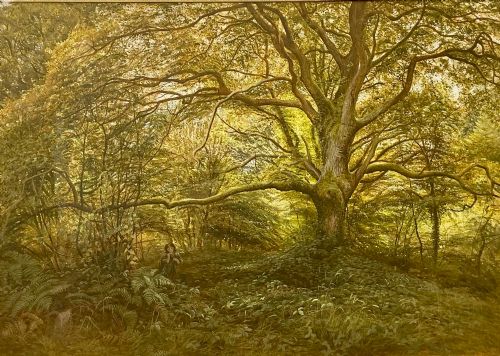


Watercolour Woodland Scene
These watercolour woodland scene works capture naturalistic trees and rivers in pigment on paper, offering buyers a genuine piece of historical landscape art.
Watercolour Woodland Scene
A watercolour woodland scene brings nineteenth century and twentieth century landscape traditions directly into a room. These paintings depict quiet paths, bluebell woods, riverscapes, and rural gatherings beneath a wash of pigment on paper.
The pieces on this page span several decades, including Victorian and Edwardian examples alongside works from the nineteen hundreds, nineteen tens, nineteen twenties, nineteen forties, and nineteen sixties. They appear in formats ranging from standard paintings to delicate miniature works.
Buyers will find distinct stylistic approaches represented across these listings. British Impressionism, Victorian naturalism, and fine art landscape traditions all emerge through the varied hands of period artists.
How they were made
These works rely upon watercolour pigment applied directly to paper supports. Artists built up their compositions using fluid washes and fine brushwork to render woodland light and foliage.
Many examples are preserved beneath glass within traditional wood and gilt wood frames. These period frames protect the delicate paper surface from atmospheric moisture and handling.
Watercolour Woodland Scene Retail Price Guide 2026
Typical asking prices for watercolour woodland scene among the pieces listed under this phrase on Sellingantiques today, from the lower quarter to the upper quarter. They describe what is for sale here now, not the wider market.
One tiny miniature painting depicts musicians in a wood after Boucher, proving big scenes fit small paper.
What varies in quality
The strength of the composition and the handling of light separate standard landscape studies from finer gallery works. Skilled artists manage pigment transparency to create depth within dense trees and open riverbanks.
The integrity of the paper and the preservation of the original pigments dictate the overall standard of a piece. Condition relies heavily on how well the frame and glass have shielded the watercolour over the decades.
Bonomi Edward Warren·Alfred Grey RHA·Walter Follen Bishop·Rowland Henry Hill·Edmund George Warren·Charles James Adams·George Graham·Charles Edward Holloway·Charles Edward Wilson
The Watercolour Woodland Scene Glossary
- Watercolour pigment
- The finely ground colour particles suspended in a water-soluble binder that form the primary medium of these paintings.
- Gilt wood
- Wood framing finished with a thin layer of gold leaf or metallic gilding, commonly found on period landscape artworks.
- British Impressionism
- A painting style focusing on light and natural atmosphere, prominent in certain listed works from the nineteenth and twentieth centuries.
- Miniature painting
- A small-format artwork executed with extreme precision, represented here in detailed woodland and figurative subjects.
Watercolour Woodland Scene: Frequently Asked Questions
What periods do these watercolours cover?
The selection spans from the nineteenth century and Victorian era through the Edwardian period into the mid-twentieth century.
Each era brings distinct stylistic shifts, moving from Victorian naturalism towards broader impressionist treatments.
How should I frame a watercolour painting?
Watercolours require framing behind glass with a mount that keeps the paper from touching the glass directly.
This barrier protects the delicate pigment and paper support from humidity and condensation over time.
Are these paintings executed on canvas?
No, these works use paper as the primary support for the watercolour pigment.
Paper responds differently to moisture than canvas, making proper glazing essential for long-term preservation.
What subjects feature in these scenes?
The compositions focus primarily on natural environments including woodland paths, bluebell woods, riversides, and rural figures.
Artists also recorded seasonal shifts, from snowy winter landscapes to autumnal river views.