


Watercolour Landscape Wall Art
Watercolour landscape wall art brings fluid skies and distant horizons into a room through pigment, paper and glass.
Watercolour Landscape Wall Art
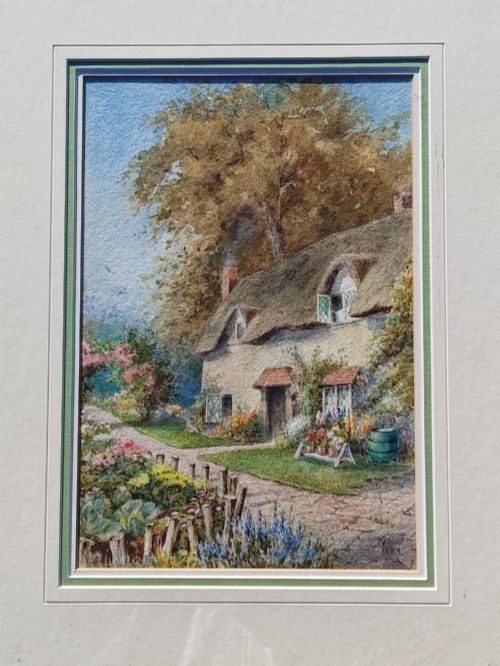
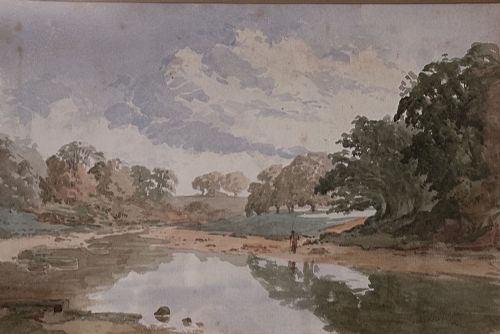
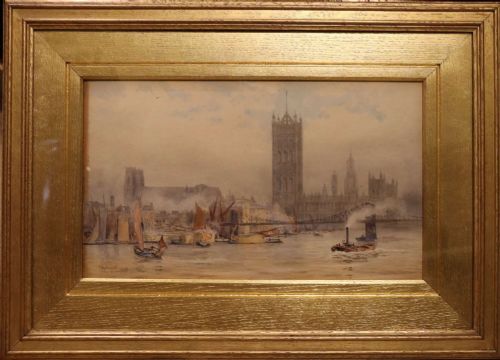
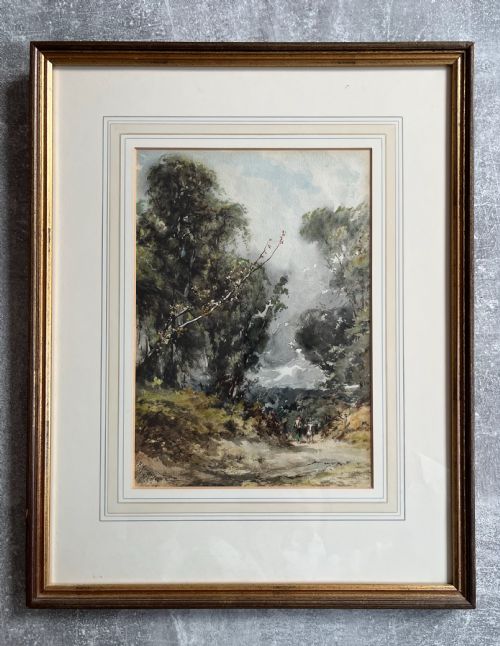
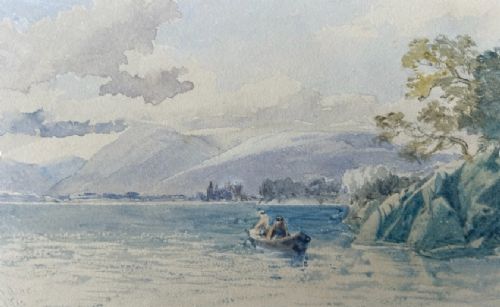
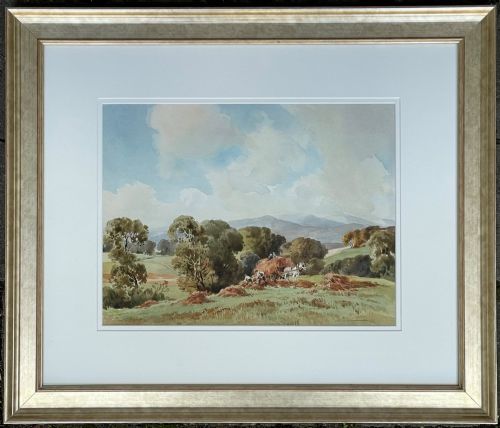
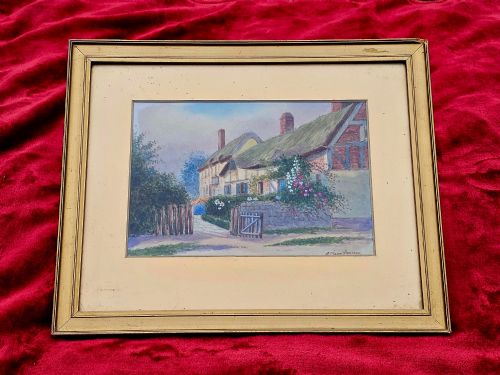
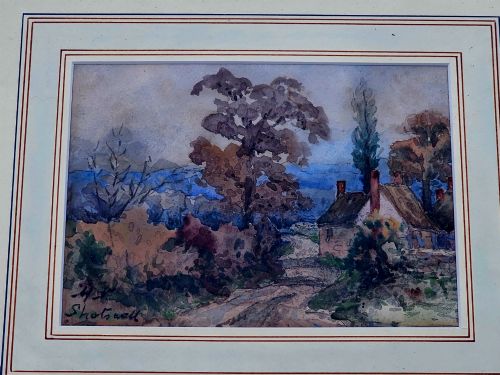
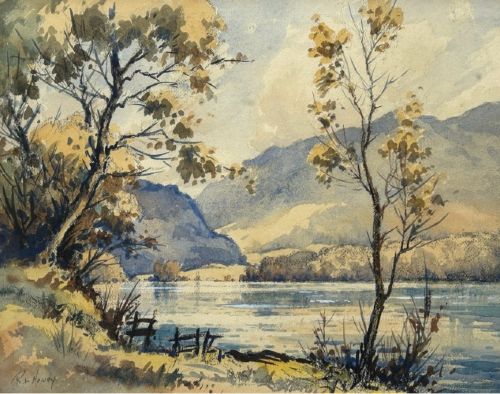
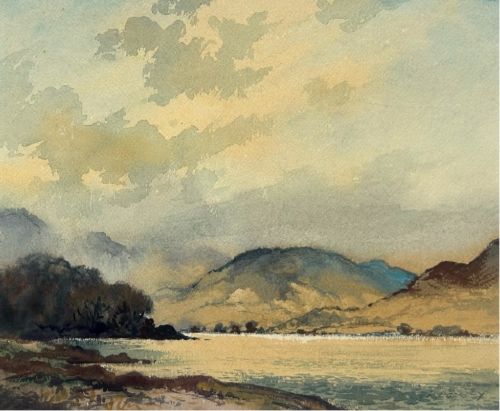
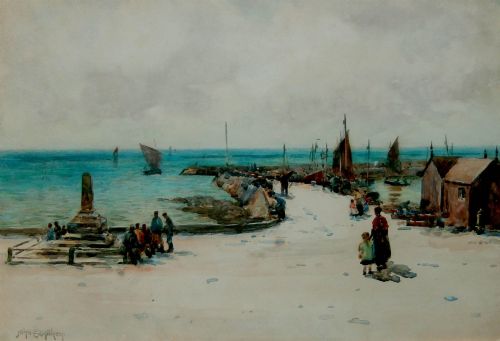
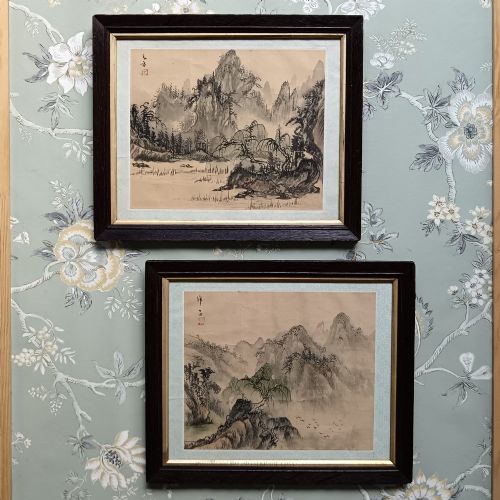
Watercolour landscape wall art comprises original paintings executed on paper or silk, capturing rural vistas, coastal scenes and river valleys. These works range from tightly detailed Victorian views to freer mid-century depictions of mountains and lakes.
The pieces appearing on this page stem predominantly from the nineteenth and twentieth centuries, spanning Victorian, Edwardian and mid-century British schools alongside occasional international scenes.
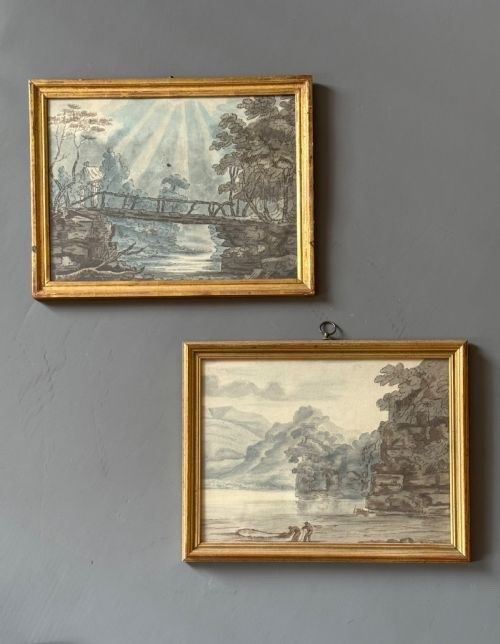
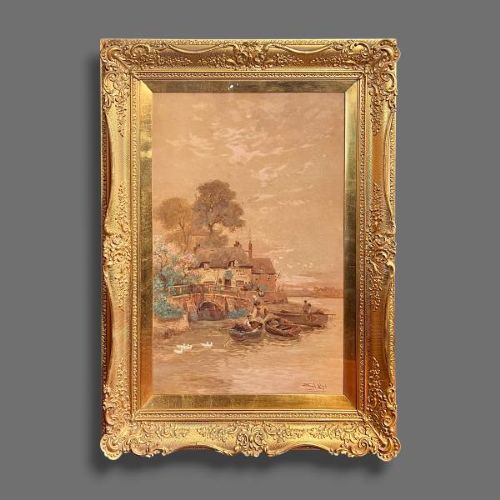
Framed watercolours bring historic atmosphere and subtle washes of colour to domestic spaces, preserved behind protective glass and wooden or gilt frames.
How They Were Made
Artists applied water-soluble pigments onto paper or silk, sometimes augmenting the washes with ink, bodycolour or gouache for finer details and highlights.
Works were commonly mounted behind glass within wooden frames, occasionally incorporating gold leaf or gilt wood moulding to complement the palette of the painting.
The selection includes works from the Victorian era, Edwardian period and mid-century British schools.
What Varies in Quality
Skill in handling pigment and light distinguishes the finest landscapes, where tonal graduation creates genuine depth and atmospheric perspective.
The integrity of the original framing and the preservation of the paper support, free from excessive fading or damp damage, elevate a piece within its period.
George Fotherly Hargitt·Thomas Miles Richardson Jnr·James Orrock·Alfred Young Nutt·Percy Lancaster·A. Marie Parsons·Robert Leslie Howey·John E. Aitken·William Banks Fortescue·Robert A. Nottingham·John Smith Atherton·Ernest Arthur Rowe·Frederick Walker·Thomas Maidment·Frederick James Kerr·William Matthison·Henry Martin Pope·George Stanfield Walters·John Moxon·F.J. Snell·George F Pennington·William Frederick Settle·Alfred George Morgan·Edgar Woollatt·Lionel Horsnell
The Watercolour Landscape Wall Art Glossary
- Watercolour
- A paint consisting of colour suspended in a water-soluble vehicle, applied in translucent washes to paper.
- Gouache
- An opaque water-based paint often used alongside transparent watercolour to add highlights and solid areas of tone.
- Gilt Wood
- Wood that has been treated with gold leaf or metallic gilding powder, frequently seen on period picture frames.
- Shan Shui
- A style of traditional Chinese painting that depicts scenery or natural landscapes, often executed on silk.
- Provenance
- The documented history of a work's origin and previous ownership, helping establish authenticity and background.
Watercolour Landscape Wall Art: Frequently Asked Questions
How should I hang vintage watercolours?
Keep watercolours away from direct sunlight to prevent the pigments and paper from fading over time. Hanging them on interior walls with stable humidity protects the paper support and the original frame.
Ensure the glass does not touch the surface of the painting directly, as trapped moisture can damage the delicate pigments.
Are these paintings always signed?
Many nineteenth and twentieth-century watercolours feature artist signatures, monograms or dates inscribed directly onto the paper. Other works remain unsigned or are attributed to specific schools and circles based on style and technique.
Signatures add historical context but unsigned pieces from reputable periods remain valued for their artistic merit.
What framing is typical for these?
Period pieces frequently retain their original wooden frames, which may include gilt wood or gold leaf detailing suited to Victorian and Edwardian aesthetics. These frames often show minor age-related wear that reflects their long history.
Replacing a damaged historic frame should be done carefully to preserve the character of the artwork.
How do I identify the period?
Stylistic clues, paper types, framing methods and inscribed dates help narrow down the decade or artistic movement. Victorian works often display meticulous detail, while mid-century pieces tend towards looser impressionistic brushwork.
Comparing signatures and known working dates of artists provides further clarity on origin.