

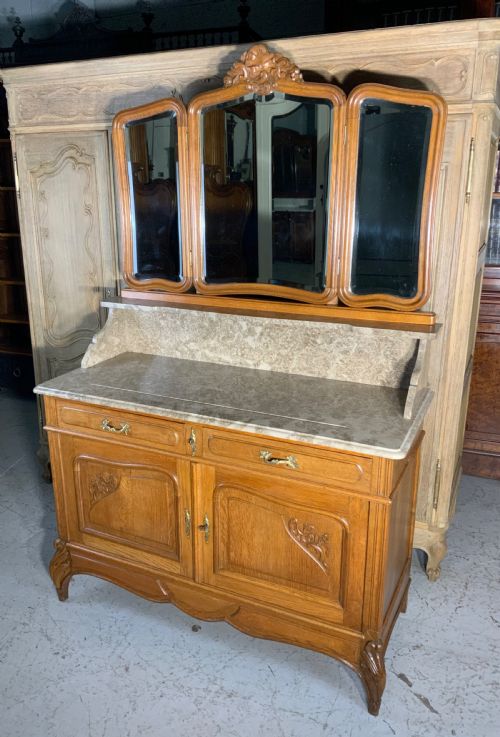
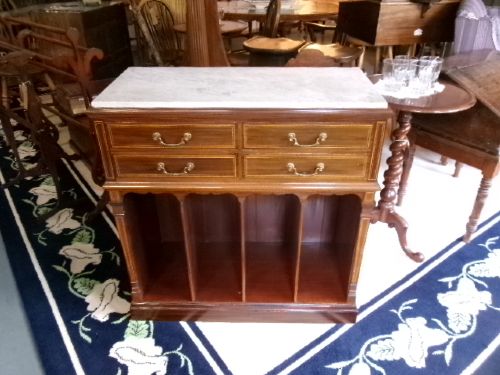
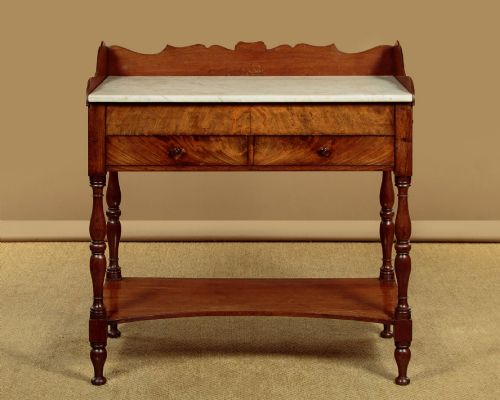
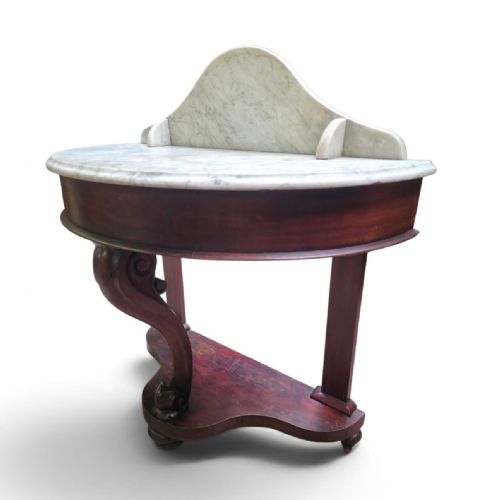
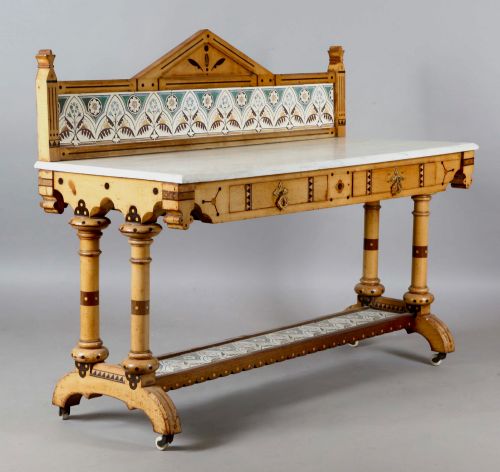
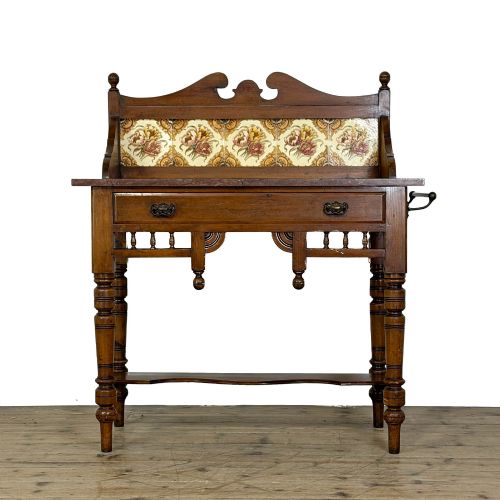
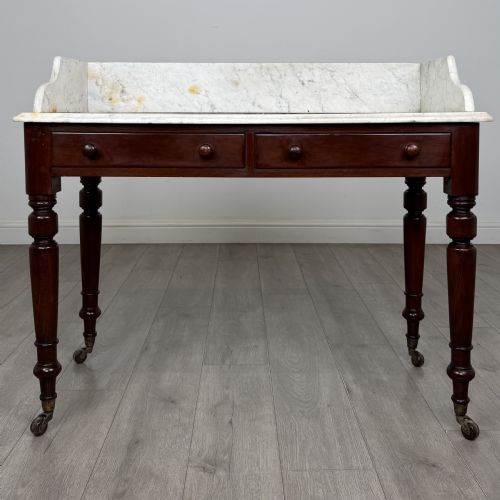
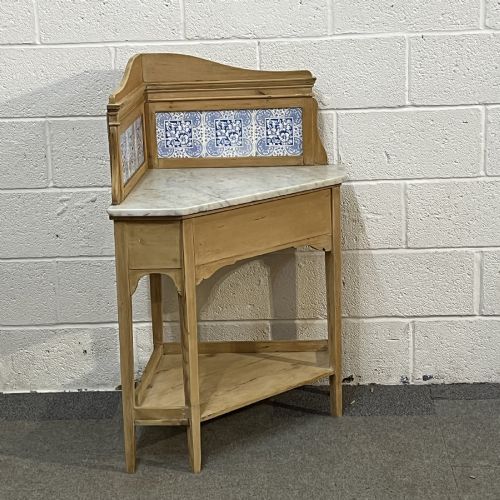
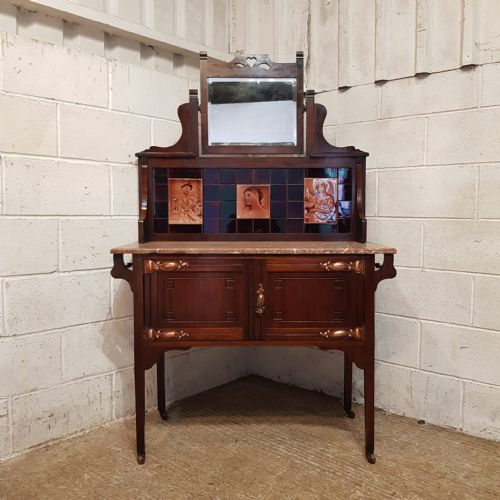
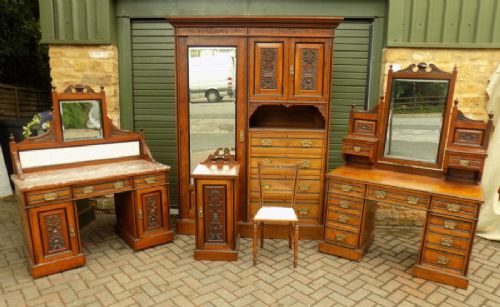
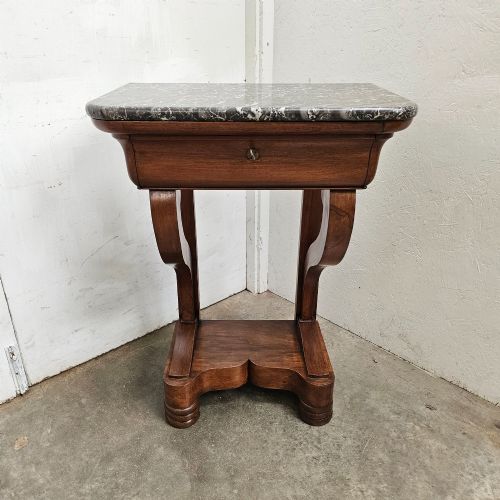
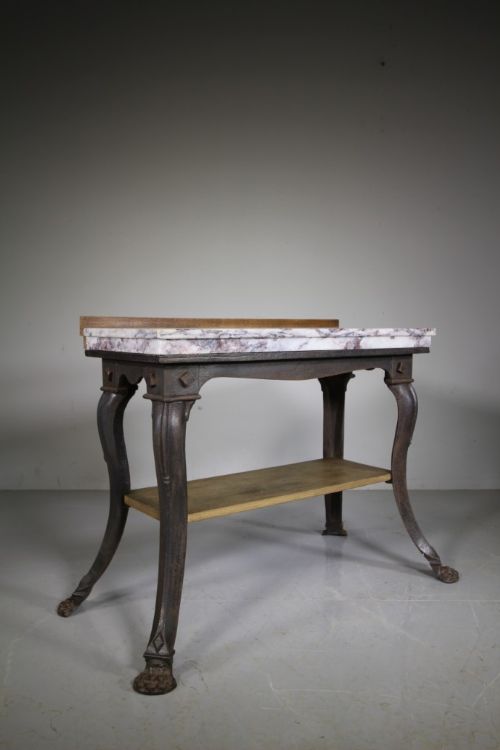
Washstand with Marble Top
These washstand with marble top pieces are functional bedroom furniture pieces from the Victorian and Edwardian eras, offering a smooth stone surface that brings practical utility and period character to a room.
Washstand with Marble Top
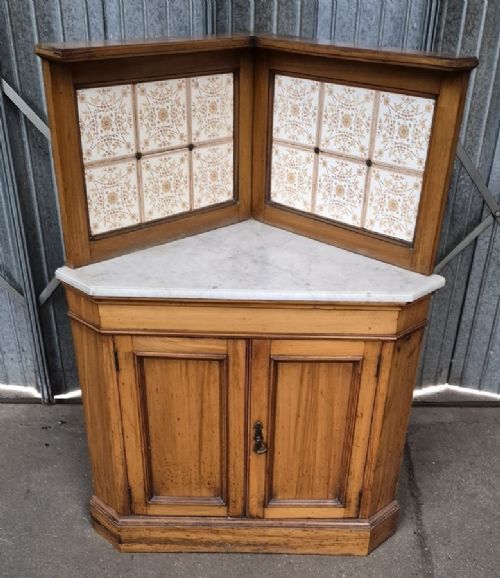
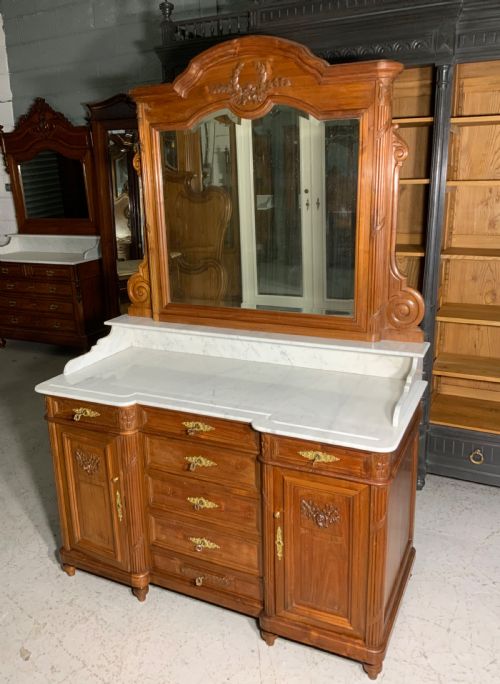
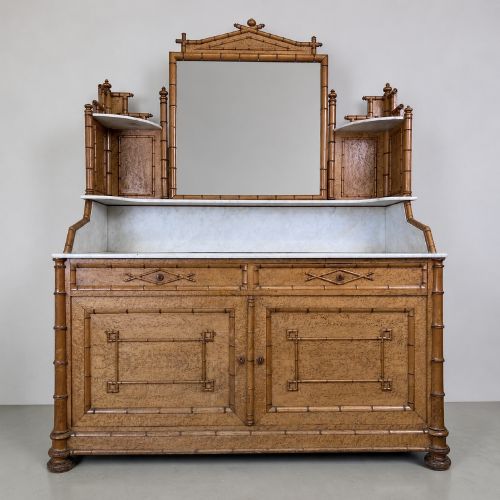
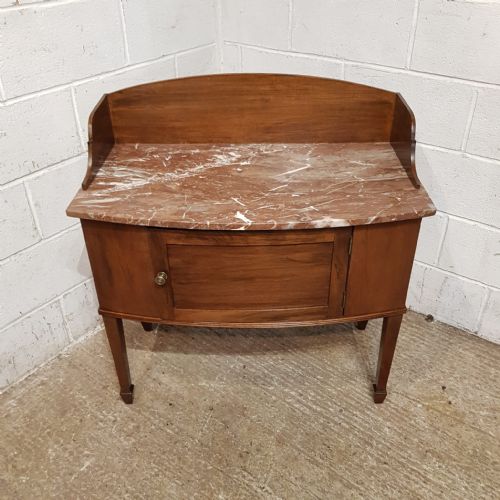
A washstand with marble top is a bedroom furnishing designed to hold basins, ewers, and washing accessories, utilising a stone surface to protect the timber body from water damage. Buyers searching this phrase will find pieces spanning the nineteenth century up to the nineteen-twenties, incorporating diverse forms such as corner units, bow-fronted tables, and complete dressing suites.
The most common versions encountered on this page originate from the Victorian and Edwardian periods, constructed in timbers like mahogany, walnut, pine, and satinwood. These frequently incorporate decorative elements such as ceramic tiles, brass hardware, and ebonised details, alongside related forms like dressing stands and sideboards.
Materials and construction methods
Cabinetmakers built these pieces using solid and veneered hardwoods like mahogany, walnut, and satinwood, alongside softer timbers such as pine for internal framing and structural elements. Surfaces were frequently polished, inlaid, ebonised, or painted with grain finishes to suit domestic fashions of the nineteenth and early twentieth centuries.
Heavy stone slabs formed the essential upper surface of a washstand with marble top, providing a durable and water-resistant workspace designed to withstand daily washing routines. These were often accompanied by inset ceramic tiles along the back splash, while brass fixtures and glass components completed the hardware.
Washstand with Marble Top Retail Price Guide 2026
Typical asking prices for washstand with marble top among the pieces listed under this phrase on Sellingantiques today, from the lower quarter to the upper quarter. They describe what is for sale here now, not the wider market.
Listings feature pieces spanning the Victorian and Edwardian eras, constructed from mahogany, pine, walnut, satinwood, and marble.
Assessing quality in period washstands
Quality in a washstand with marble top reveals itself in the selection and matching of timber veneers, the precision of inlay work, and the integrity of the stone slab. Finer pieces demonstrate careful attention to secondary timbers and robust joinery that keeps the heavy marble top securely supported.
Decorative detailing distinguishes standard utility items from exceptional examples, such as the inclusion of painted or glazed ceramic tiles by known designers, intricate carving, and original brass fittings. The retention of original surface finishes, whether polished wood or painted faux marble, heavily influences the character of the piece.
Charles Bevan·Christopher Dresser·Maples
The Washstand with Marble Top Glossary
- Marble top
- A polished stone surface fitted to the upper section of a washstand to provide a water-resistant counter for washing basins and jugs. This material added weight and durability to nineteenth-century bedroom furniture.
- Ebonised
- Timber treated with a dark finish to imitate expensive ebony wood. This technique was popular in Victorian furniture design for creating sharp visual contrast.
- Satinwood
- A pale, lustrous timber imported from tropical regions and utilised for fine veneers and stringing on Edwardian and nineteenth-century cabinet work. It creates a bright, reflective surface quality.
- Reformed Gothic
- A nineteenth-century design style that reinterpreted medieval architectural forms for modern domestic furniture through geometric lines and structural honesty.
- Faux marble
- A painted surface finish applied to cheaper woods like pine to simulate the appearance of genuine stone. This technique offered a decorative alternative in regional or economical bedroom pieces.
Washstand with Marble Top: Frequently Asked Questions
What is a washstand with marble top?
A washstand with marble top is a nineteenth or early twentieth-century bedroom cabinet built to hold washing basins and toiletries. The stone surface provided a practical, water-resistant area for morning routines before plumbed bathrooms became standard.
These pieces range from simple corner tables in pine to elaborate mahogany and satinwood furniture fitted with decorative tiles and brass hardware.
How do I clean a marble top washstand?
Cleaning a marble top washstand requires gentle, non-acidic solutions to protect the polished stone surface from etching or staining. Soft cloths and warm water are typically sufficient for everyday care.
Avoid harsh chemical cleaners or abrasive scourers that can dull the historical polish of the nineteenth-century stone.
Can I use a washstand as a vanity?
A washstand with marble top adapts readily to modern use as a bathroom vanity, hallway table, or bedroom dressing surface. The original stone top naturally resists moisture from modern toiletries and basins.
Many buyers repurpose these items to introduce period character and useful surface space into contemporary homes.
How do I date a marble top washstand?
Dating these pieces involves examining the secondary timbers, construction methods, and stylistic cues such as Victorian or Edwardian design motifs. The presence of specific tile designs, brass fixtures, and inlay techniques helps narrow the period of manufacture.
Earlier Victorian examples often feature heavier mahogany or pine construction, while Edwardian pieces frequently utilise lighter satinwood and walnut framing.