






Warm Pine Chest
A warm pine chest brings honeyed tones and practical storage to a room, spanning modest blanket boxes and sturdy drawer units.
Warm Pine Chest
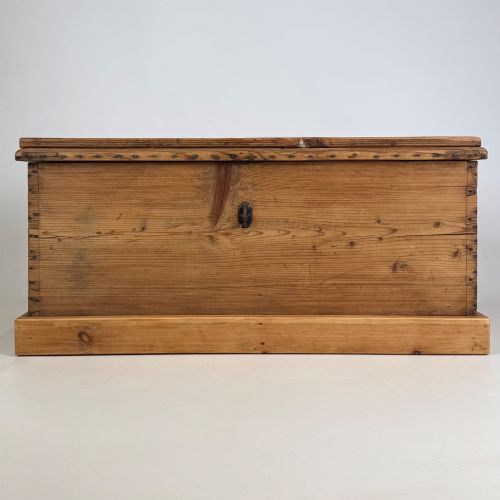
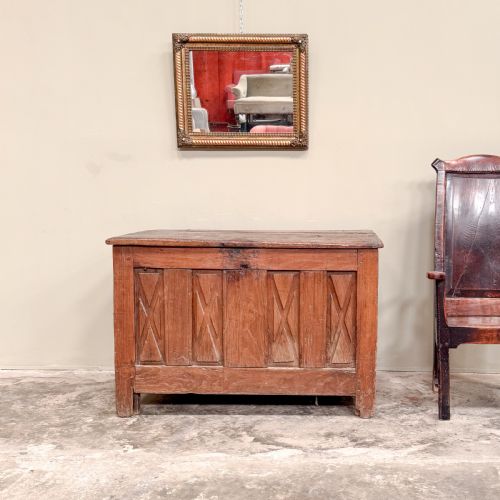
A warm pine chest encompasses utilitarian blanket boxes, coffer forms, and multi-drawer storage pieces originating across the eighteenth, nineteenth, and early twentieth centuries. When searching for a warm pine chest, buyers encounter domestic furniture shaped by Georgian, Victorian, and Edwardian hands, alongside provincial and maritime examples.
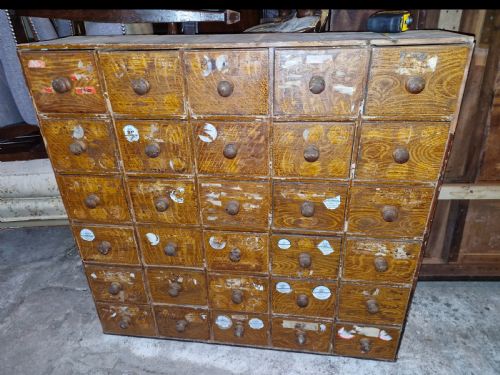
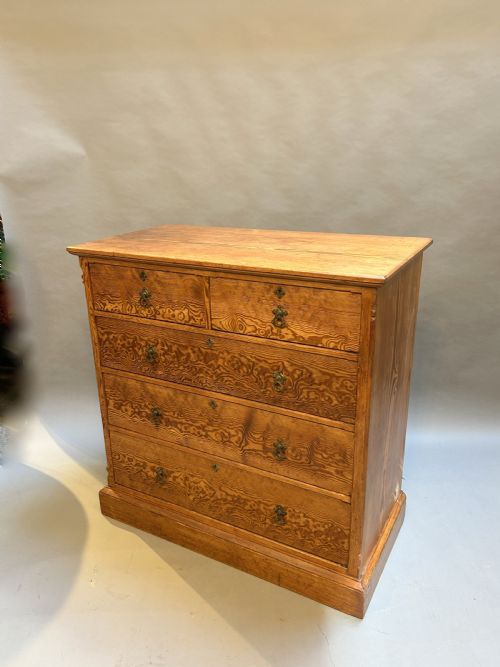
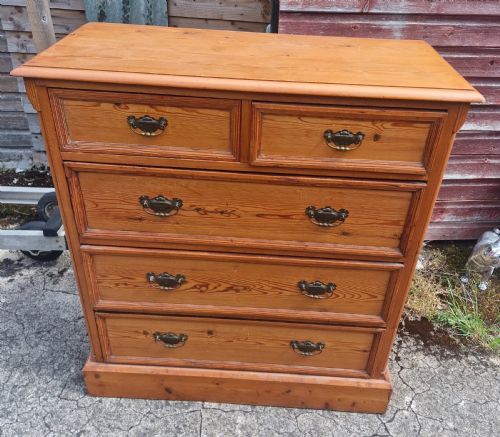
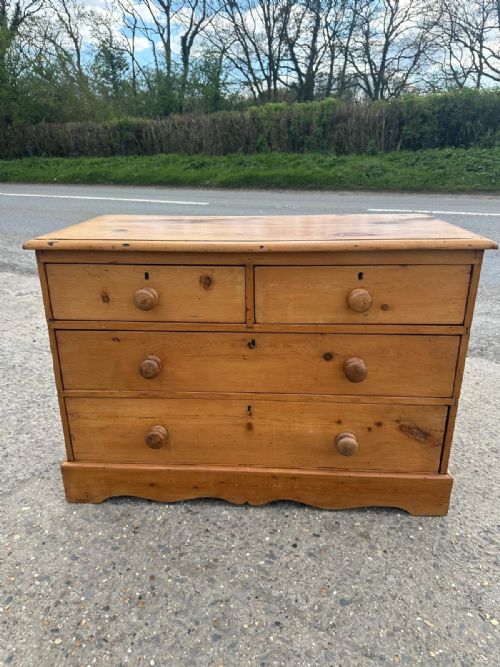
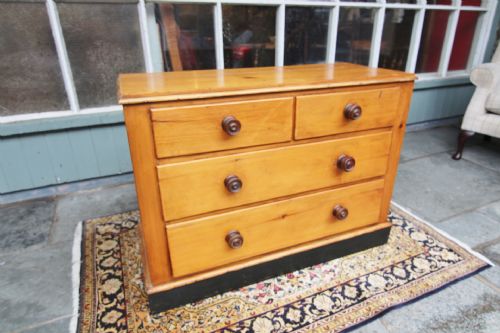
The pieces on this page range from compact bedside cabinets and apothecary boxes to large nineteenth century four-drawer chests, pitch pine trunks, and mule chests. Scumbled surfaces, painted finishes, and waxed patinas contribute to the inviting character associated with these wooden containers.
How they were made
Carpenters utilised native and imported softwoods, primarily pine, pitch pine, and oregon pine, occasionally incorporating oak for internal framing or brass and iron for handles, locks, and campaign mounts. Surfaces received hand-waxing, simulated grain painting, or scumbling to enrich the appearance of the timber.
Construction methods rely on traditional joinery techniques suited to utility and travel, spanning dovetailed drawer boxes, planked lids, and panelled sides. Maritime and campaign pieces utilised robust iron or brass hardware to withstand transit.
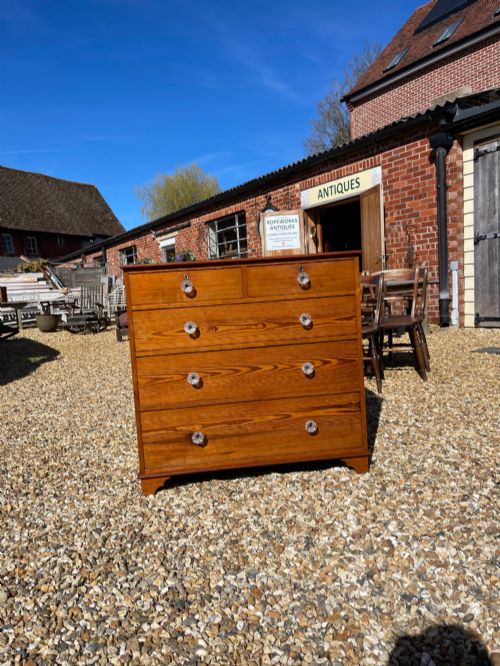
SS Orontes donated a ships pitch pine chest of drawers to the timeline.
What varies in quality
Quality rests in the integrity of the timber selection, the crispness of the joinery, and the preservation of original surface treatments such as early paintwork, scumbling, or waxed patinas. Pieces retaining their original brass or iron hardware and structurally sound drawers stand apart from heavily altered examples.
Proportion and utility define the finer pieces, whether in the balanced arrangement of a two-over-three drawer configuration or the specialised internal arrangement of a collectors cabinet.
J. T. Crockett
The Warm Pine Chest Glossary
- Scumbled
- A decorative surface technique where a translucent glaze is dragged or brushed over a base coat to simulate finer wood grain.
- Mule chest
- A storage chest featuring one or more drawers built into the base beneath the primary compartment.
- Pitch pine
- A dense, resinous softwood prized for its prominent grain pattern and durability, frequently seen in maritime and Victorian furniture.
- Coffer
- A heavy wooden box with a hinged lid, traditionally used for storing valuables or textiles before chest-of-drawers forms became common.
Warm Pine Chest: Frequently Asked Questions
How do I care for a pine chest?
Keep the wood nourished by applying traditional beeswax periodically, avoiding direct sunlight and excessive heat sources that dry out older timbers.
Ensure items placed on top do not trap moisture against the aged surface to preserve the original patina and waxed finish.
Were these chests used in bedrooms?
Many of these pieces served domestic sleeping quarters for holding garments, linens, and personal belongings within drawer units or blanket boxes.
Other variations travelled aboard ships, functioned in apothecary settings, or stored logs by the hearth.
What is pitch pine?
Pitch pine is a durable, resinous softwood known for its striking grain figures and resistance to heavy wear.
It was frequently chosen for maritime environments and robust nineteenth-century storage furniture.
How can I tell a Victorian pine chest from an Edwardian one?
Victorian examples often display heavier proportions, darker waxed patinas, or scumbled painted finishes, alongside traditional two-over-three drawer layouts.
Edwardian pieces tend to show lighter tones and simpler, cleaner lines reflecting changing domestic tastes at the turn of the century.