
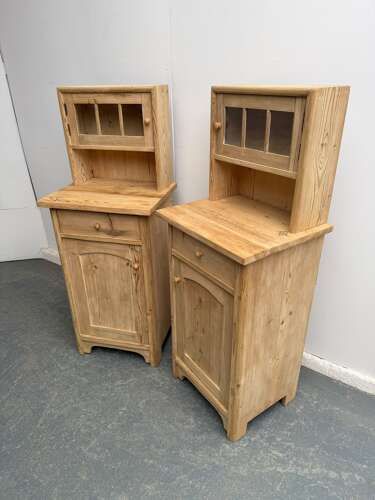


Rustic Pine Nightstand
These rustic pine nightstand pieces offer practical bedside storage and surface space, bringing honest country utility and character into the modern bedroom.
Rustic Pine Nightstand
A rustic pine nightstand brings functional bedside storage and surface space to a bedroom, drawing on traditional forms designed for domestic life. When you browse this phrase, you encounter bedside cabinets, pot cupboards, and compact side tables that serve the same purpose beside a bed.
The pieces you meet on this page hail primarily from the Victorian period, along with examples from the nineteenth century and eighteenth century. Styles range from Victorian country and English country to Scandinavian country and rustic farmhouse.
Makers and craftsmen built these items for daily use rather than formal display, resulting in honest, unpretentious forms. You will find single cupboards, pairs with drawers, and small tables suited to holding a lamp and a book.
How they were made
Makers constructed these items predominantly from solid pine, occasionally incorporating oak, fruitwood, and other mixed woods for structural elements. Surfaces were either left to show the natural grain or treated with layers of paint in black, blue, light grey, or traditional painted finishes.
Construction techniques focus on utility, utilising straightforward joinery suitable for hardworking domestic furniture. Hardware such as ceramic or glass elements often complements the painted or waxed wood bodies.
The listings here feature pieces from the eighteenth century, nineteenth century, and Victorian era, constructed in pine, oak, and fruitwood.
What varies in quality
Quality in these pieces rests on the integrity of the timber and the character of the surface treatment, whether an honest waxed patina or historic paint. Better examples maintain their original structural proportions and show thoughtful detailing like columned corners or carved panels.
The distinction between standard utility items and finer examples lies in the balance of the proportions and the depth of the finish. Original paintwork and well-preserved hardware elevate a piece above simpler workshop output.
The Rustic Pine Nightstand Glossary
- Pine
- A softwood commonly used for traditional country furniture due to its availability and workability. It takes wax and paint readily.
- Pot cupboard
- A small bedside cabinet historically designed to enclose a chamber pot. These now serve effectively as nightstands.
- Upstand
- A low wooden barrier raised along the back or sides of a cabinet top. It prevents items from slipping off the surface.
- Washstand
- A piece of furniture designed to hold a basin and pitcher for washing. Many now find a second life as bedside tables.
- Patina
- The surface sheen and colour developed by wood and paint over decades of use and handling. It indicates age and authentic wear.
Rustic Pine Nightstand: Frequently Asked Questions
What is a rustic pine nightstand?
A rustic pine nightstand is a compact bedside storage piece or small table made from pine, often featuring painted or waxed surfaces. These items originate mainly from the nineteenth and eighteenth centuries.
They provide convenient surface space for lamps and books while introducing traditional country character into a bedroom scheme.
How were these nightstands used originally?
Originally, these cabinets and small tables served various domestic functions beside beds or in dressing rooms, holding chamber pots, washing equipment, or personal items. Their enclosed cupboards and drawers kept daily necessities out of sight.
Over time, households adapted these practical pieces to function as standard bedside storage units.
How do I live with a painted pine piece?
Living with painted pine requires an appreciation for historic surfaces and natural wear. The painted finishes, whether grey, blue, or black, bring warmth and colour to interior spaces.
Treat the surfaces gently, avoiding harsh chemical cleaners that might strip the historic paint or wax layers.
How can I tell the period of a nightstand?
You determine the period by examining the construction methods, timber selection, and overall style characteristics such as Victorian framing or primitive eighteenth-century joinery. Details like hand-carved elements or early painted finishes offer further clues to age.
Comparing the form to documented regional styles, such as Scandinavian country or English farmhouse, helps narrow down the era.