



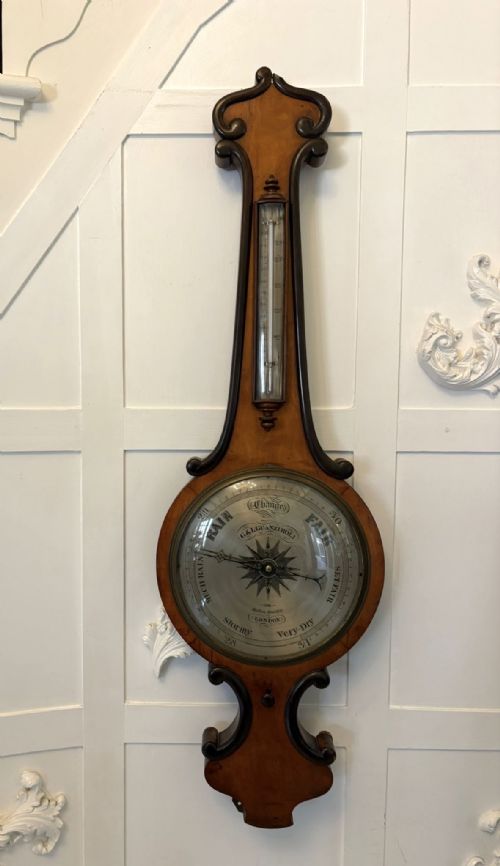


Walnut Weather Instrument
A walnut weather instrument brings the practical science of the nineteenth century into domestic interiors through rich timber and legible dials.
Walnut Weather Instrument
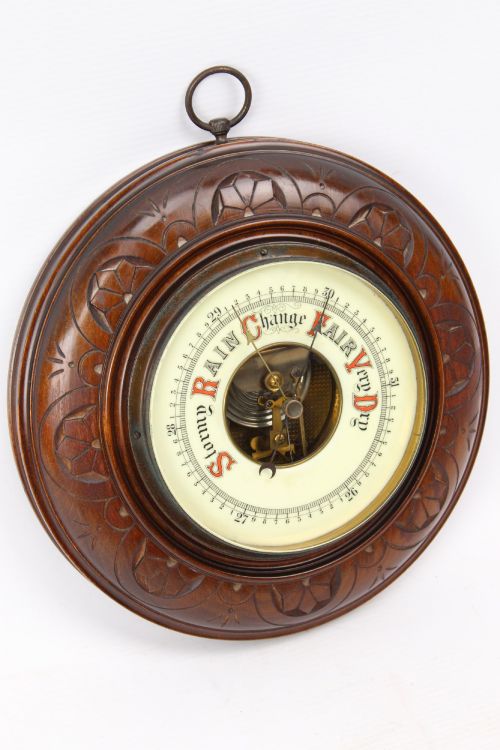
When you search for a walnut weather instrument, you encounter scientific objects designed to measure atmospheric pressure, temperature and time in domestic settings. The pieces span banjo and wheel barometers, stick barometers, clock barometers and self-recording barographs housed in timber cases.
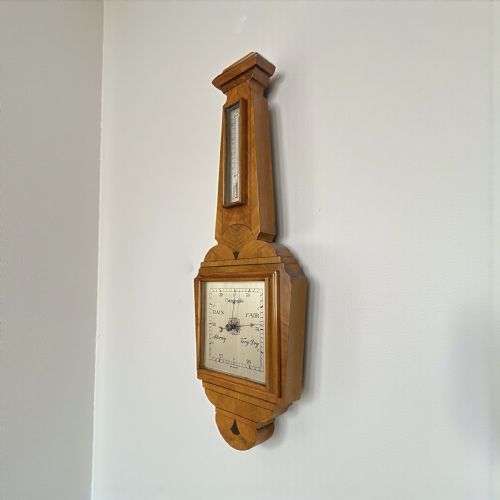
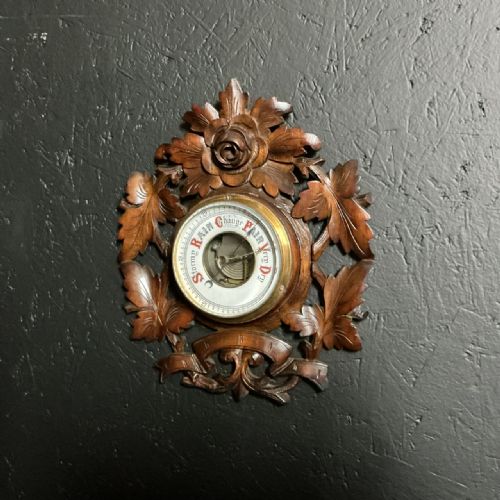
Victorian examples dominate the selection, alongside Edwardian and Art Deco interpretations. You meet both British instruments signed by London makers and European work, particularly Black Forest carvings and Scandinavian pieces.
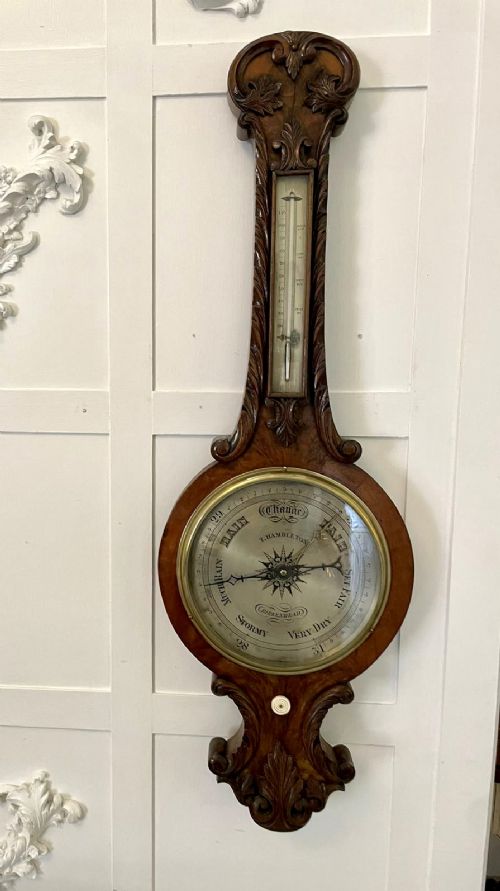
The primary forms range from wall-mounted banjo designs featuring carved crests to heavy table barographs enclosed in glass and wood. Many combine multiple functions, pairing the barometer with a thermometer or an aneroid clock dial.
What varies in quality
Quality rests in the crispness of the wood carving and the depth of the walnut grain, particularly where burr veneers show varied figuring. The standard of the engraved paper or ceramic dial and the precision of the maker's signature elevate the piece.
The integrity of the mechanical movement and the preservation of the original glass and brass bezels determine the standing of an instrument. Finer examples retain their original mercury tubes or functional aneroid mechanisms alongside well-maintained timber cases.
Walnut Weather Instrument Retail Price Guide 2026
Typical asking prices for walnut weather instrument among the pieces listed under this phrase on Sellingantiques today, from the lower quarter to the upper quarter. They describe what is for sale here now, not the wider market.
Black Forest carvers spent long winters carving walnut foliage so realistic that birds might theoretically attempt to nest in the barometer crests.
G & L Guanziroli London·Depree and Young Ltd Exeter·Negretti & Zambra London
The Walnut Weather Instrument Glossary
- Barometer
- An instrument measuring atmospheric pressure to forecast weather changes. It uses either a column of mercury or an aneroid metal capsule.
- Barograph
- A mechanical barometer that records barometric pressure continuously over a week on a rotating paper chart driven by a clockwork drum.
- Aneroid barometer
- A barometer that measures pressure without liquid, using a flexible metal box that expands or contracts as pressure shifts.
- Banjo barometer
- A domestic barometer shaped like a banjo, featuring a circular dial at the base and a long stem holding a thermometer or hygrometer.
- Stick barometer
- A tall, narrow barometer where the vertical mercury tube remains exposed against a backboard, often protected by a glass door.
- Burr walnut
- A prized timber cut from walnut tree growths, displaying intricate, swirling grain patterns used for decorative veneer fronts.
Walnut Weather Instrument: Frequently Asked Questions
How do I read a mercury barometer?
Read the main pointer against the scale marked in inches or millibars. Tapping the glass gently helps settle the mechanism before taking the measurement.
Compare the primary pointer with the manually set index pointer to see if pressure is rising or falling since your last observation.
Where should I hang a wall barometer?
Choose an interior wall away from direct sunlight, radiators, and heavy vibrations. Stable indoor temperatures ensure the internal mechanism functions accurately without thermal interference.
Ensure the mounting point supports the weight securely, particularly for larger carved wood and glass instruments.
What is the difference between an aneroid and mercurial barometer?
A mercurial barometer uses a column of liquid mercury balanced against atmospheric pressure in a glass tube. It represents the traditional scientific method of measurement.
An aneroid barometer operates through a sealed metal capsule that flexes with pressure changes, removing the need for liquid columns and allowing for more compact case designs.
How do I maintain a vintage barograph?
Keep the clockwork movement wound regularly using the appropriate key to ensure the drum rotates smoothly. Replace the paper charts weekly if you wish to record continuous pressure data.
Dust the glass cover and wooden case gently with a dry cloth, avoiding harsh cleaning agents that might damage the walnut finish.