


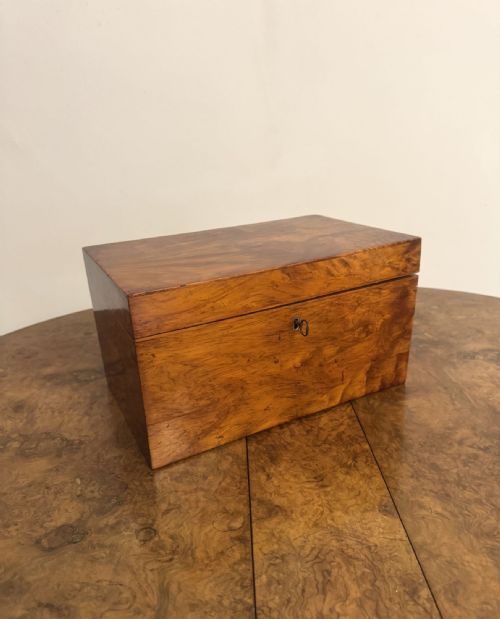

Walnut Veneer Chest
A walnut veneer chest brings rich grain and deep colour into a room, offering practical storage disguised as exceptional cabinetry.
Walnut Veneer Chest
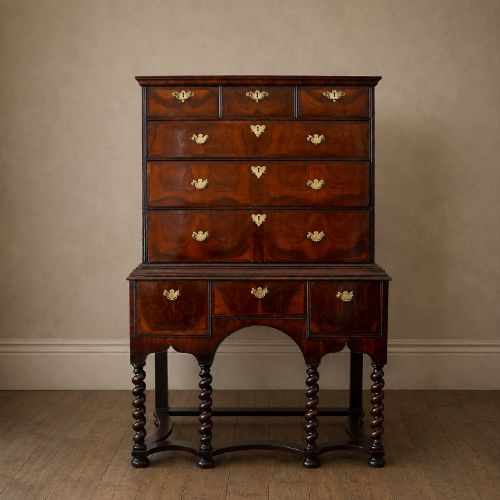
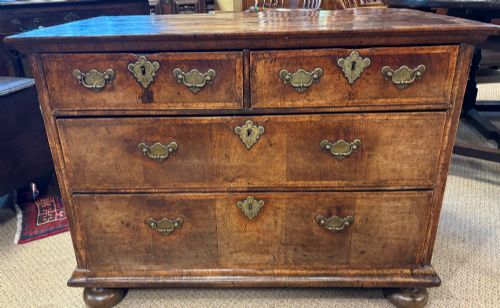
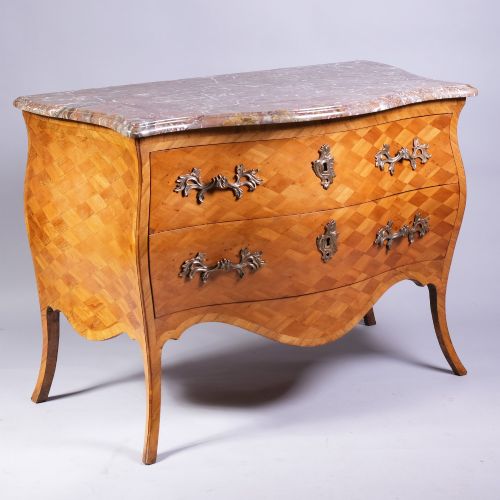
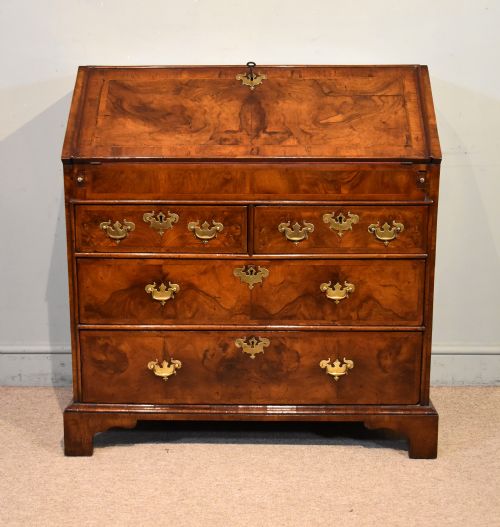
A walnut veneer chest encompasses traditional drawer units, chests on stands, tallboys, bureaux, and commodes found across several centuries. These pieces originate primarily from British and European workshops, ranging from the late seventeenth century through the Georgian and Regency eras into the early twentieth century.
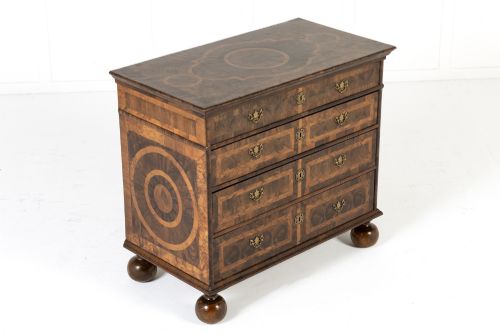
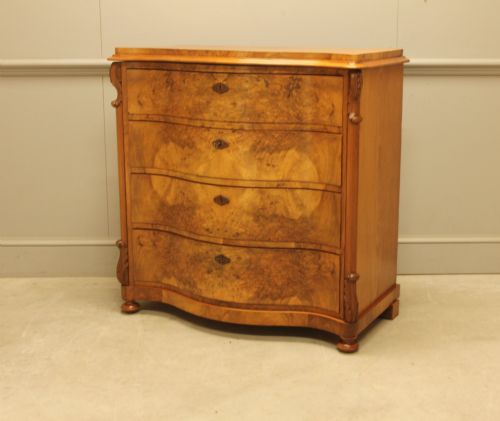
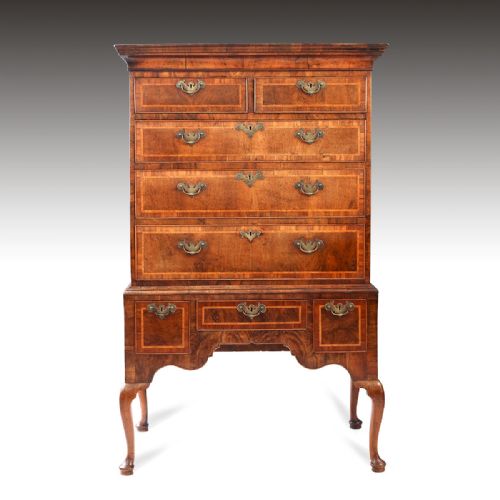
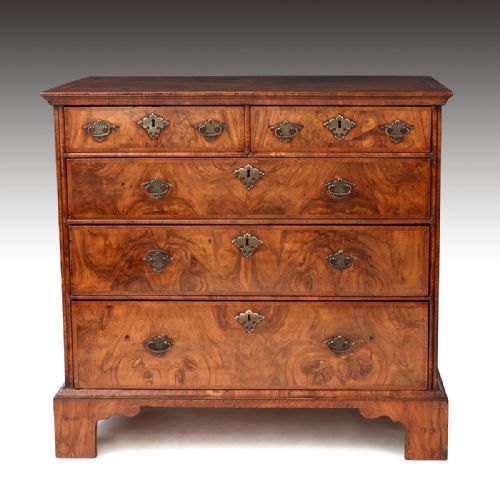
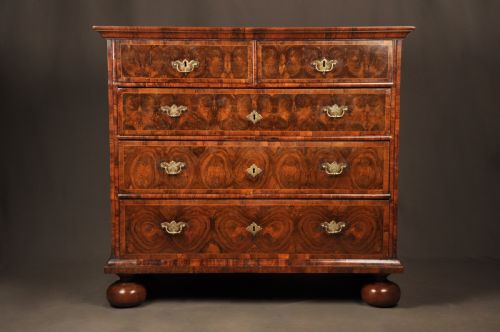
The version most commonly met on this page is the early chest of drawers or chest on stand from the William and Mary or George I periods, often featuring distinct banded or figured surfaces. Later iterations from the Art Deco period and the nineteenth century appear frequently, offering alternative proportions and smoother, figured or bookmatched timber facades.
Materials and Construction
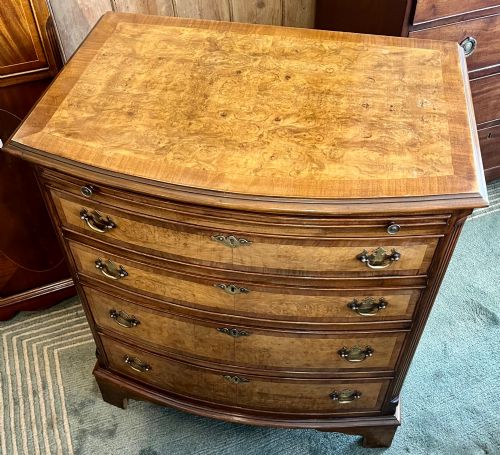
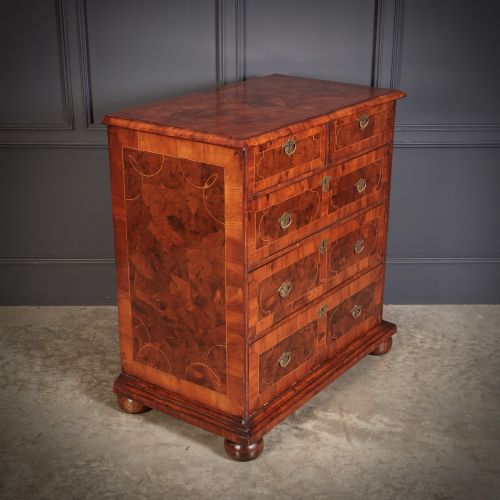
Cabinetmakers laid thin slices of walnut, burr walnut, or olivewood over secondary structural timbers such as pine or oak, creating intricate geometric patterns and striking visual movement. Cross-banding in contrasting woods and delicate boxwood stringing frequently frame the drawer fronts and tops to accentuate the grain.
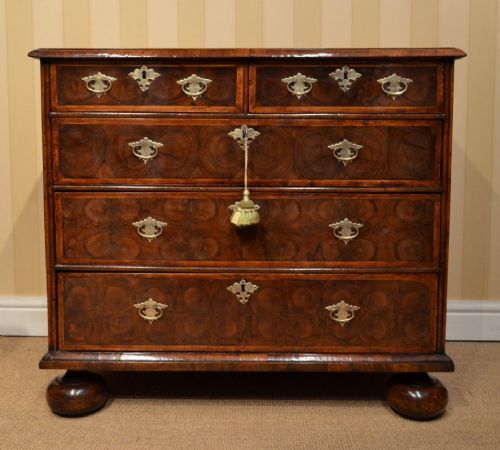
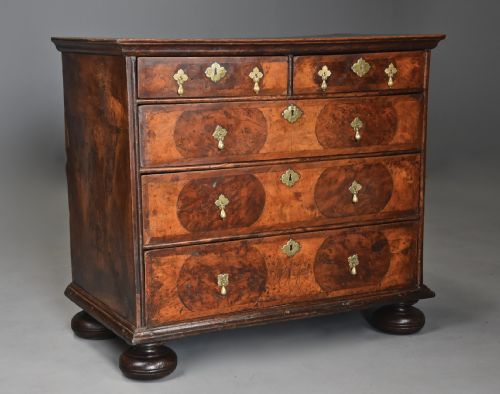
Early seventeenth-century examples often utilise oyster veneering, where small circular cross-sections of branchwood are laid down closely together. Later Georgian and Continental pieces lean towards quarter-veneering and bookmatching, aligning mirrored grain patterns across the primary surfaces.
Walnut Veneer Chest Retail Price Guide 2026
Typical asking prices for walnut veneer chest among the pieces listed under this phrase on Sellingantiques today, from the lower quarter to the upper quarter. They describe what is for sale here now, not the wider market.
Some seventeenth-century branches gave their lives just to look like a plate of oysters on a drawer front.
Markers of Excellence
The distinction between ordinary and exceptional examples rests upon the selection and preservation of the timber veneer. Pieces utilising deeply figured burr walnut, olive, or meticulously matched oyster cuts display a greater visual depth and demand superior woodworking skill.
Structural integrity and the survival of original surface patination elevate a piece further. The alignment of cross-banding, the crispness of inlaid stringing, and the harmony of the proportions dictate the standing of a walnut veneer chest within its period.
The Walnut Veneer Chest Glossary
- Oyster veneering
- A technique involving slices cut transversely from small branches to produce circular or oval patterns resembling oyster shells. This method creates a dense, repeating mosaic across the surface of seventeenth-century furniture.
- Cross-banding
- A narrow strip of veneer laid around the border of a panel or drawer front with the grain running perpendicular to the central field. It provides a neat, contrasting frame for figured walnut.
- Bookmatching
- A method of arranging pairs of wood veneer sheets adjacent to each other so that they mirror the grain pattern. This technique produces symmetrical, decorative designs on larger surfaces such as drawer fronts and tops.
- Burr walnut
- Wood taken from a tree growth or knot that produces swirling, highly decorative grain patterns. Highly prized by cabinetmakers for formal furniture.
- Biedereeier
- A Central European style dating from the nineteenth century focusing on clean lines, minimal ornamentation, and blonde figured-walnut timbers. These pieces emphasise the natural beauty of the wood over complex carving.
Walnut Veneer Chest: Frequently Asked Questions
How do I date a walnut chest?
Dating relies on construction methods, drawer linings, handle hardware, and the specific type of veneering used. Earlier pieces from the seventeenth century often feature oak carcases and oyster cut details, while eighteenth-century examples introduce sophisticated cross-banding and quarter-veneered tops.
Later nineteenth and twentieth-century versions display different secondary timbers and modern manufacturing marks. Examining the timber choice and the style of the feet provides further clues to the decade of manufacture.
What is oyster veneering?
Oyster veneering involves slicing small branches diagonally to create round or oval wooden discs resembling oyster shells. Cabinetmakers arranged these circles closely together to cover entire drawer fronts and tops.
This labour-intensive technique is a hallmark of late seventeenth-century craftsmanship. It creates a textured, patterned surface that catches the light differently depending on the grain orientation.
How should I care for a veneered surface?
Veneered furniture requires protection from direct sunlight and extreme humidity fluctuations to prevent the thin timber layers from lifting. Applying a quality beeswax occasionally helps nourish the wood and maintain its natural sheen.
Avoid placing damp items or heavy heat sources directly on the top surface. Gentle dusting with a dry, soft cloth preserves the historic patina and protects the delicate edges.
Where should I place a chest in my home?
A compact chest on stand or bedside cabinet fits well in smaller spaces like hallways or bedrooms where surface area is useful. Larger chests of drawers provide substantial bedroom storage while acting as a focal point against a neutral wall.
Ensure the room maintains stable environmental conditions away from radiators. This placement protects the historic veneer from drying out and cracking over time.