





Walnut Trinket Chest
A walnut trinket chest provides a compact and tactile repository for personal valuables, drawing on centuries of figured timbers and meticulous box-making traditions.
Walnut Trinket Chest
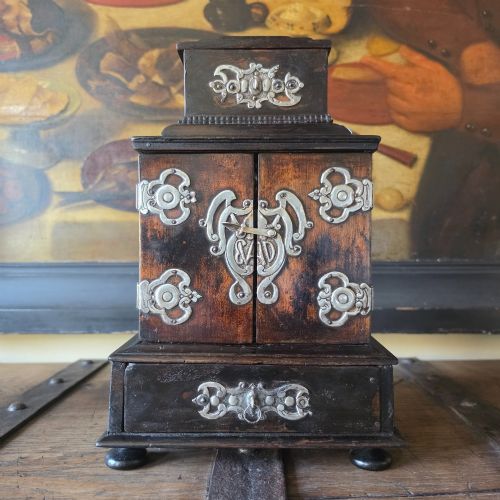
A walnut trinket chest encompasses small-scale receptacles designed for jewellery, keepsakes, and correspondence, appearing across periods from the seventeenth century through to the early twentieth century. These pieces take various structural forms, including domed caskets, miniature drawer chests, tea caddies, and slope-front writing desks, each serving a domestic function for safekeeping.
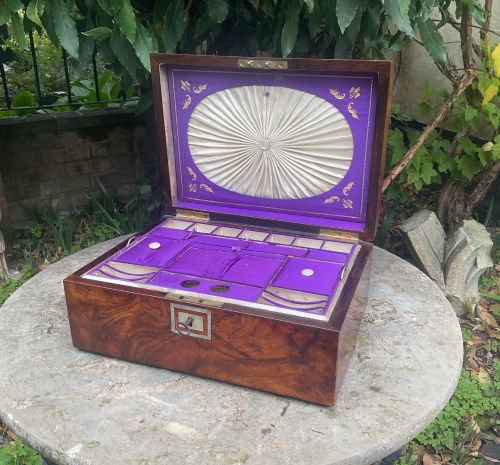
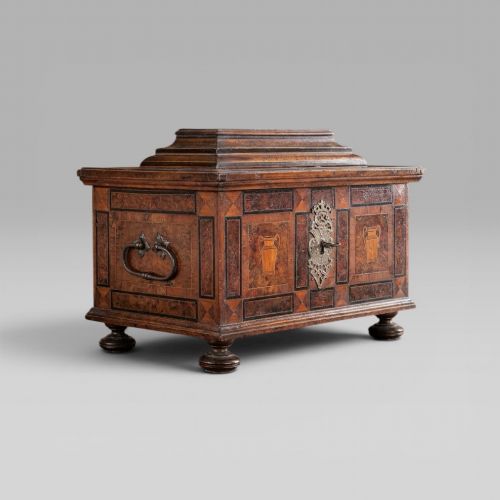
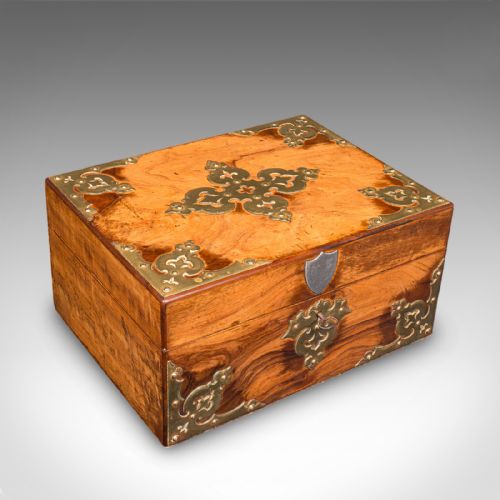
The Victorian era supplies the highest volume of examples on this page, frequently rendered in burr walnut with brass mounts and fitted interior compartments lined in silk or velvet. Alongside these nineteenth-century iterations, buyers encounter earlier Georgian and seventeenth-century Continental caskets, as well as specialised decorative containers incorporating parquetry and Tunbridge Ware.
Materials and Construction Methods
Cabinetmakers utilised solid walnut and decorative veneers, particularly burr walnut, selected for its swirling grain patterns and rich tonal depth. Carcases were constructed using traditional joinery methods and reinforced with brass banding, hinges, and escutcheons to secure structural integrity.
Surface enrichment involved intricate techniques such as floral marquetry, parquetry, and inlaid details fashioned from mother-of-pearl, bone, and contrasting woods. Interiors were thoughtfully fitted with segmented trays, glass elements, and textile linings of silk to protect delicate contents.
Walnut Trinket Chest Retail Price Guide 2026
Typical asking prices for walnut trinket chest among the pieces listed under this phrase on Sellingantiques today, from the lower quarter to the upper quarter. They describe what is for sale here now, not the wider market.
Listings span periods from the 17th century to the 1930s, featuring materials such as walnut, burr walnut, brass, mother-of-pearl, and silk.
Distinctions in Quality and Execution
Quality reveals itself in the selection and book-matching of the walnut veneers, where symmetrical grain alignment across the lid and sides demonstrates the cabinetmaker's skill. The precision of the inlay work and the integration of secondary materials like mother-of-pearl and brass hardware further separate standard production boxes from exceptional commissions.
The sophistication of the internal mechanism and fitting determines the upper tier of these pieces, seen in secret drawers, drop-front doors with bevelled glass, and robust lock assemblies. Superior examples retain their original fitted silk compartments and functional locking systems intact.
Parkins and Grotto
The Walnut Trinket Chest Glossary
- Burr walnut
- A figured wood grain obtained from the wart-like growths on walnut trees, prized for its complex, swirling patterns. Cabinetmakers sliced this timber into thin veneers to adorn the exterior surfaces of high-status boxes.
- Parquetry
- A geometric mosaic of wood pieces used for decorative veneer on box lids and panels. Artisans arranged contrasting timbers to create crisp, angular patterns.
- Tunbridge Ware
- A form of British woodworking characterised by tiny, pixel-like mosaics of coloured woods forming pictorial or geometric bands. This technique frequently embellished nineteenth-century trinket boxes originating from Kent.
- Sarcophagus-shaped
- A box design featuring a steep, sloping lid and flared base mirroring classical monumental forms. This silhouette afforded greater internal depth for storing tea or heavier keepsakes.
- Escutcheon
- A protective brass or bone plate surrounding a keyhole. It served both a utilitarian purpose to prevent wear around the lock and a decorative function.
Walnut Trinket Chest: Frequently Asked Questions
What were walnut trinket chests originally used for?
These small containers served as secure domestic repositories for precious personal items such as rings, brooches, loose coin, and private letters. Many featured specialised internal trays and compartments designed to organise specific valuables.
Certain variations, such as tea caddies and sewing boxes, adapted the core box form to house dry tea leaves or needlework implements, reflecting the orderly domestic habits of their respective eras.
How do I distinguish a Victorian box from a Georgian one?
Victorian examples frequently display the dramatic, swirling grain of burr walnut combined with applied brass binding, mother-of-pearl inlay, and Gothic or eclectic revival details. They tend to have complex fitted interiors lined with silk or velvet.
Georgian pieces generally rely on understated elegance, featuring straight-grained walnut veneers, simpler stringing lines, and restrained hardware proportions that emphasise architectural form over surface decoration.
Can I use a vintage box for modern jewellery?
These antique receptacles accommodate contemporary rings, necklaces, and small accessories securely, as their compartmentalised trays and velvet or silk linings provide natural cushioning. The varied internal depths suit different scales of personal ornaments.
Care should be taken with delicate textile linings and older hinges, ensuring that modern items do not force tight spaces or strain original structural elements.