






Walnut Tea Box
These walnut tea box pieces are handsome timber containers for dried leaf, built to sit in Georgian and Victorian parlours.
Walnut Tea Box
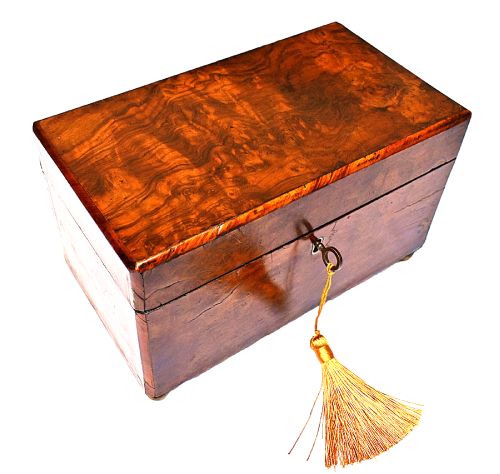
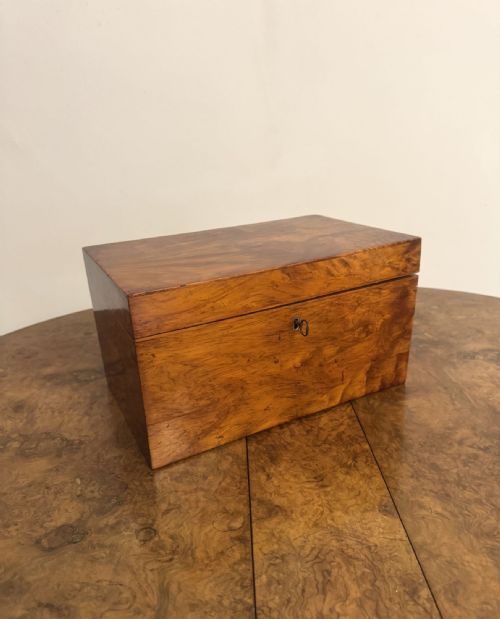
A walnut tea box is a lidded wooden container designed to store and preserve dry tea leaves when tea was an expensive commodity. The examples gathered here span the Georgian, Regency and Victorian eras, taking forms from simple rectangular boxes to sarcophagus shapes, oval vessels and larger freestanding teapoys.
Most pieces you meet on this page rely on burr walnut veneer for its rich, swirling grain patterns, occasionally paired with plain walnut or burr elm. They frequently contain fitted interiors with internal compartments or mixing bowls, and many retain functioning locks and keys.
Materials and construction
The carcase of a walnut tea box is typically built from solid timber and faced with figured burr walnut veneer to create visual depth on the exterior surfaces. Cabinet makers utilised boxwood, brass and bone for stringing, escutcheons and detailed inlay work.
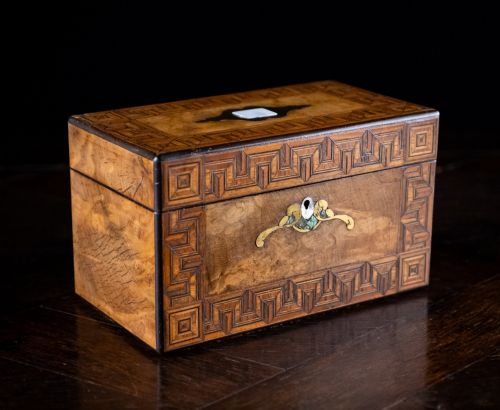
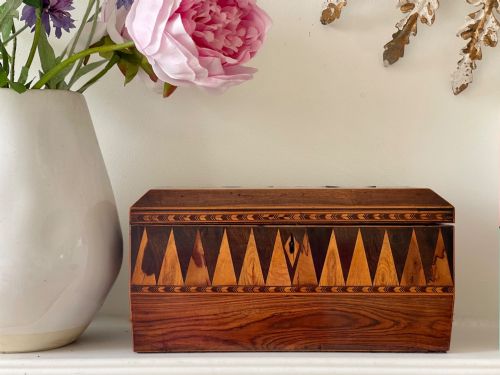
Specific regions applied intricate decorative techniques such as Tunbridge Ware micro-mosaic patterns and geometric parquetry to the exterior surfaces. Metal hardware like brass hinges and lock plates secure the lids and internal compartments.
Walnut Tea Box Retail Price Guide 2026
Typical asking prices for walnut tea box among the pieces listed under this phrase on Sellingantiques today, from the lower quarter to the upper quarter. They describe what is for sale here now, not the wider market.
The selection includes parquetry, Tunbridge Ware and Gothic revival styles applied to boxes and teapoys.
Distinctions in quality
Quality rests on the selection and matching of the burr walnut veneer, where symmetrical grain patterns and skillful application elevate the appearance of the box. Superior examples display precise parquetry or Tunbridge Ware detailing rather than plain surfaces.
The interior fitment dictates distinction, with complete lidded canisters, intact mixing bowls and working locks representing higher workmanship. Original brass fittings and sound construction of the internal compartments separate standard utilitarian boxes from finer parlour pieces.
Henry Hollamby
The Walnut Tea Box Glossary
- Tea caddy
- A box or container designed to store tea leaves. The term originates from the word catty, a Chinese unit of weight.
- Teapoy
- A freestanding piece of furniture featuring a tea box mounted on a pillar or legs. They often include internal compartments for multiple grades of tea.
- Burr walnut
- Timber taken from a tree growth where the grain has grown in a deformed, swirling manner. Cabinet makers slice this wood into highly decorative veneers.
- Tunbridge Ware
- Woodworking characterised by mosaic patterns made from tiny coloured wooden triangles and tiles. This technique flourished in Kent during the nineteenth century.
- Parquetry
- Geometric mosaic woodwork used for decorative surface patterns. Makers arrange small pieces of wood like walnut and boxwood to form regular designs.
- Sarcophagus
- A box shape featuring a domed or sloping lid reminiscent of ancient stone tombs. This silhouette became popular for larger containers during the Regency and Victorian periods.
Walnut Tea Box: Frequently Asked Questions
What is inside a walnut tea box?
Most of these boxes contain divided interior compartments designed to hold different varieties of dry tea leaves separately.
Finer examples also retain glass or ceramic mixing bowls and small fitted lids for individual canisters.
How do I date a walnut tea box?
Dating relies on combining the overall silhouette, such as Georgian rectangular forms versus Victorian sarcophagus shapes, with decorative techniques.
Material choices like early red walnut or later Tunbridge Ware details also help place a piece within its period.
What is the difference between a tea caddy and a teapoy?
A tea caddy is a tabletop box designed to be moved easily between rooms or stored on a sideboard.
A teapoy is a larger, freestanding furniture piece with its own legs or pedestal support.