




Walnut Storage Unit
These walnut storage unit pieces are timber cabinets, chests, and bookcases built to hold everything from books to linens, offering warm grain and practical domestic organisation.
Walnut Storage Unit
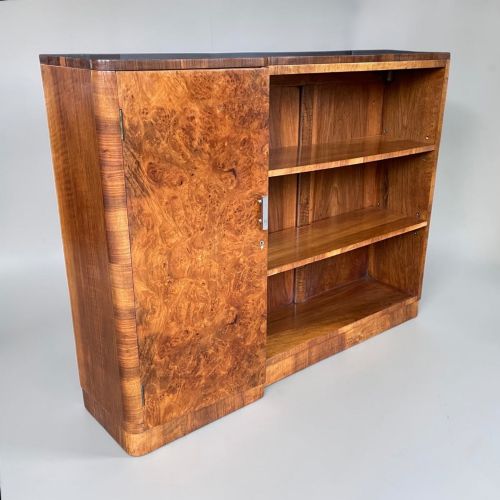
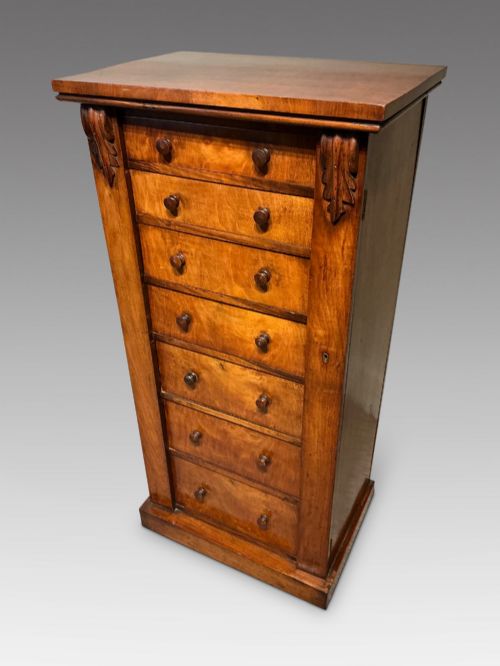
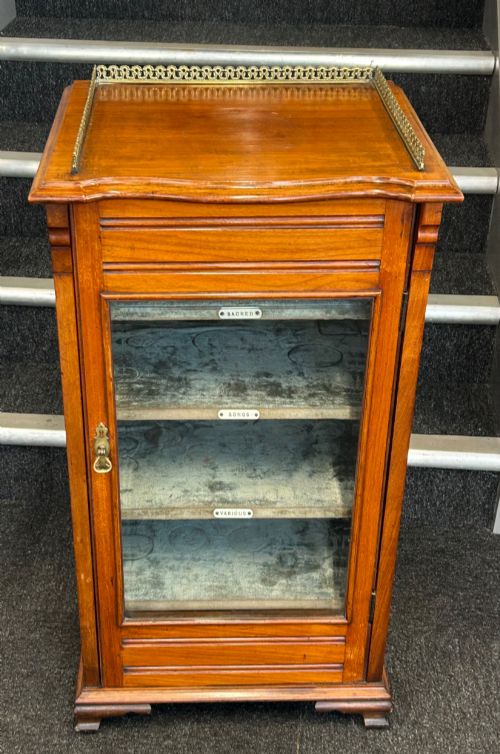
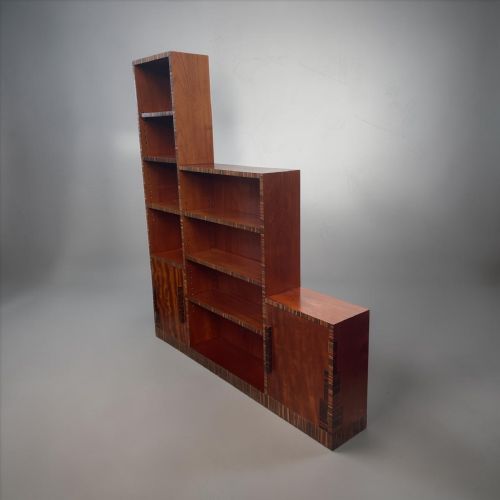
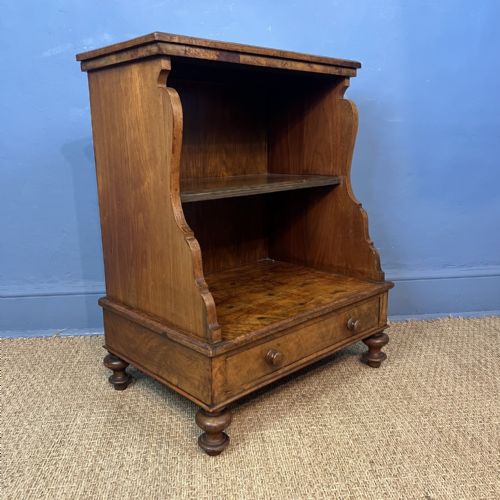
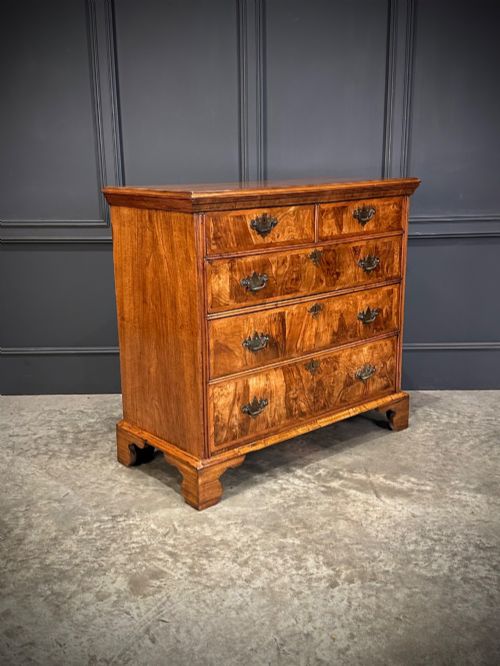
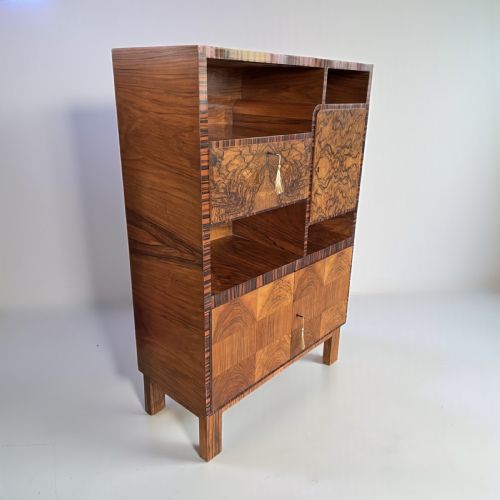
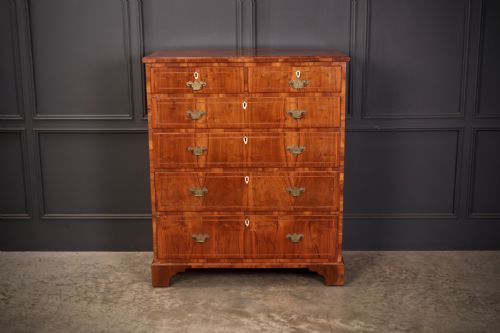
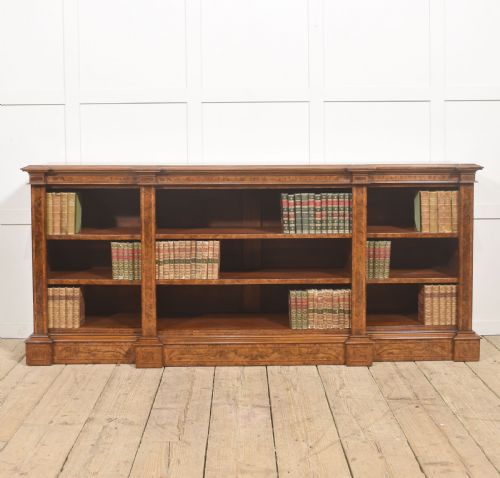
A walnut storage unit covers a broad span of domestic furniture designed to keep rooms orderly, most commonly appearing here as chests of drawers, bookcases, and cabinets. These items range from simple 18th-century country pieces and grand 19th-century breakfront bookcases to compact 1930s Art Deco tallboys and stepped shelving.
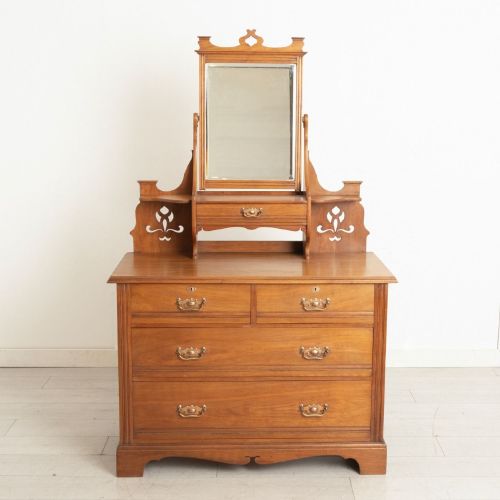
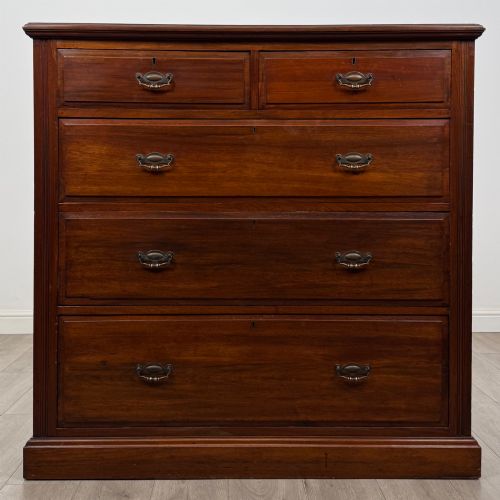
The periods represented stretch across the 18th, 19th, and early 20th centuries, taking in Victorian, Edwardian, and Art Deco designs. Buyers are most likely to encounter Victorian and Edwardian chests of drawers or open bookcases made from walnut, burr walnut, and walnut veneer.
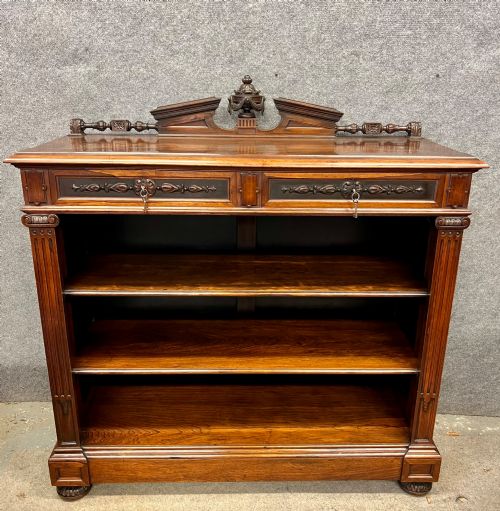
Regional styles vary from English and French Provincial buffets to Dutch marquetry corner cabinets and Biedermeier commodes. Each form reflects the domestic needs of its era, whether that meant housing sheet music, displaying books, or storing napkins.
Materials and construction
Makers utilised solid walnut alongside decorative burr walnut veneers to achieve rich, figured grain patterns across drawer fronts and cabinet doors. Secondary woods and structural frames often incorporated hardwood, while ebonised wood details provided contrast on late 19th-century pieces.
Brass hardware, including swing handles, escutcheons, and hinges, functionalised the design while adding metallic punctuation to the dark wood surfaces. Glass panelling appeared on bookcases and display cabinets, and fabric occasionally lined interior compartments.
Walnut Storage Unit Retail Price Guide 2026
Typical asking prices for walnut storage unit among the pieces listed under this phrase on Sellingantiques today, from the lower quarter to the upper quarter. They describe what is for sale here now, not the wider market.
Object types include sheet music cabinets, napkin drawers, tallboys, and floor-standing corner cabinets from English, French, and Dutch origins.
Variations in quality
Quality in these pieces depends heavily on the selection and matching of the timber veneers, particularly where burr walnut creates symmetrical patterns across large surfaces like breakfront bookcases and chest drawers. Superior examples show careful grain alignment and restrained marquetry rather than heavy-handed decoration.
Construction methods also separate standard items from finer works, visible in the tightness of dovetail joints on drawers, the smooth action of sliding doors, and the original integrity of brass fittings and glass panes. The restraint of the carving and the proportion of the cornice or plinth dictate the visual success of the piece.
Shapland & Petter·Whytock & Reid
The Walnut Storage Unit Glossary
- Burr walnut
- A veneer sliced from the gnarled growths of a walnut tree, yielding a swirling, highly decorative grain pattern. It was frequently used on the primary display surfaces of 19th-century and Art Deco cabinets.
- Breakfront
- A piece of furniture whose central section projects forward from the flanking sections. This configuration is commonly seen on large bookcases and storage units from the 19th century.
- Tallboy
- A tall chest of drawers, often constructed as one chest stacked upon another. The form gained popularity in the 18th century and appeared in later Art Deco iterations.
- Marquetry
- The art of applying pieces of veneer to a structure to form decorative patterns and pictures. Dutch examples often display intricate floral and botanical motifs executed in various woods.
- Ebonised wood
- Timber treated with a dark stain or finish to imitate ebony. It was widely used for mouldings and detailing during the Victorian and late 19th-century periods.
Walnut Storage Unit: Frequently Asked Questions
What periods do these pieces come from?
The selection spans from the 18th century through the Victorian and Edwardian eras, extending into 1930s Art Deco designs. Pieces range from early Georgian chests to later 20th-century bookcases.
Each era brought distinct proportions and decorative treatments, allowing buyers to match specific historical styles to their interiors.
How do I care for walnut furniture?
Walnut benefits from stable room temperatures away from direct sunlight and strong heat sources, which can dry out the timber and veneer. Regular dusting with a soft, dry cloth preserves the finish.
Occasional application of appropriate wax polish maintains the moisture and lustre of the wood without building up a heavy residue.
Are these units suitable for modern homes?
Their practical forms, including bookcases, chests of drawers, and wall cabinets, make them well-suited for contemporary storage and display needs. Compact Edwardian and 1930s pieces fit easily into modern floor plans.
The warm tones of the timber also complement a wide variety of interior colour schemes.
What is the difference between solid walnut and walnut veneer?
Solid walnut uses thick timber throughout the structural parts of the cabinet, whereas walnut veneer applies a thin layer of highly figured wood over a stable secondary hardwood base. Veneering allowed makers to utilise expensive burr walnut without warping risks.
Both methods have a long history in quality cabinet making.