





Walnut Standing Shelves
Walnut standing shelves bring warmth and tiered display space to a room, most commonly appearing as Victorian whatnots and multi-tiered etageres.
Walnut Standing Shelves
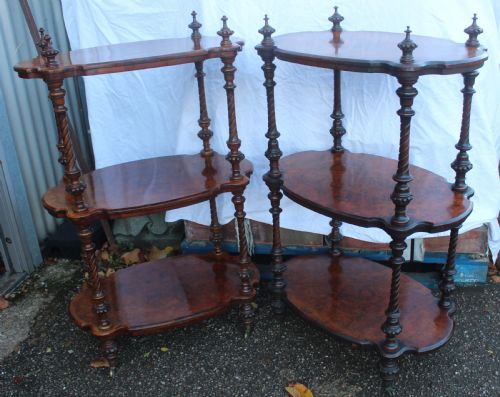
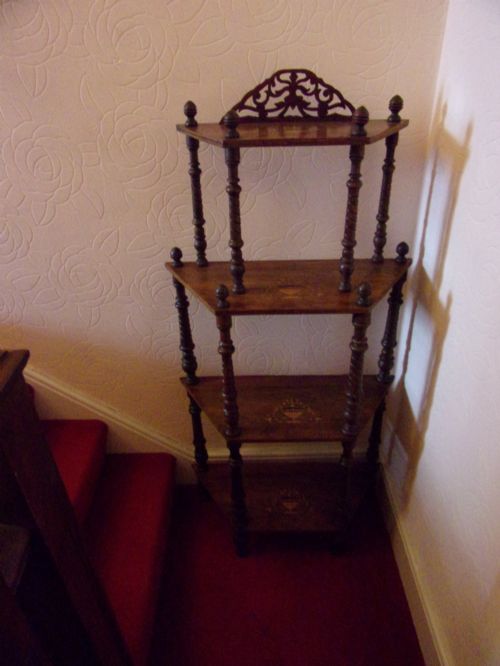
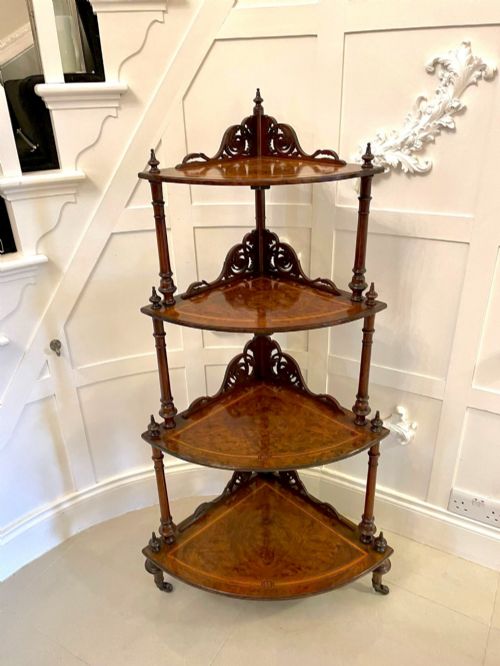
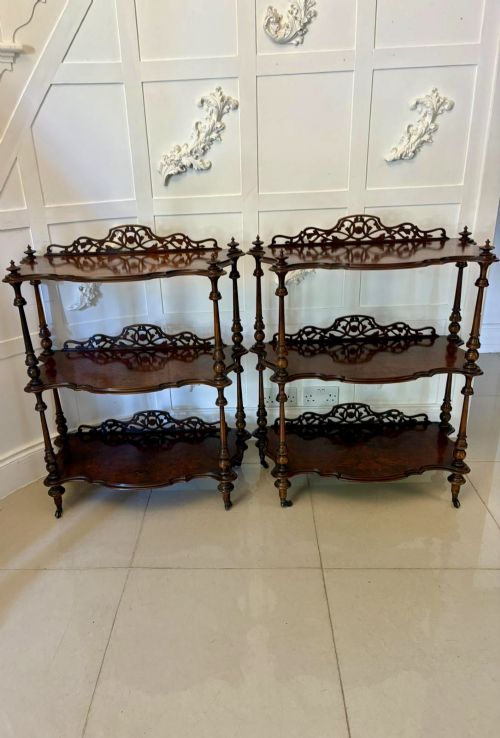
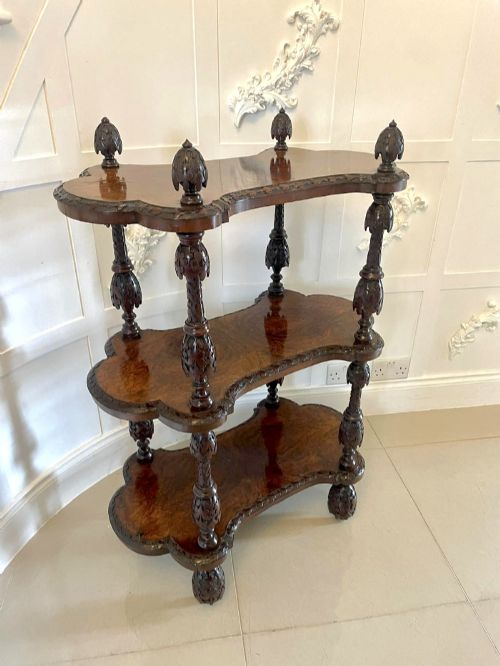
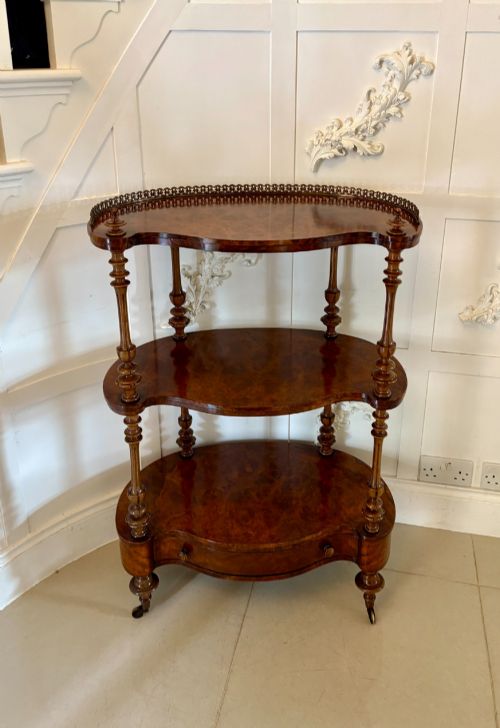
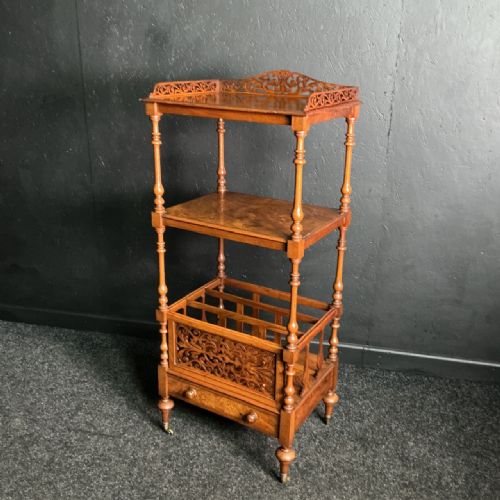
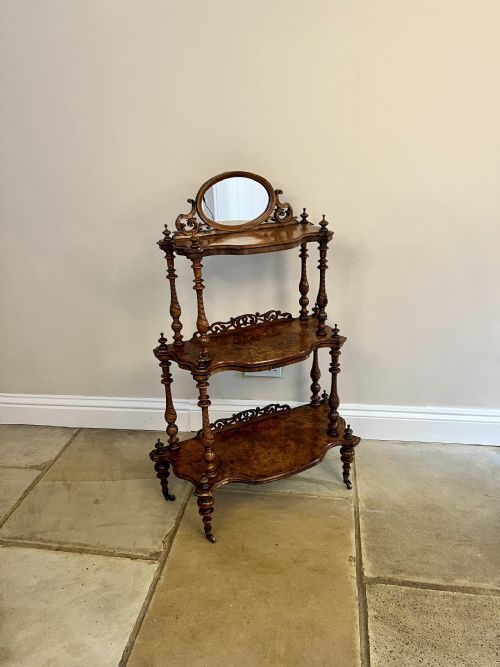
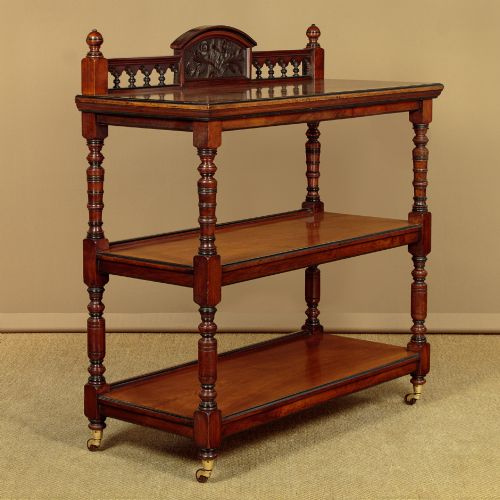
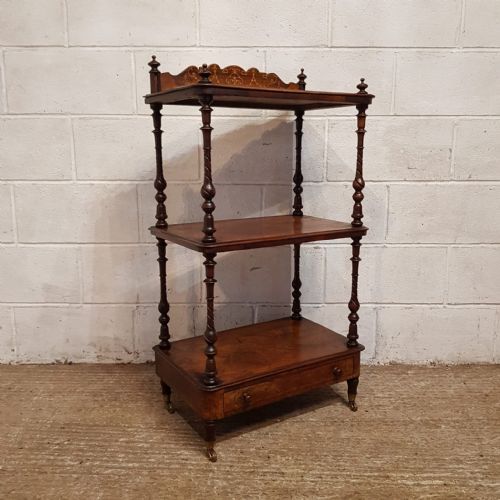
When searching for walnut standing shelves, collectors primarily encounter nineteenth-century tier structures known as whatnots and etageres. These pieces are designed for freestanding display or corner placement, offering multiple tiers supported by turned columns or carved uprights. The selection spans straightforward open bookcases to elaborate serpentine-shaped pieces fitted with brass mounts or lower drawers.
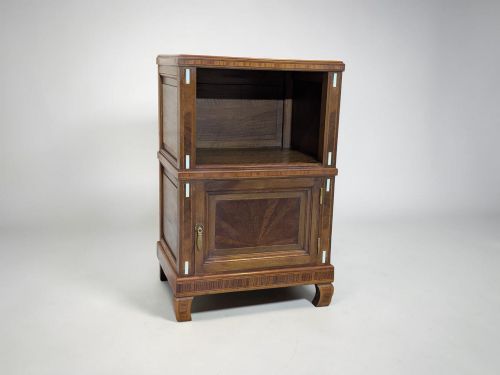
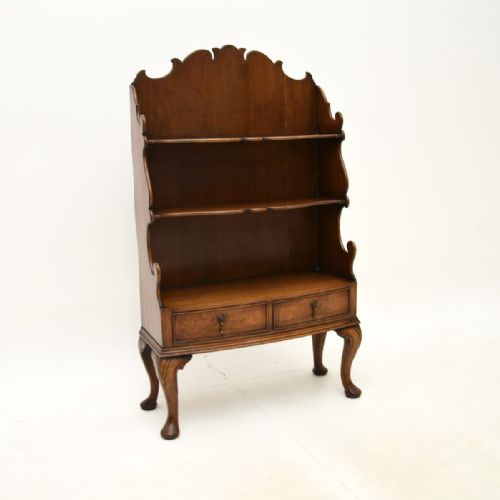
Victorian examples dominate the offerings, frequently rendered in burr walnut with rich grain patterns. Alongside these multi-tiered display stands, the inventory includes Edwardian open bookcases and later variations stretching into the twentieth century. Forms range from compact corner pieces and music cabinets to low bookcases and cascading bookshelves.
How They Were Made
Cabinetmakers utilised figured walnut and burr walnut veneers laid over secondary timbers to achieve striking grain patterns on the main surfaces. This technique allowed makers to showcase the swirling figure of the wood across flat panels, tabletops, and tier shelves. Solid walnut was typically reserved for structural elements such as turned legs, columns, and upright supports.
Construction details often incorporate brass mounts, castors, and glazed or mirrored sections, particularly in pieces influenced by French design or the Aesthetic Movement. Marquetry inlay, ebonised wood details, and pierced fretwork appear across Victorian and Edwardian examples to add visual contrast. Shelving units are frequently supported by delicate turned columns or shaped brackets that maintain overall stability while keeping the profile light.
Walnut Standing Shelves Retail Price Guide 2026
Typical asking prices for walnut standing shelves among the pieces listed under this phrase on Sellingantiques today, from the lower quarter to the upper quarter. They describe what is for sale here now, not the wider market.
Several stands feature fully adjustable shelves, proving that nineteenth-century readers swapped their books around just as often as we do today.
What Varies in Quality
Quality in these standing shelves rests heavily on the selection and matching of the burr walnut veneer across the tiers and panels. Superior examples exhibit continuous, highly figured grain patterns that have been carefully laid out by the cabinetmaker, whereas simpler pieces rely on plain walnut or less dynamic cuts of timber.
The refinement of the supporting structure also dictates the tier of craftsmanship. Pieces featuring finely turned columns, delicate pierced fretwork, or serpentine-shaped mouldings demand higher skill than standard rectilinear open bookcases. The integration of auxiliary materials, such as finely chased brass mounts or precise marquetry, separates standard utilitarian furniture from exhibition-grade examples.
Gabriel Viardot
The Walnut Standing Shelves Glossary
- Whatnot
- A movable piece of furniture with shelves placed one above another for displaying ornaments or books. This form became particularly popular during the Victorian period.
- Etagere
- A French hanging or standing piece of furniture with a tier of open shelves for small objects. These often feature slender turned supports and decorative mounts.
- Burr Walnut
- Wood taken from a walnut tree growth where the grain has deformed into a swirling pattern. Cabinetmakers slice this wood into thin veneers for decorative surfaces.
- Canterbury
- A low stand originally designed for sheet music, featuring vertical partitions. They frequently appear combined with standard whatnot shelving units.
- Aesthetic Movement
- A late nineteenth-century design style emphasising visual beauty over narrative or moral function. Pieces from this movement often display Japanese influences and ebonised finishes.
Walnut Standing Shelves: Frequently Asked Questions
What is the difference between a whatnot and an etagere?
A whatnot is a traditional English multi-tiered shelving unit used primarily for displaying ornaments in Victorian parlours. An etagere is the French equivalent, often sharing a similar stepped or tiered silhouette with lighter turned supports.
Both terms describe open standing shelves, though etagere designs frequently lean towards continental decorative details like brass mounts or marquetry.
Where should I place a walnut corner whatnot?
Corner whatnots fit neatly into unused room angles, making them practical for smaller spaces where a flat-backed bookcase might overwhelm the floor plan. They elevate decorative objects without obstructing pathways.
These pieces work effectively in sitting rooms, studies, or hallways to display small collections, ceramics, or framed photographs.
How do I care for burr walnut shelves?
Burr walnut benefits from a stable environment away from direct sunlight and sudden temperature shifts, which can dry out the delicate veneer. Dusting with a soft, dry cloth maintains the polished finish without harming the grain.
Occasional application of quality beeswax helps nourish the wood and preserves the depth of the figure over time.
How can I tell a Victorian whatnot from an Edwardian one?
Victorian standing shelves often feature dark burr walnut veneers, elaborate serpentine shapes, turned columns, and detailed fretwork. They tend to be heavier in presence and ornamentation.
Edwardian pieces generally present a lighter, more restrained aesthetic, frequently taking the form of open bookcases with clean lines and simpler architectural proportions.