


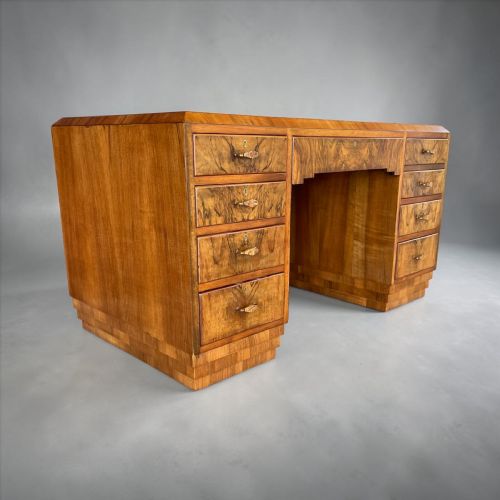
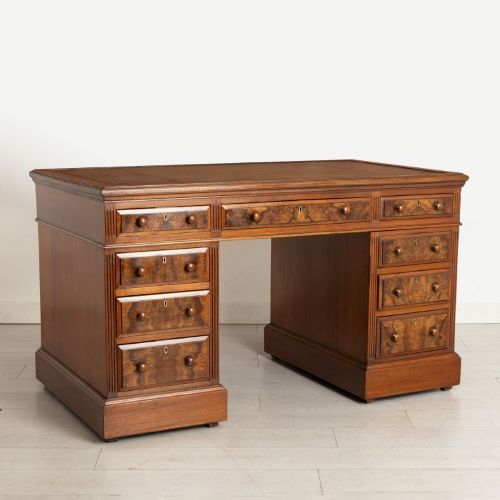
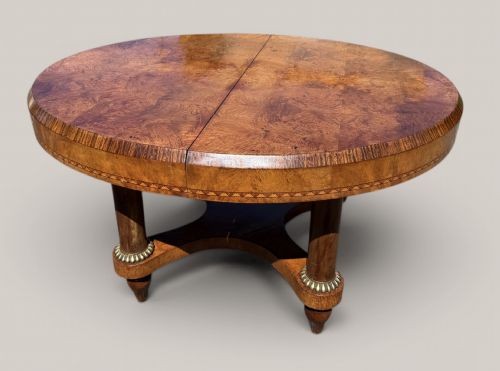
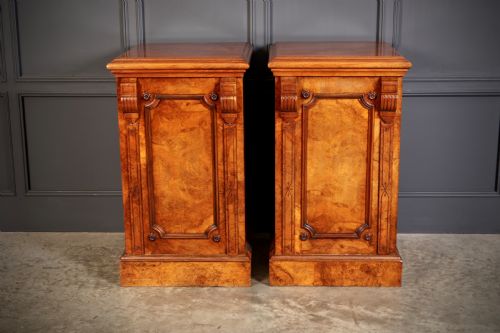

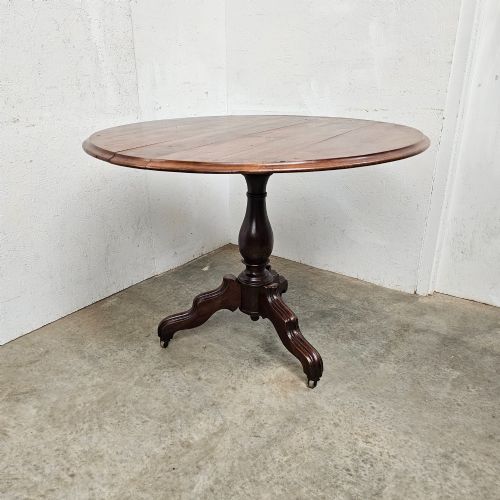
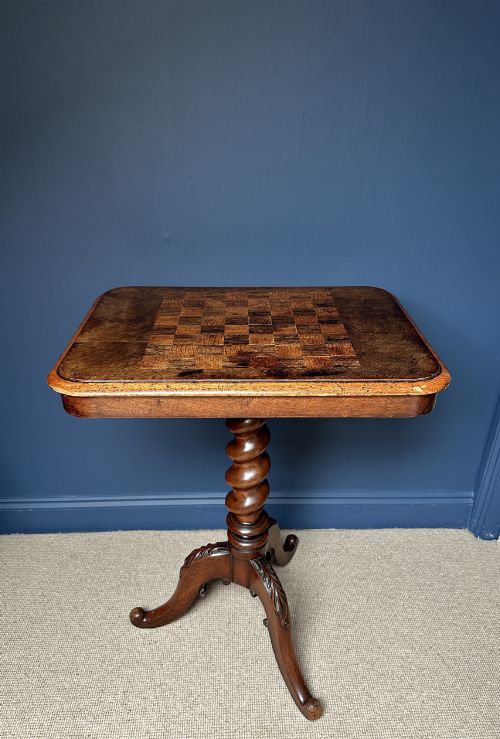
Walnut Pedestal Base
A walnut pedestal base supports tables, desks and stands with a central column rising from feet or a plinth.
Walnut Pedestal Base
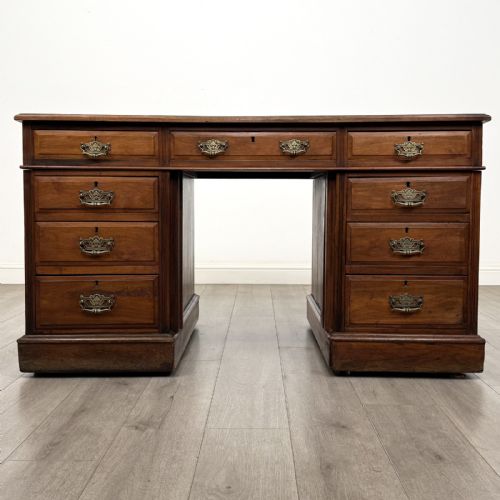
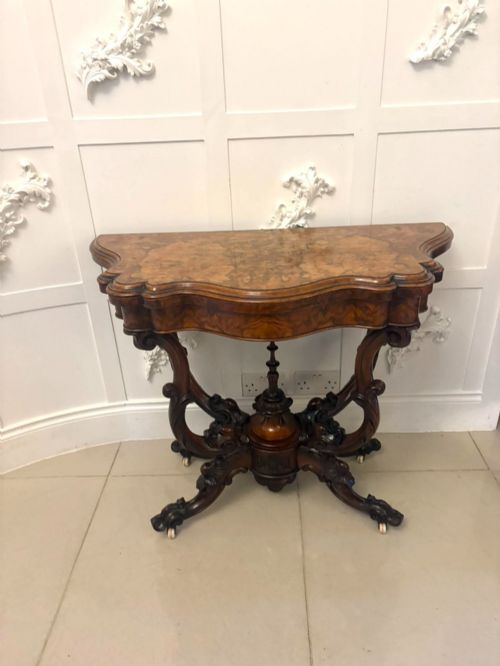
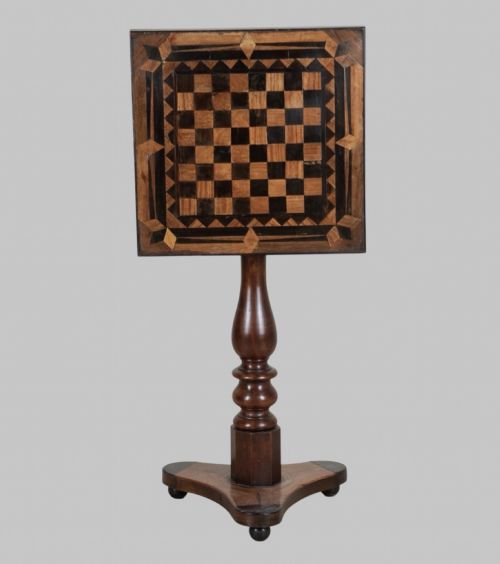
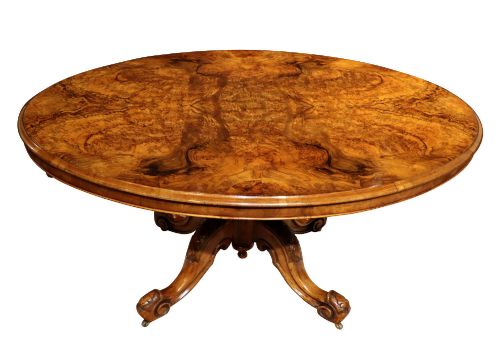
A walnut pedestal base anchors items designed for the centre of a room, including centre tables, breakfast tables, dining tables and card tables. You will encounter Victorian and 1930s examples most frequently on this page, alongside Georgian pieces and earlier continental forms.
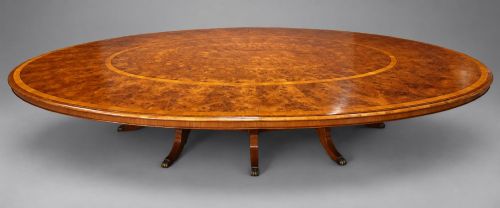
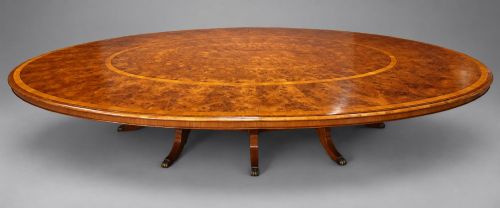
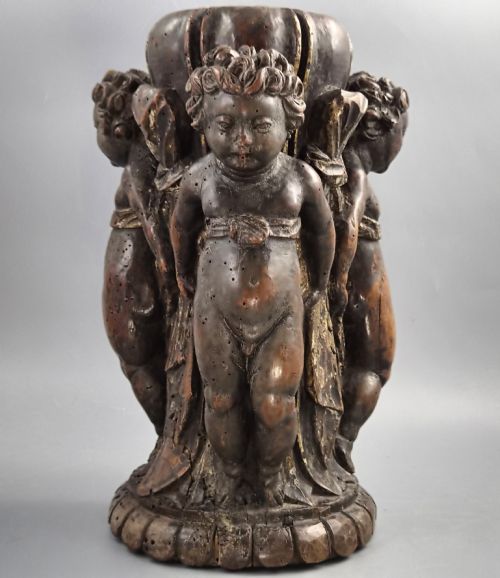
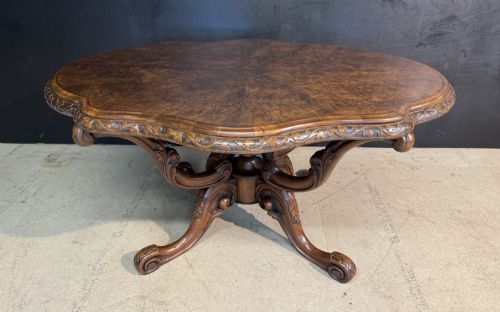
These supports range from simple turned columns and tripod configurations to heavy quadrapod bases, carved baskets, and sculptural figures like putti or eagles. The structural design dictates how the piece sits in a space and how chairs fit underneath.
The timber itself varies from plain dark walnut to highly figured burr walnut and rich veneers, often paired with secondary woods like mahogany. Surfaces frequently feature marquetry inlay, marble tops or carved detailing that marks out the specific period of manufacture.
Materials and construction
Cabinet makers utilised solid walnut and decorative burr walnut veneers applied over underlying timber carcases to achieve rich figured patterns on table tops and column shafts. Brass fittings, marble slabs and secondary woods such as mahogany appear in structural elements and decorative mounts.
Carved sections on bases rely on hand-chiselled detail, visible in leafy scrolls, tripod legs, and figural supports like eagles or putti. Turned columns employ lathe work to shape the central pedestal before it joins the foot or platform base.
Walnut Pedestal Base Retail Price Guide 2026
Typical asking prices for walnut pedestal base among the pieces listed under this phrase on Sellingantiques today, from the lower quarter to the upper quarter. They describe what is for sale here now, not the wider market.
Listings span from the 17th century through the Georgian and Victorian eras up to 1930s Art Deco dining suites and coffee tables.
Assessing quality
Quality rests in the choice of timber and the complexity of the grain, where rich burr walnut and symmetrical veneers elevate an item above plain stock. The depth and crispness of hand-carving on the pedestal base also separate standard production from superior craftsmanship.
Structural stability determines utility, particularly on central columns and multi-legged bases supporting heavy marble or timber tops. The precision of marquetry inlay and the retention of original surface patination complete the measure of a piece.
The Walnut Pedestal Base Glossary
- Burr walnut
- A figured wood grain obtained from growths on walnut trees, showing swirling patterns and knots. It is sliced into thin veneers for decorative surfaces.
- Quadrapod base
- A heavy four-footed support structure radiating from a central column. This arrangement provides stability for large dining and breakfast tables.
- Marquetry
- Decorative patterns formed by fitting together small pieces of coloured wood veneer. It frequently decorates Victorian and Georgian table tops.
- Torchiere
- A tall stand or pedestal originally designed to hold a light source or candle. Surviving examples often feature elaborate carved walnut figures or columns.
Walnut Pedestal Base: Frequently Asked Questions
Where should I place a pedestal table?
These tables suit the centre of a room where the carved base can be viewed from all sides without being blocked by walls. They also function effectively as breakfast or card tables in larger reception spaces.
Ensure you measure the floor space around the central column to allow comfortable seating and movement. The pedestal design allows chairs to tuck in neatly beneath the top.
How do I care for walnut furniture?
Keep walnut furniture away from direct heat sources and strong sunlight to prevent the timber and veneers from drying out or fading. Regular dusting with a soft, dry cloth protects the polished surface.
Avoid using silicone-based polishes or excessive moisture on antique wood. Occasional application of a suitable wax preserves the lustre of the grain.
What is the difference between a centre table and a dining table?
Centre tables are traditionally freestanding decorative pieces meant to sit in the middle of a room, often featuring detailed marquetry or tilt-top mechanisms. Dining tables are built primarily for seated meals and frequently extend to accommodate multiple guests.
Some large pedestal tables serve both functions, combining robust construction with decorative marquetry tops.
How can I tell the period of a pedestal base?
Dating relies on the style of the carving, the turning of the pedestal column, and the choice of timber veneer. Georgian pieces show restraint and classical inlay, while Victorian examples often feature heavy burr walnut and elaborate carved quadrapod bases.
Art Deco items from the 1920s and 1930s strip away ornamentation in favour of clean, dark walnut forms and geometric silhouettes.