


Walnut Parlor Chairs
Walnut parlor chairs bring Victorian and Edwardian drawing rooms to life with carved frames, cabriole legs, and upholstered seats.
Walnut Parlor Chairs
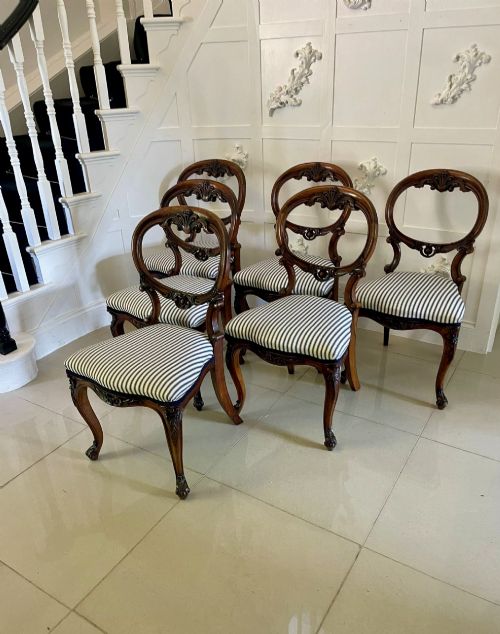
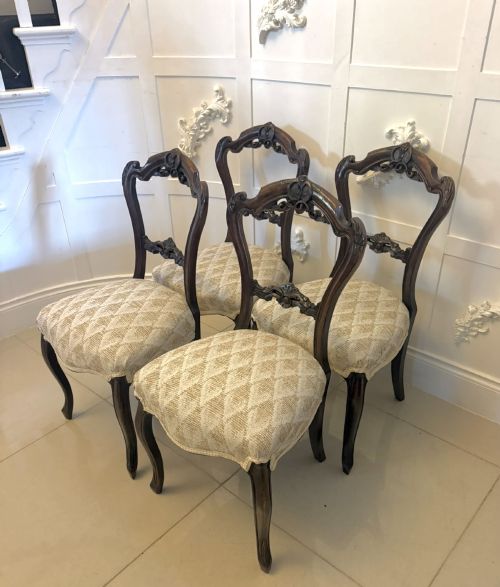
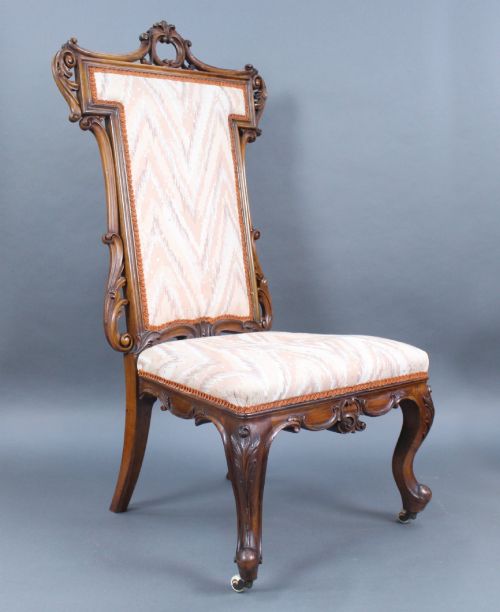
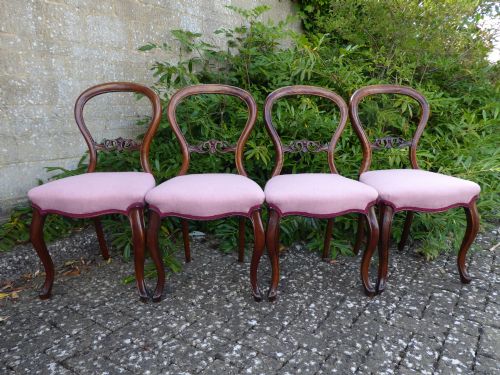
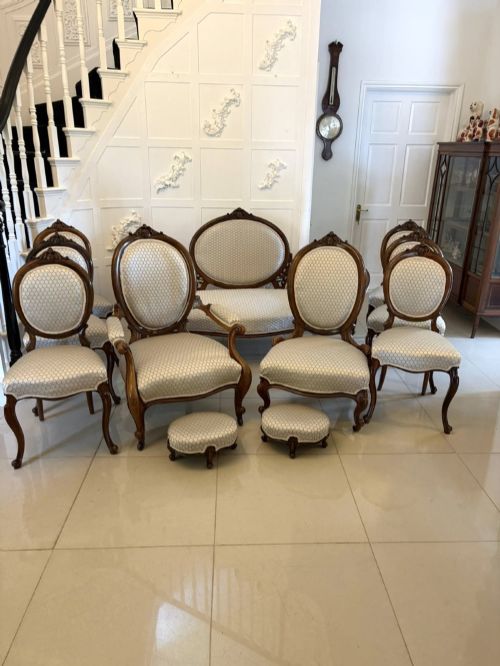
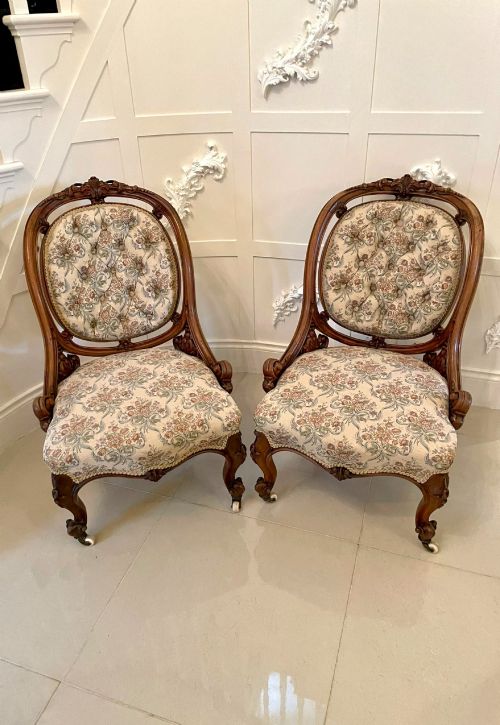
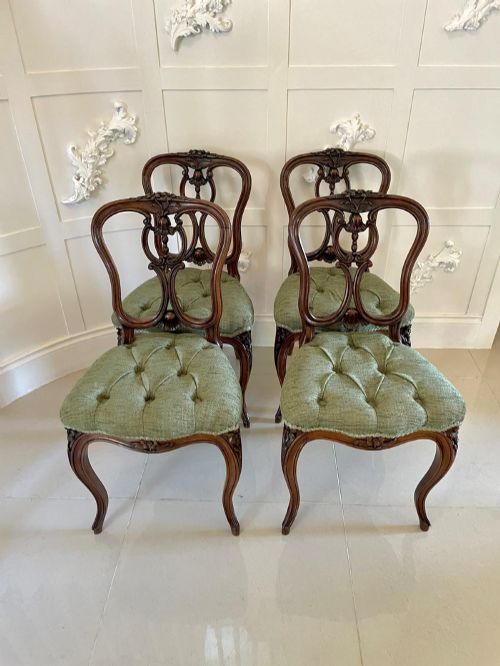
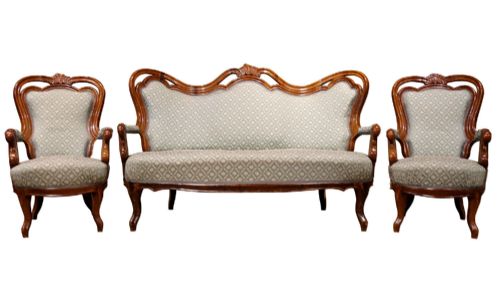
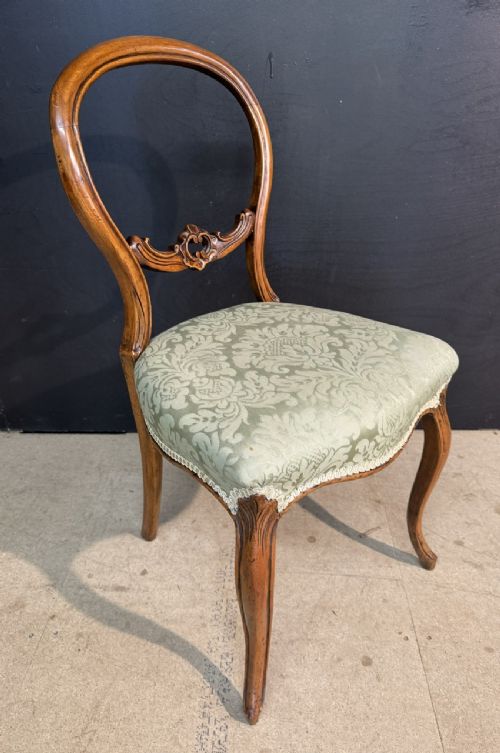
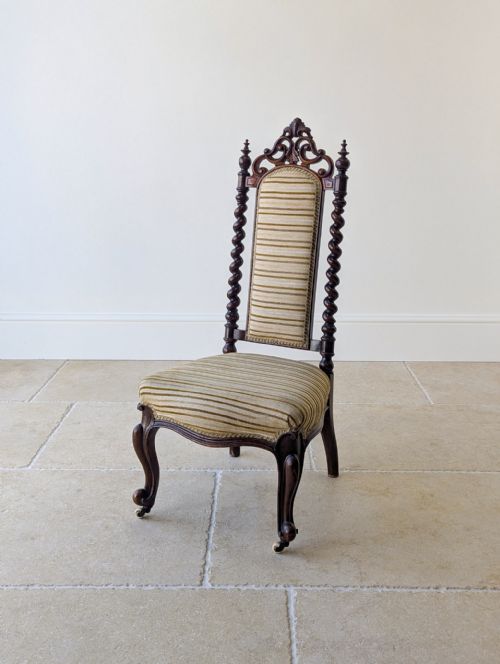
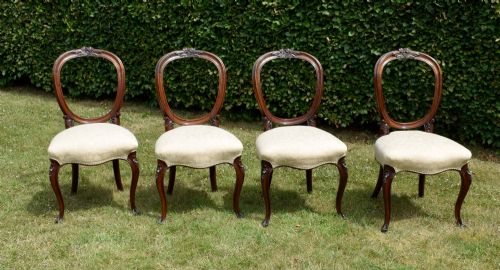
Walnut parlor chairs encompass dining chairs, armchairs, side chairs, and occasionally complete salon suites dating from the Victorian and Edwardian periods. The most frequent examples you will encounter are single chairs, pairs, or sets of four and six, often featuring carved walnut frames.
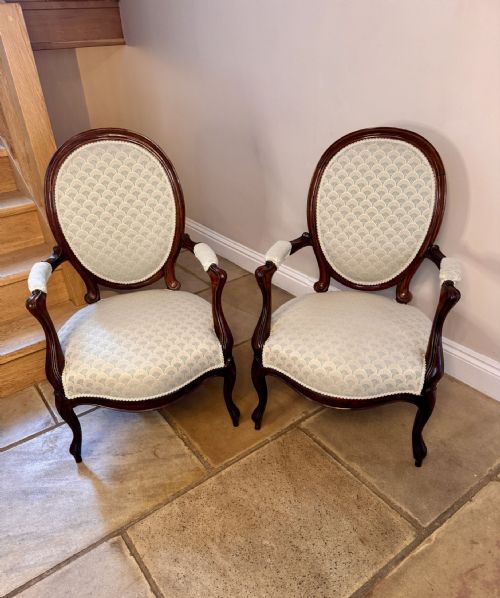
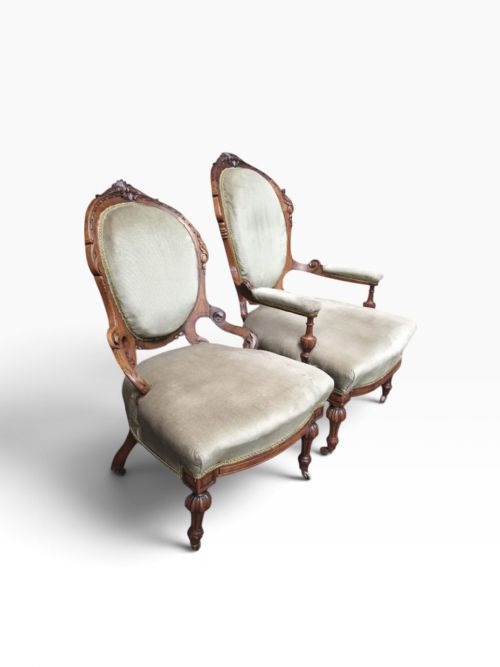
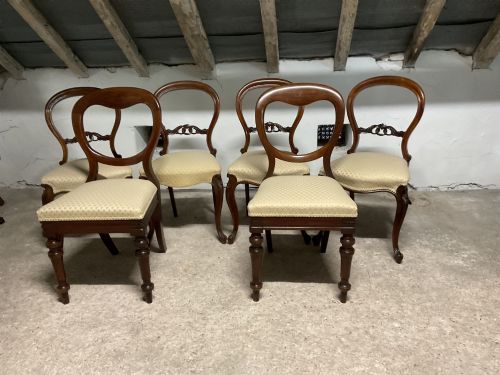
The forms span balloon back designs, open armchairs, and occasional chairs made throughout the nineteenth century and into the early twentieth century. These seating pieces served formal drawing rooms and sitting rooms, ranging from modest side chairs to paired ladies and gentlemen's armchairs.
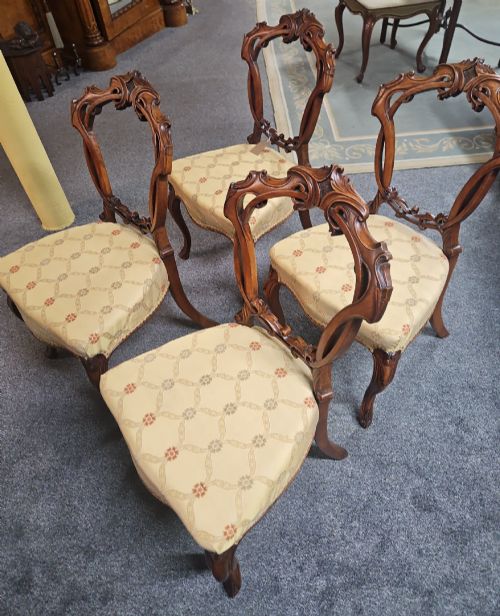
Makers drew on various revival styles, including French Rococo Revival, Louis XV Revival, and Empire Revival, adapting historical continental shapes for British and European interiors. Such pieces reflect the changing domestic fashions of the Victorian era and the subsequent Edwardian period.
Distinguishing quality in walnut parlor chairs
Quality rests in the depth and crispness of the wood carving, the precision of the joinery, and the integrity of the walnut timber. Pieces described in the evidence as fine or exhibition quality display superior hand-carved detail on the frames and sturdier structural construction.
The scale of matching sets and the cohesion of larger salon suites also alter the standing of a piece, particularly where pairs or groups of six survive together. The proportion of the cabriole legs and the execution of details like pierced splat backs distinguish standard seating from exceptional examples.
Walnut Parlor Chairs Retail Price Guide 2026
Typical asking prices for walnut parlor chairs among the pieces listed under this phrase on Sellingantiques today, from the lower quarter to the upper quarter. They describe what is for sale here now, not the wider market.
His and hers armchairs ensure nobody has to argue over who gets the wider seat after dinner.
Morison and Co of Edinburgh
The Walnut Parlor Chairs Glossary
- Balloon back
- A chair back shaped like a continuous rounded loop resembling a balloon, characteristic of many Victorian dining and parlor seats.
- Cabriole leg
- A furniture leg that curves out and then in, tapering to a foot, frequently seen on revival pieces from the nineteenth century.
- Salon suite
- A matching set of drawing room seating typically comprising a settee, armchairs, and side chairs intended for formal reception rooms.
- Pierced splat
- The central vertical strip of a chair back that has been carved or cut through to create an openwork decorative pattern.
- Ladies and gentlemen's chairs
- A matched pair of armchairs where the ladies chair is typically smaller and lower, designed for the Victorian parlor.
Walnut Parlor Chairs: Frequently Asked Questions
What is a parlor chair?
A parlor chair is a decorative seating piece designed for the formal reception rooms of Victorian and Edwardian homes. These chairs prioritized aesthetic appeal and comfort for entertaining guests over utilitarian dining use.
They often incorporated carved walnut frames and upholstered components that matched larger salon suites or stood as individual occasional pieces.
How do I date these chairs?
Dating relies on stylistic markers, construction methods, and period characteristics recorded across the nineteenth and early twentieth centuries. Victorian pieces often display Rococo revival influences or balloon back forms, whilst Edwardian examples show lighter proportions.
Reference to specific decades or reigns in descriptions helps anchor the manufacturing period between 1850 and the early 1900s.
Were these chairs used in dining rooms?
Many walnut chairs from this era served as dining chairs, particularly those formed in sets of four or six with sturdy wooden frames. Dining variants usually featured straight or cabriole legs and supportive upholstered seats suitable for prolonged sitting.
Salon and parlor chairs, by contrast, tended to include armchairs, occasional chairs, and ladies and gentlemen's pairs meant for sitting rooms.
How do I care for antique walnut furniture?
Caring for antique walnut involves keeping wooden frames away from direct sunlight and excessive temperature fluctuations to prevent the timber from drying out. Gentle dusting with a dry cloth maintains the finish without harming the historic surface.
Upholstered sections benefit from professional cleaning suited to historic textiles like velvet and traditional fabrics.