



Walnut Parlor Cabinet
A walnut parlor cabinet brings warmth and gravitas to a reception room through rich timber figure and polished brass mountings.
Walnut Parlor Cabinet
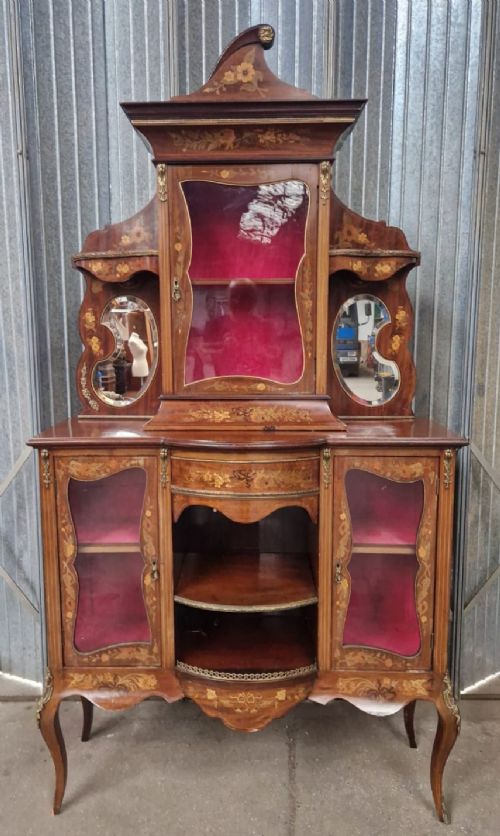
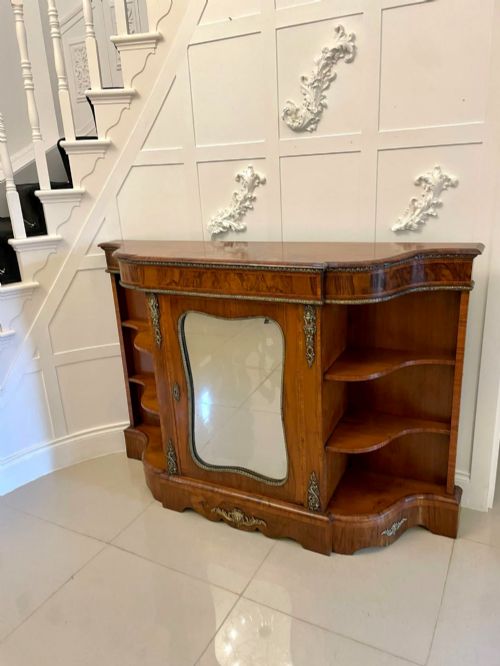
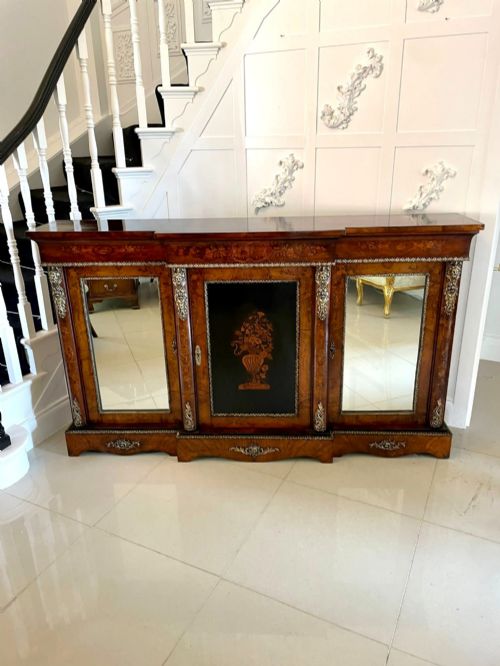
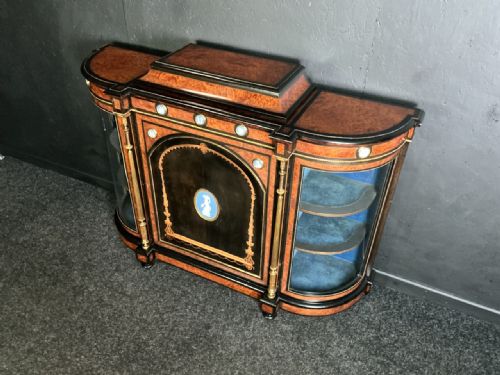
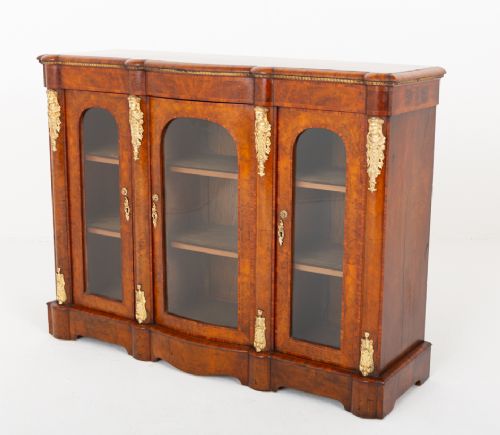
A walnut parlor cabinet sits within a tradition of formal entertaining furniture designed to display prized possessions in Victorian and Edwardian rooms. When you examine a walnut parlor cabinet on this page, you meet credenzas, display cabinets, and mirrored sideboards dating from the mid-nineteenth century onward.
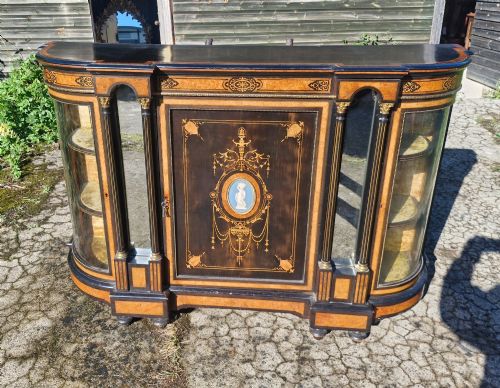
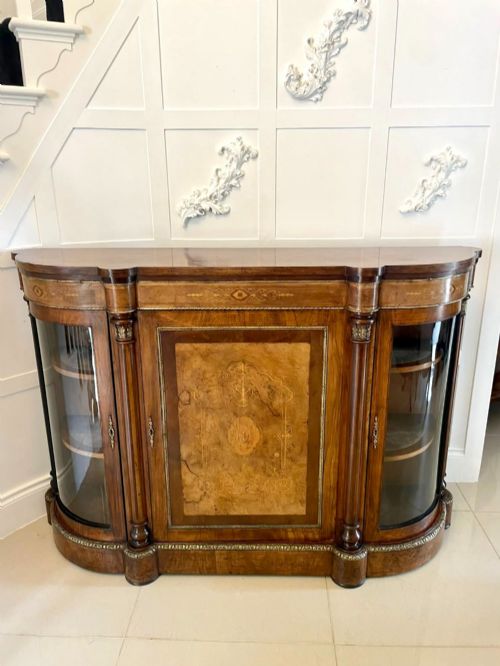
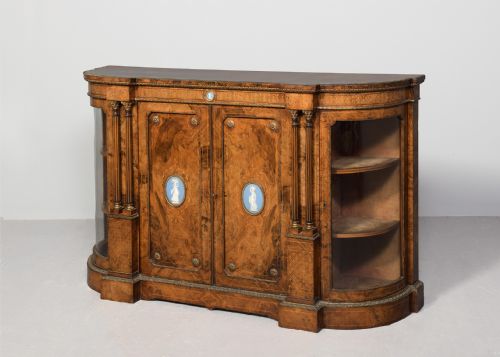
The credenza form dominates these listings, frequently featuring curved glass doors, side cupboards, and central shelving tailored for porcelain and decorative objects. Pieces emerge primarily from Victorian workshops, spanning decades from eighteen fifty to nineteen hundred alongside Edwardian variations.
How they were made
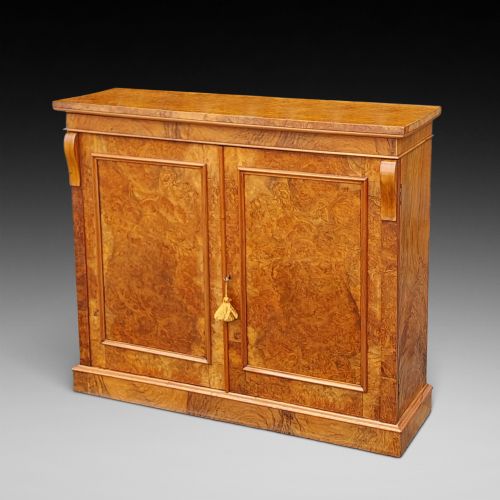
Cabinet makers utilised figured and burr walnut veneers applied over solid carcases to achieve rich, swirling grain patterns across the primary surfaces. Workshops enhanced these rich brown tones with boxwood inlay, ebonised wood details, and porcelain plaques set flush into the timber.
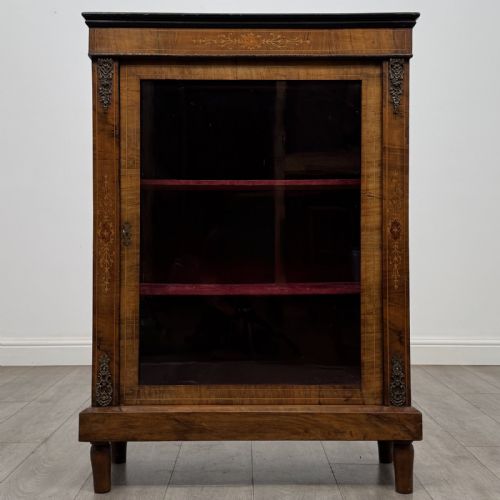
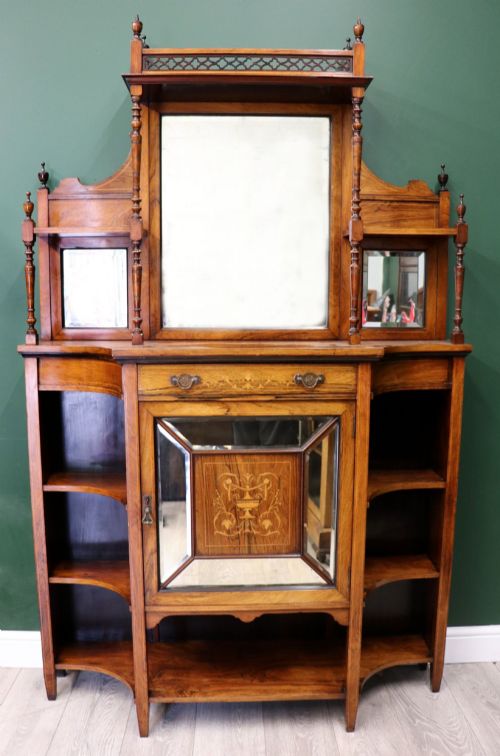
Cast ormolu mounts and brass fittings edge the doors, plinths, and glazed panels, while mirrored backs reflect light within the display compartments. Internal structures occasionally incorporate fitted writing drawers alongside adjustable wooden shelving.
Listings feature walnut parlor cabinets spanning the Victorian, mid-Victorian, and Edwardian periods, incorporating glass, ormolu, porcelain, and boxwood inlay.
What varies in quality
The ambition of the marquetry design and the selection of the burr walnut veneer dictate the visual impact of an individual cabinet. Elaborate serpentine fronts and mirror-backed superstructures demand greater skill from the joiner than standard straight-fronted sideboards.
The Walnut Parlor Cabinet Glossary
- Burr walnut
- A prized timber veneer harvested from the gnarled growths of walnut trees. It yields complex, swirling grain patterns highly valued by nineteenth century cabinet makers.
- Credenza
- A low cabinet for a dining or drawing room, typically comprising a central cupboard flanked by curved glass display doors. It serves as a surface for serving and display.
- Ormolu
- Gilded bronze mounts cast and chased by hand to ornament furniture corners, friezes, and door frames. The technique adds metallic contrast to dark timber.
- Marquetry
- The art of applying thin pieces of wood veneer and other materials to form decorative patterns and pictures on a carcase.
- Secretaire drawer
- A pull-out drawer concealing a fitted writing desk with small compartments and a baize-lined writing surface.
Walnut Parlor Cabinet: Frequently Asked Questions
What is a walnut parlor cabinet used for?
These cabinets served primarily to display porcelain, silver, and decorative objects in formal reception rooms. The glass-fronted side compartments protected delicate items while reflecting light from the room.
Larger versions with mirrored backs added a sense of depth and illumination to Victorian interiors. Some pieces also incorporated enclosed storage or hidden writing compartments for household correspondence.
How should I care for burr walnut veneer?
Burr walnut requires stable indoor humidity and protection from direct sunlight to prevent veneer lifting and timber fading. Regular dusting with a soft, dry cloth preserves the polished surface without chemical buildup.
A light application of appropriate furniture wax every few months nourishes the timber and maintains the subtle sheen of the French polished finish.
What is the difference between a credenza and a sideboard?
A credenza is typically a low, freestanding cabinet featuring glazed display compartments flanking a central cupboard, designed originally for the Victorian parlor. A sideboard tends to be heavier and taller, traditionally utilised in a dining room for serving food and storing tableware.
Parlor cabinets listed here often blur these boundaries by combining display glass with lower cupboards and mirrored wooden superstructures.