

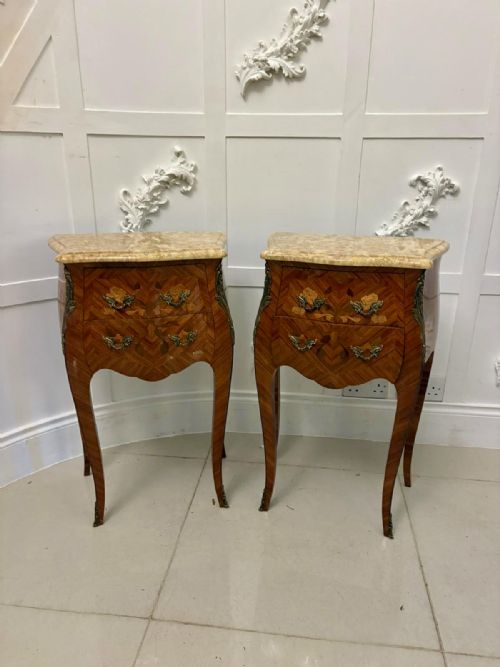


Walnut Marquetry Bedside Tables
Walnut marquetry bedside tables bring French floral patterns and figured wood to the bedside, combining decorative inlays with practical surfaces for lamps and books.
Walnut Marquetry Bedside Tables
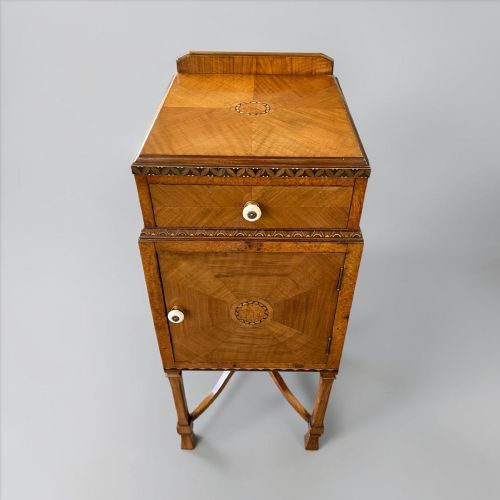
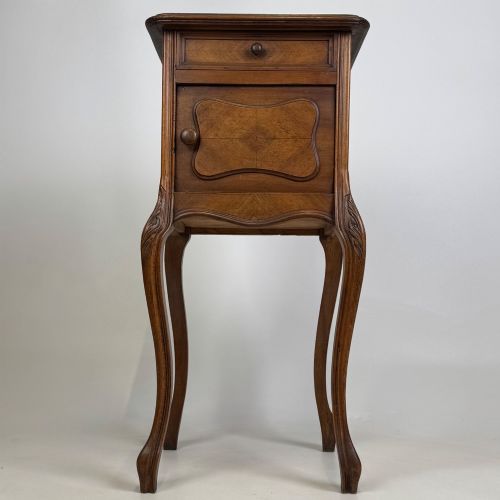
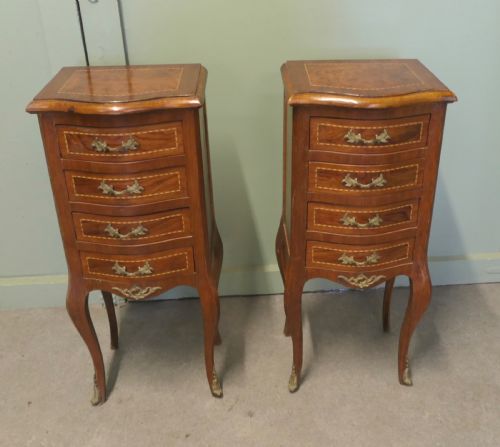
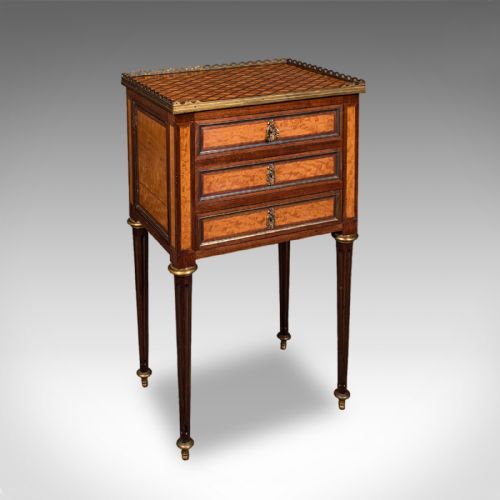
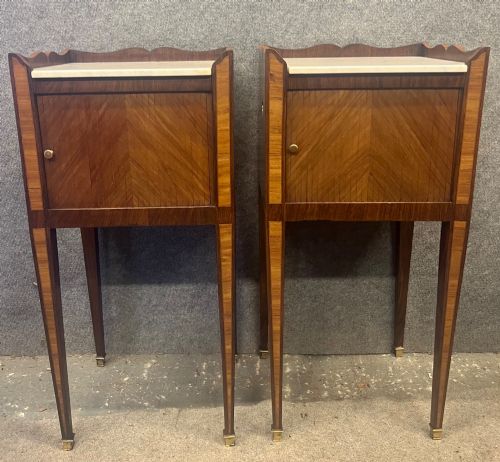
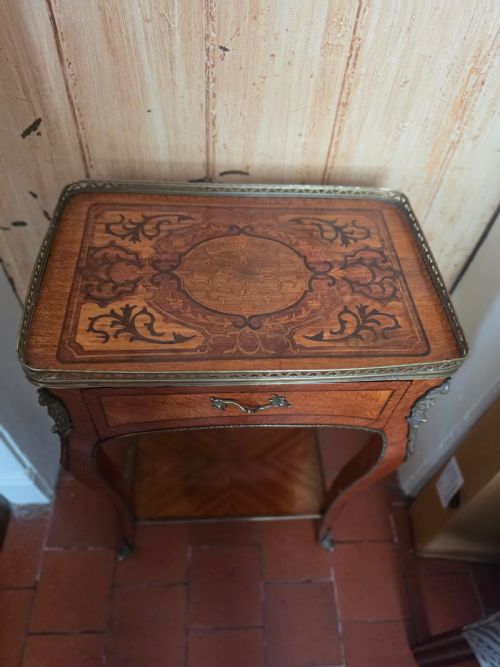
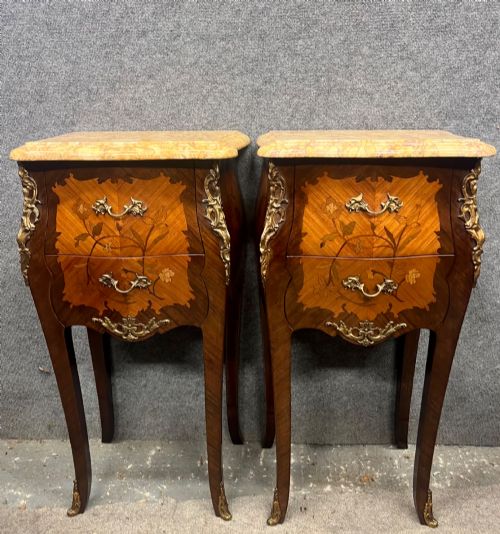
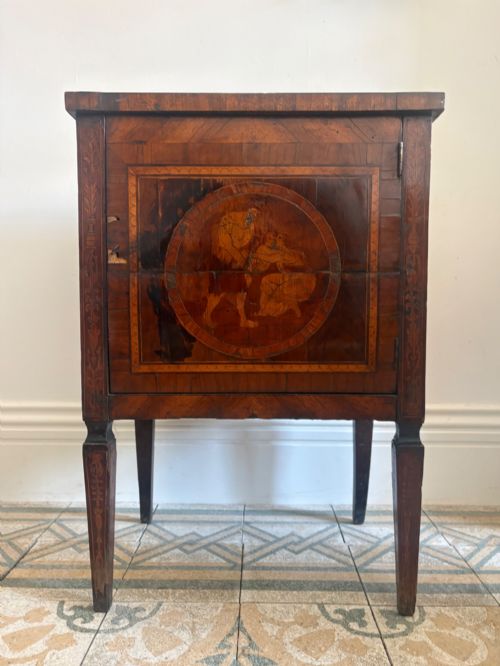
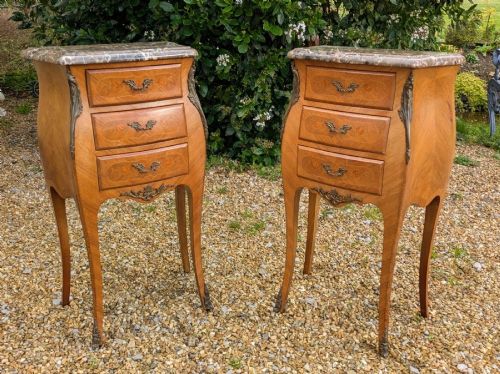
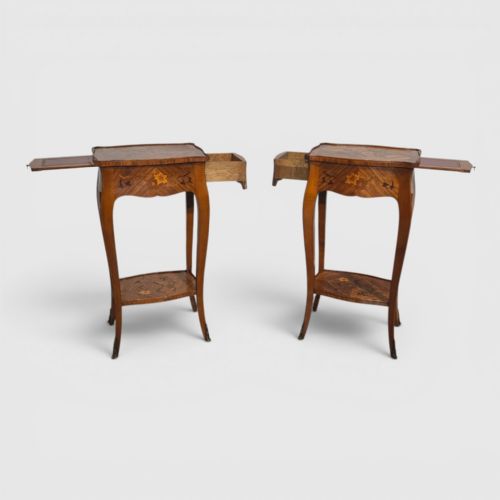
Walnut marquetry bedside tables encompass compact French and Italian side cabinets, commodes, and lamp tables designed for the bedroom. These pieces draw heavily on Louis XV and Louis XVI revival aesthetics, presenting serpentine fronts, bombe shapes, and fine geometric or floral inlays.
Originating largely from continental workshops, these items serve to introduce historic cabinet-making into contemporary interiors. They offer functional storage while maintaining the elaborate decorative vocabulary of eighteenth-century court furniture in smaller proportions.
How they were made
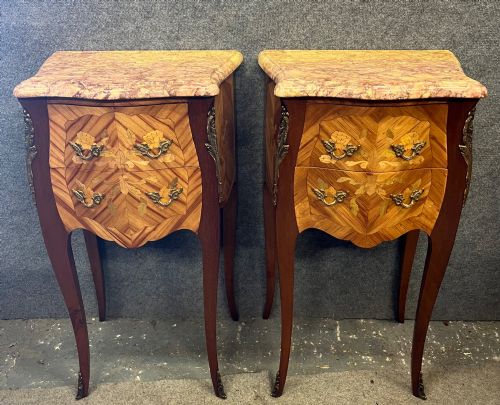
Cabinet-makers constructed carcasses using native and exotic timbers, applying fine veneers of walnut, kingwood, fruitwood, and rosewood over solid foundations. These sliced timbers formed the ground for elaborate marquetry pictures and parquetry geometric patterns.
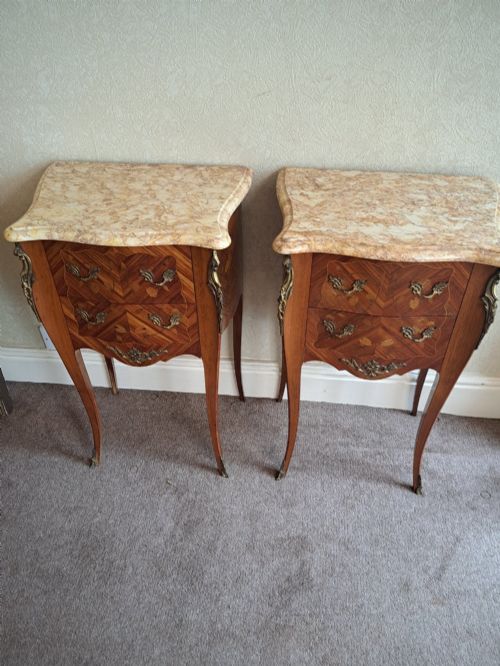
Many examples incorporate shaped marble tops, often white or veined varieties, fitted precisely to the upper surface of the cabinet. Gilded bronze or ormolu mounts, along with brass handles and escutcheons, accent the corners and framing edges.
Secret night-time storage disguised behind delicate floral marquetry ensured that nineteenth-century remedies remained hidden in plain sight.
What varies in quality
Quality rests in the crispness of the marquetry cutting and the choice of contrasting woods used to create tonal depth within the floral or geometric motifs. Finer pieces demonstrate seamless veneer matching across curved surfaces and serpentine drawers.
The execution of cast ormolu mounts and the thickness of the fitted marble slab distinguish higher tier examples from standard production. Cabinet construction details, such as dovetailed drawer linings and well-fitted doors, separate master workshops from simpler commercial outputs.
The Walnut Marquetry Bedside Tables Glossary
- Marquetry
- Decorative veneer work forming pictures or patterns by assembling small pieces of coloured wood, shell, or ivory. This technique defines the ornate surface decoration seen across these tabletops and drawer fronts.
- Ormolu
- Gilded bronze mounts applied to furniture for decorative enrichment and corner protection. Makers used these cast metal elements to accentuate the Louis XV and Rococo revival lines.
- Parquetry
- Geometric mosaic woodwork formed by small veneer blocks arranged in repeating patterns such as cubes or chequers. It frequently appears alongside floral marquetry on twentieth-century tables.
- Bombe
- An outwardly bulging, convex shape associated with continental commodes and bedside cabinets. This swelling profile requires advanced woodworking skill to veneer accurately.
- Chevet
- A French term for a small bedside table or nightstand. These compact units usually include a combination of cupboards and drawers.
Walnut Marquetry Bedside Tables: Frequently Asked Questions
What is a marquetry bedside table?
A marquetry bedside table is a small bedroom cabinet decorated with precise wood veneer patterns depicting floral or geometric designs. These pieces often feature drawers or cupboards set below a marble or wood top.
Originating primarily from French and Italian cabinet-making traditions, they adapt eighteenth-century styles into practical sizes for modern bedrooms.
How do I date these bedside tables?
Dating relies on examining construction methods, timber choices, and stylistic revival cues. Pieces listed span from the late nineteenth century through the art deco period of 1930.
Earlier examples from the Victorian era often show heavier carcasses, while 1920 and 1930 versions embrace lighter proportions and simpler parquetry.
How do I care for walnut veneer?
Walnut veneer requires protection from direct sunlight and excessive humidity to prevent fading and lifting of the delicate wood pieces. Dust regularly with a dry cloth and avoid silicone-based polishes.
Maintaining a stable indoor climate preserves both the timber colour and the intricate marquetry bindings.