
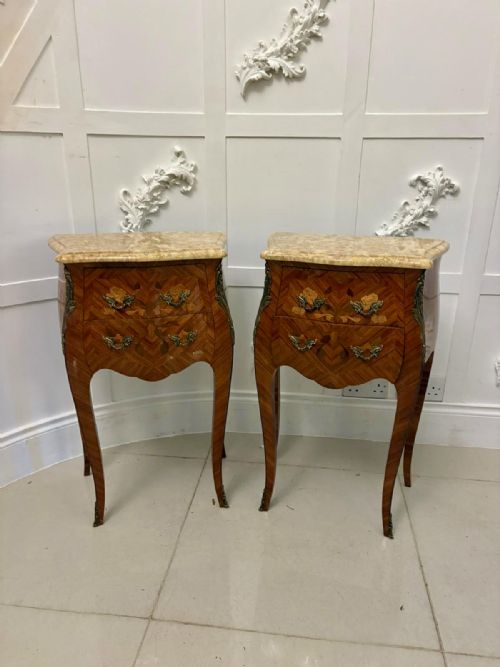


Walnut Marble Nightstands
Walnut marble nightstands bring practical bedside storage together with stone tops, spanning Victorian work to the Art Deco period.
Walnut Marble Nightstands
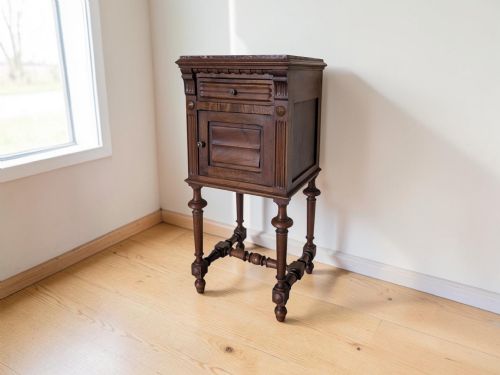
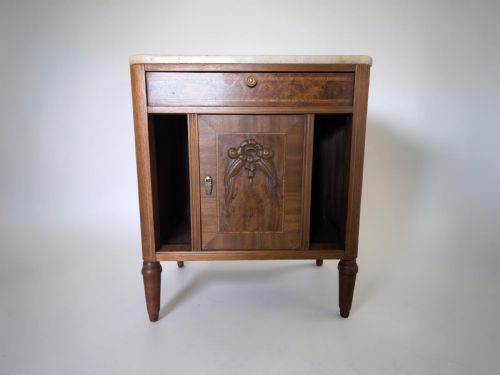
When you search for walnut marble nightstands, you find bedside tables, bedside cabinets, and side cabinets designed to sit next to a bed. The pieces appearing here span from the Victorian era and the nineteenth century through to the 1900s, 1910s, 1920s, and 1930s, reflecting various French and Italian influences.
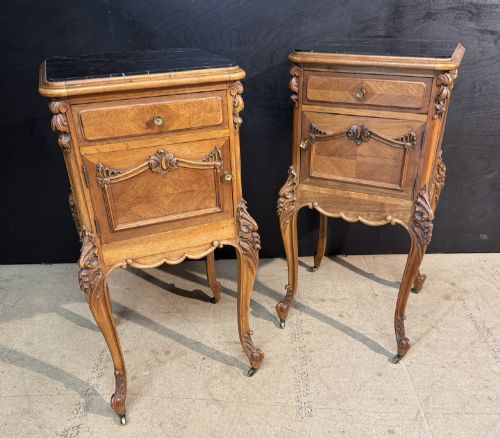
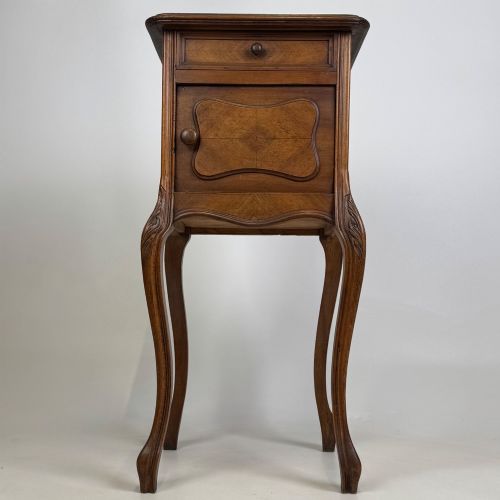
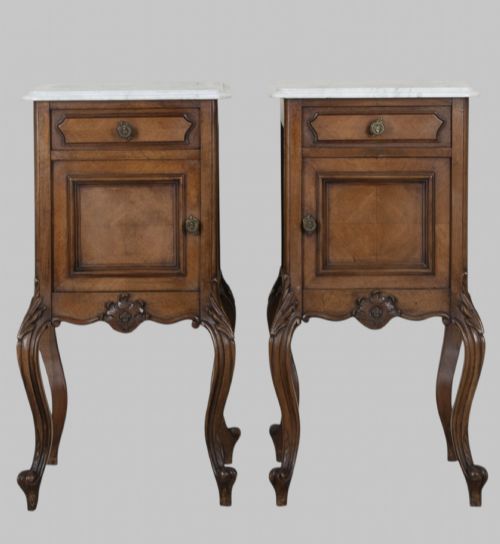
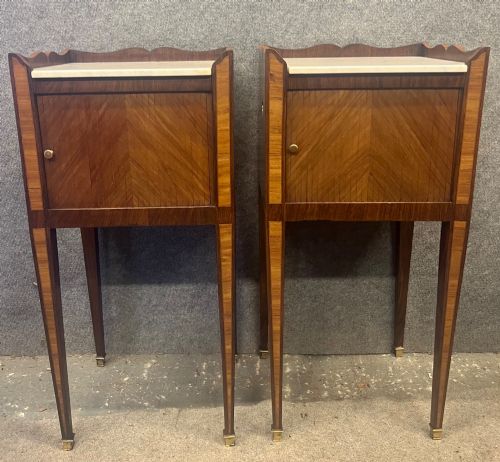
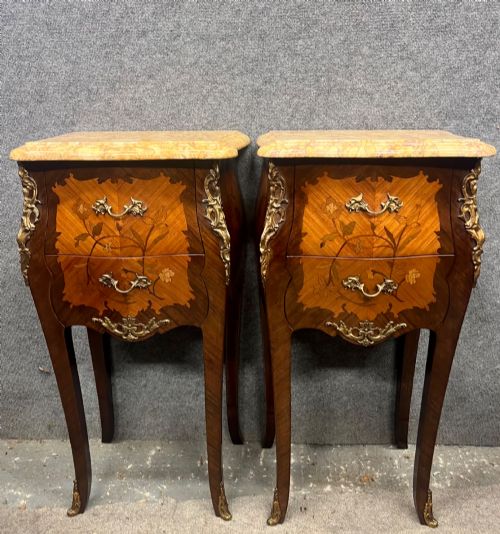
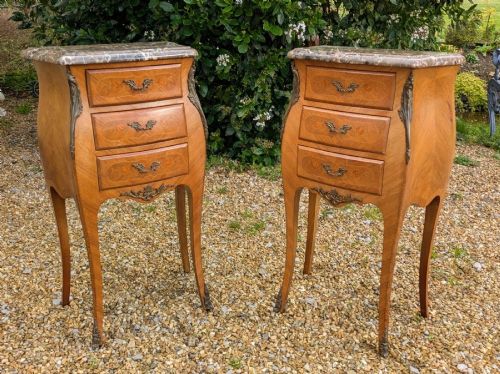
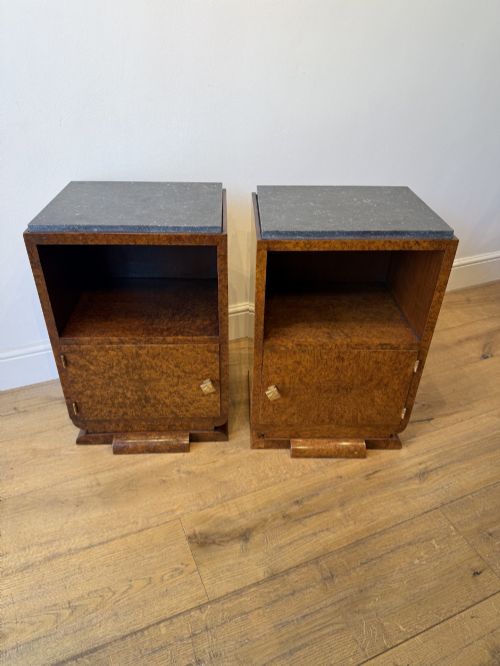
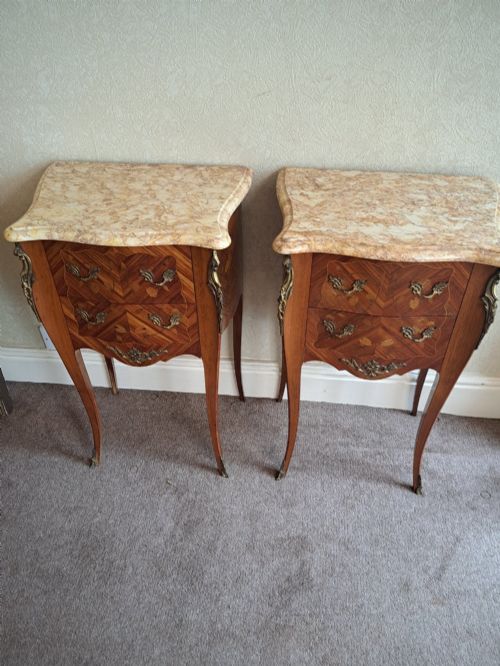
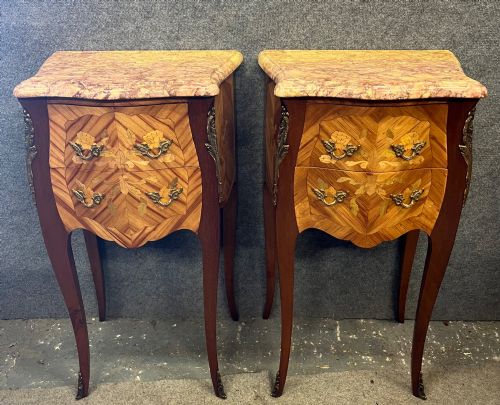
The most common format you will meet on this page is the bedside cabinet, often formed as a pair with a fitted marble top above a cupboard door or drawers. Alongside standard bedside tables, the listings include serpentine shapes, cylindrical forms, and bombe profiles derived from Louis XV styles.
Makers and workshops from these periods produced pieces that served both functional bedroom storage and decorative display. The combination of timber framing and stone surfaces provides a stable platform for lamps and nighttime items while introducing distinct regional styling.
How they were made
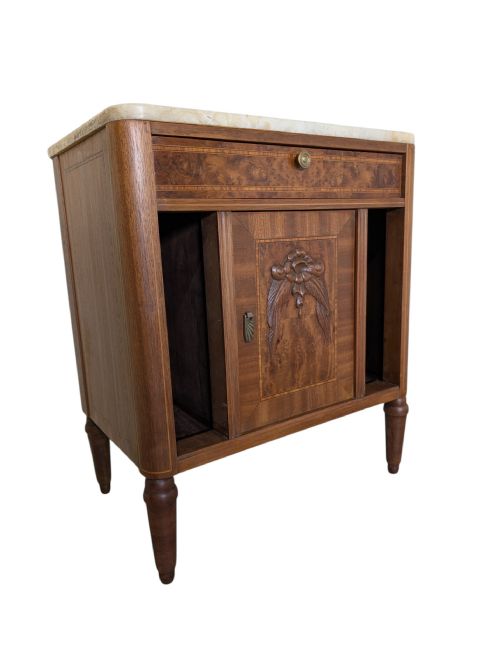
Cabinet makers constructed the foundational carcase from wood, applying walnut veneers, burr walnut, and kingwood to external surfaces. Many examples incorporate intricate marquetry and parquetry inlay work across the doors and drawer fronts, demonstrating precise geometric or floral patterns.
The stone element consists of fitted marble tops, including specific varieties such as Belgian Sainte-Anne marble, shaped to follow the contours of the timber base. Brass and ormolu mounts frequently accent corners, handles, and feet, completing the assembly of wood, stone, and metal.
Listings span the nineteenth century through the 1930s, uniting French and Italian designs in walnut, veneer, and marble.
What varies in quality
The distinction between standard items and the top of the range rests on the selection of materials and the precision of the cabinet work. Superior pieces utilise highly figured burr walnut or detailed multi-timber marquetry rather than plain veneers.
Construction details such as dovetailed drawer boxes, matching grain patterns across pairs, and thick, well-figured marble slabs determine the standing of an individual nightstand. The integration of cast ormolu mounts and finely carved wooden elements further separates standard production from finer workshop output.
The Walnut Marble Nightstands Glossary
- Bombe
- A bulging, outward-curving shape found on the sides and fronts of certain cabinets and chests. This profile is frequently associated with French and Italian regional pieces.
- Marquetry
- The art of applying small pieces of veneer to a structure to form decorative patterns or pictures. Craftsmen used contrasting timbers to create detailed pictorial designs.
- Parquetry
- Geometric mosaic woodwork used for repeating patterns on tabletops and cabinet doors. It relies on precise angular fitting of wood veneers.
- Ormolu
- Gilded bronze mounts applied to furniture for decorative effect. These metal elements accent corners, feet, and key escutcheons.
- Chevets
- The French term for bedside tables or small cabinets. These pieces often feature a marble top and enclosed storage space.
Walnut Marble Nightstands: Frequently Asked Questions
What are walnut marble nightstands?
These pieces are small bedside cabinets and tables constructed from timber and fitted with stone surfaces. They provide enclosed storage and a durable top surface for bedroom use.
Most examples originate from the nineteenth and early twentieth centuries, drawing upon French and Italian design traditions for their overall shape.
How were these nightstands used originally?
In period bedrooms, these cabinets stood beside the bed to hold lighting, water jugs, and personal items. The enclosed cupboards and drawers kept nighttime necessities out of sight.
The marble top offered a practical, water-resistant surface that could withstand spills and heavy use without damaging the underlying wood.
How do I clean the marble top?
Stone surfaces require gentle cleaning with warm water and a soft cloth to avoid scratching the polish. Avoid acidic cleaners or vinegar, which can etch the marble.
Dry the surface thoroughly after wiping to maintain the sheen and protect the natural finish of the stone.
How can I tell the period?
Dating relies on examining construction methods, timber types, and stylistic cues such as hardware and leg forms. Victorian and nineteenth-century pieces often feature heavier solid construction, while 1920s and 1930s items lean toward Art Deco lines.
Matching the overall proportions and decorative techniques against known historical styles helps narrow down the decade of manufacture.