




Walnut Mantle Clock
When you handle a walnut mantle clock, you hold a piece of history that brings both mechanical precision and warmth of timber to a room.
Walnut Mantle Clock
A walnut mantle clock is a timekeeping piece designed for domestic interiors, typically sitting on a fireplace shelf, desk or bracket. When you search for this phrase, you meet a range of forms spanning the Victorian era through to the mid-twentieth century.
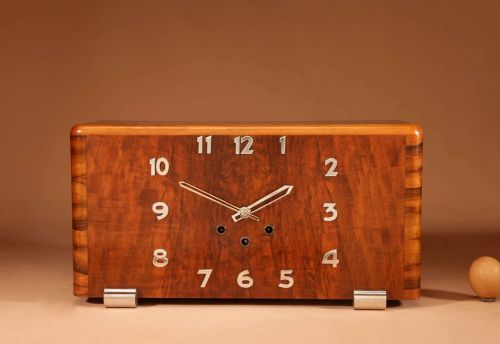
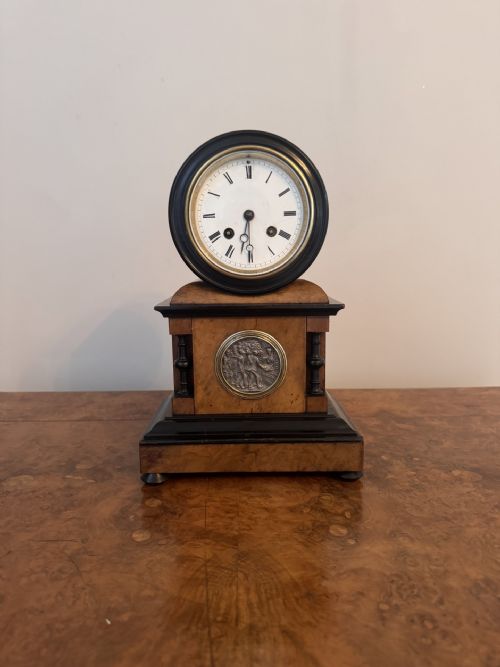
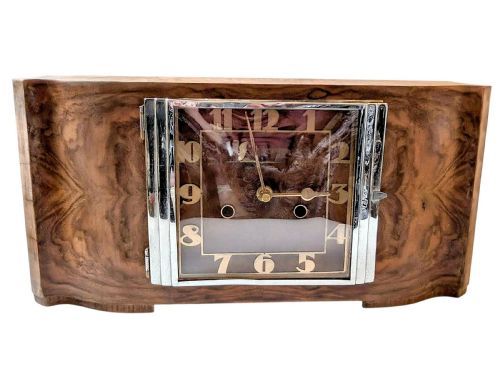
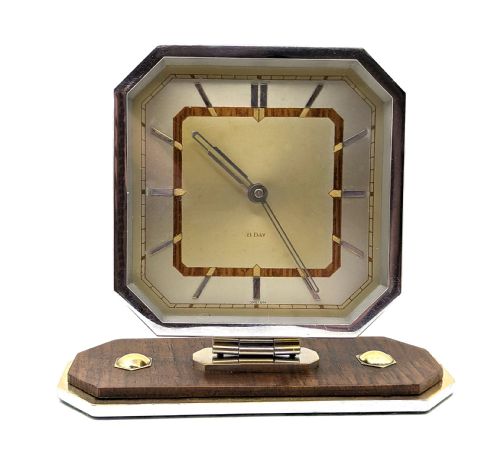
The pieces appearing on this page lean heavily towards two distinct periods. You find Victorian and Edwardian examples featuring traditional timber cases alongside Art Deco designs from the 1920s and 1930s that combine walnut with chrome and geometric lines.
Materials and construction
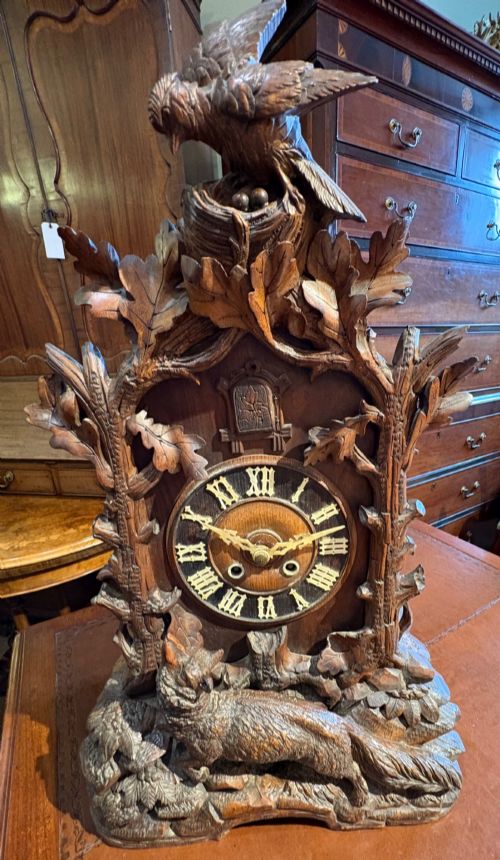
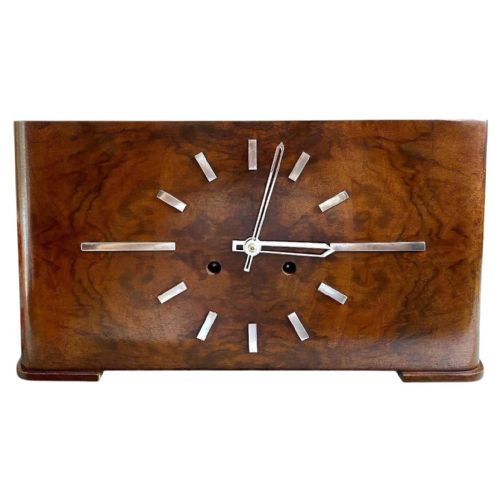
Makers utilised solid walnut and figured burr walnut veneers applied to timber carcasses to create rich grain patterns on the dial surrounds and cases. Glass protects the clock face, whilst brass components form bezels, interior movements and pendulum assemblies.
Later twentieth-century examples integrate modern industrial elements such as chrome alongside the traditional wood. Enamel dials feature painted numerals, and movements range from simple 8 day timepieces to complex chiming mechanisms.
Walnut Mantle Clock Retail Price Guide 2026
Typical asking prices for walnut mantle clock among the pieces listed under this phrase on Sellingantiques today, from the lower quarter to the upper quarter. They describe what is for sale here now, not the wider market.
Materials recorded across the archive include burr walnut, ebonised wood, brass, glass, and chrome.
What separates the tiers
The distinction between standard production and superior craftsmanship lies in the selection of the timber and the refinement of the movement. Figured burr walnut veneers with symmetrical grain patterns indicate a more considered build than plain timber.
The inclusion of named clockmakers and specialised movements, such as Westminster chime systems or bracket clock configurations, elevates the standing of an individual piece above a basic domestic timekeeper.
Mappin & Webb·Haller·Elliott of London·Junghans·Baldwin of Loughborough·Lenzkirch·Kendal & Dent London·Mauthe
The Walnut Mantle Clock Glossary
- Burr walnut
- A highly figured wood grain obtained from tree growths, prized for its swirling patterns on clock cases.
- Bracket clock
- A portable timekeeper originally designed to sit on a wall bracket or table surface.
- Pendulum
- A suspended weight that swings to regulate the movement of the clock mechanism.
- Ebonised wood
- Timber treated to imitate the dark appearance of ebony, often used for contrasting details.
- Striking
- A mechanical function that sounds the hours or quarters using gongs or bells.
Walnut Mantle Clock: Frequently Asked Questions
How do I wind an 8 day clock?
An 8 day walnut mantle clock requires winding using a dedicated key inserted into the dial holes every week to maintain tension on the mainspring.
Care must be taken not to over-wind the mechanism, stopping as soon as resistance is felt to preserve the internal gearing.
Where should I place a mantle clock?
These clocks suit flat, stable surfaces such as mantelpieces, sideboards or dedicated wall brackets where vibration is minimal.
Level placement ensures the pendulum swings evenly and the movement keeps accurate time without stopping.
How do I identify an Art Deco clock?
Art Deco examples from the 1930s display geometric forms, contrasting materials like walnut and chrome, and stylised numerical dials.
These pieces depart from Victorian ornamentation in favour of streamlined, symmetrical silhouettes.
What is a Westminster chime?
A Westminster chime mechanism plays a familiar four-note melody on gongs before striking the full hour.
This acoustic feature appears on finer twentieth-century walnut models designed for principal rooms.