



Walnut Makeup Table
These walnut makeup table pieces bring warmth and refined utility to a room, offering practical surface space alongside distinctive timber grain.
Walnut Makeup Table
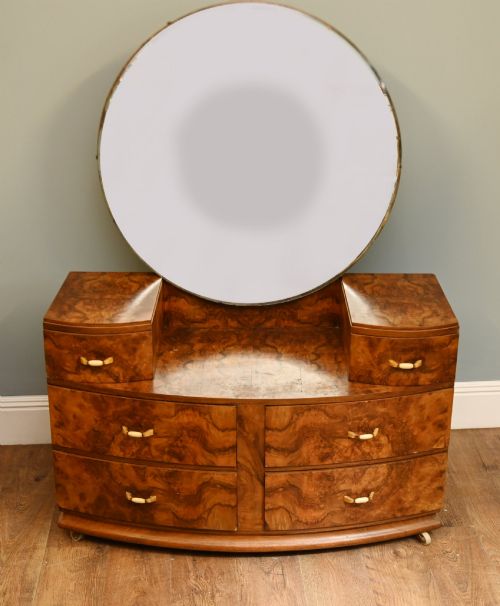
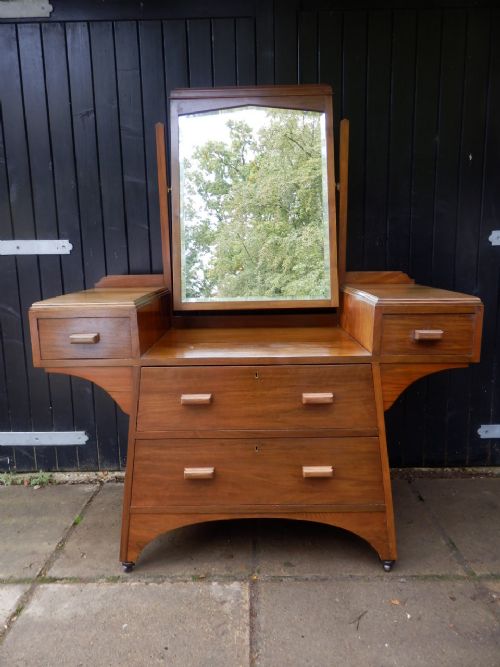
A walnut makeup table unites the functional surface of a dressing table or vanity with the rich, deep tones characteristic of walnut timber. These pieces span from the mid-nineteenth century through the Victorian era and into the geometric lines of the Art Deco period.
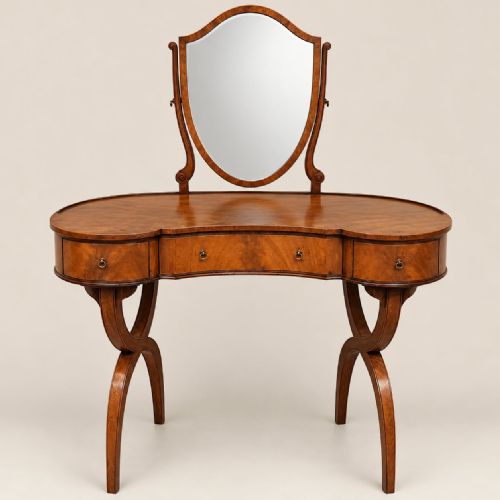
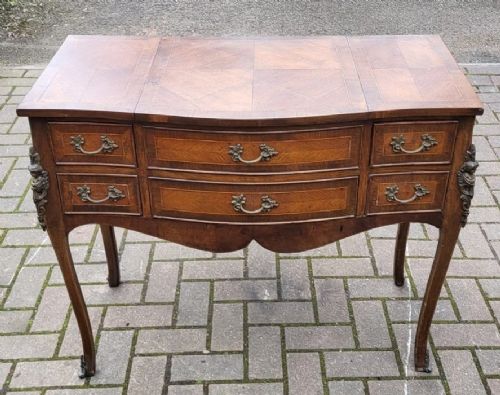
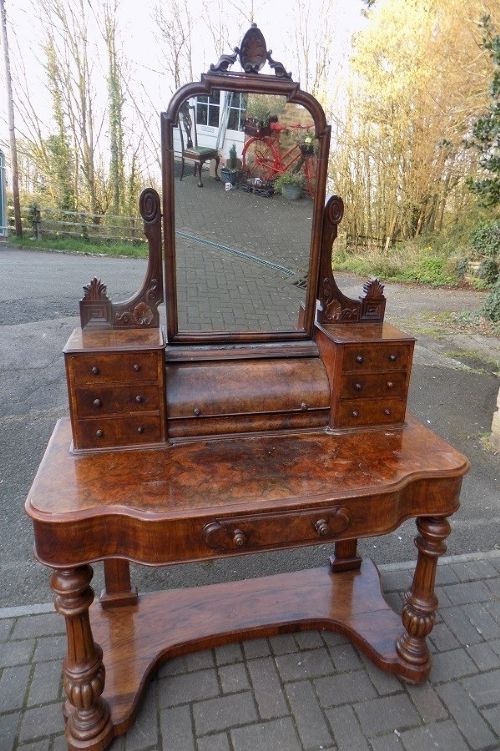
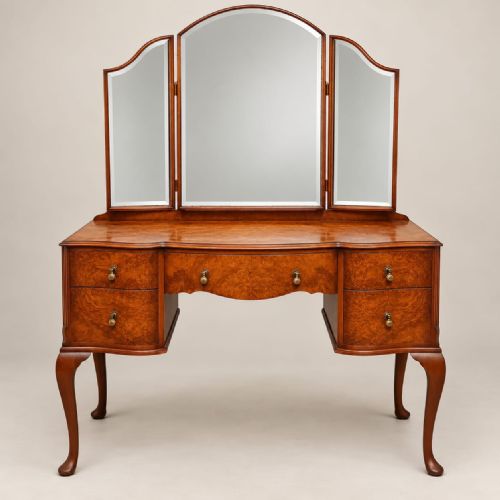
Buyers encountering this selection will frequently find Victorian duchess styles alongside pedestal forms and 1930s Art Deco interpretations. The forms range from serpentine shapes to simpler rectilinear designs incorporating mirrors.
Origins represented in these items include English cabinet-making traditions, alongside Queen Anne revival influences and French chateau styles. Each period brings a distinct structural approach to the standard dressing table format.
Materials and construction methods
Makers utilised solid walnut and figured burr walnut veneers to achieve striking patterns across the main surfaces of the furniture. Burr walnut provides a swirling, organic grain that defines the visual character of the pieces.
Structural integrity relies on traditional cabinet-making techniques, paired with functional hardware such as brass handles and fitted glass mirrors. Bakelite elements appear on later examples, reflecting the manufacturing shifts of the twentieth century.
Walnut Makeup Table Retail Price Guide 2026
Typical asking prices for walnut makeup table among the pieces listed under this phrase on Sellingantiques today, from the lower quarter to the upper quarter. They describe what is for sale here now, not the wider market.
Secret compartments occasionally hide within the pedestals, ready for your forgotten trinkets.
Factors that distinguish the work
The selection of the walnut veneer dictates much of the visual appeal, with symmetrical burr patterns marking superior examples. Cabinet-makers who took care to match grain across drawer fronts and surfaces achieved a more harmonious finish.
Proportion and the integration of mirrors also separate standard production from finer pieces, particularly in transitional periods. Master workshops paid careful attention to the curve of serpentine fronts and the stability of pedestal supports.
Maurice Adams·Maples
The Walnut Makeup Table Glossary
- Burr walnut
- A prized timber veneer harvested from walnut tree growths, notable for its complex, swirling grain patterns. It is frequently applied to the most prominent surfaces of high-status furniture.
- Duchess dressing table
- A large Victorian furniture form featuring a central mirror supported by smaller drawers, mounted on a larger table base. This style prioritises grand proportions and substantial storage.
- Pedestal dressing table
- A form supported by two banks of drawers or columns flanking a central kneehole space. This layout offers generous compartmentalisation for daily personal items.
- Serpentine shape
- A furniture contour that curves outward in the centre and inward at the sides, creating a wave-like profile. It requires advanced woodworking skill to execute accurately in solid timber or veneer.
Walnut Makeup Table: Frequently Asked Questions
What periods do these tables represent?
The pieces span from mid-nineteenth-century Victorian designs to the clean geometric lines of the nineteen-thirties.
Victorian examples often feature duchess formats with elaborate mirrors, while later twentieth-century pieces lean towards Art Deco stylings.
How do I care for burr walnut surfaces?
Burr walnut benefits from regular dusting with a soft, dry cloth to protect the delicate grain and polished finish.
Direct sunlight and excessive moisture should be avoided to prevent the veneer from fading or lifting over time.
Are the mirrors original to the tables?
Many tables retain their original glass mirrors, often housed in adjustable frames that match the primary timber.
Replacement mirrors do occur on older pieces due to the fragile nature of vintage glass over extended periods.
Where were these dressing tables used?
These pieces served primarily in domestic bedrooms as dedicated stations for personal grooming and dressing.
They provided surface space for toiletries alongside concealed storage within integrated drawers and compartments.