
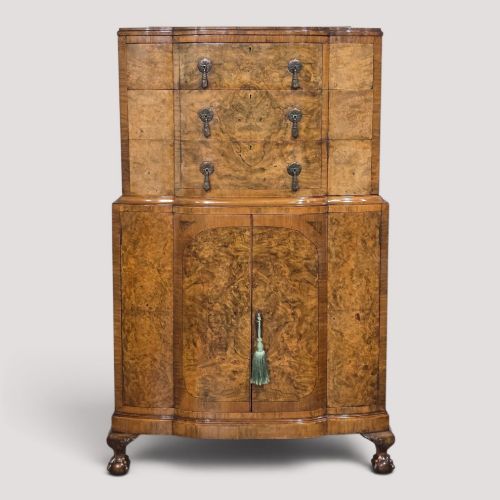
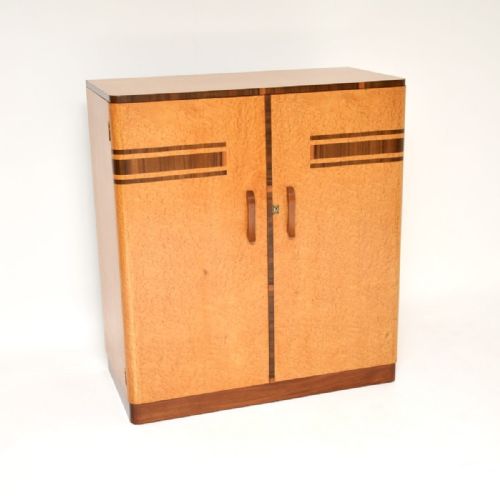
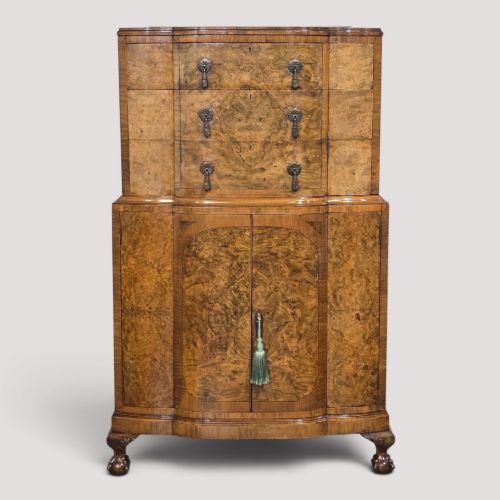

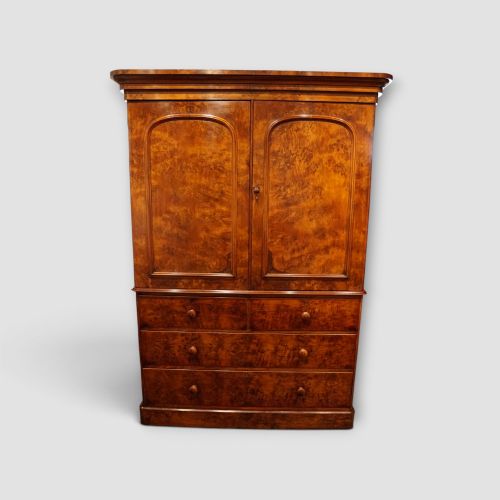
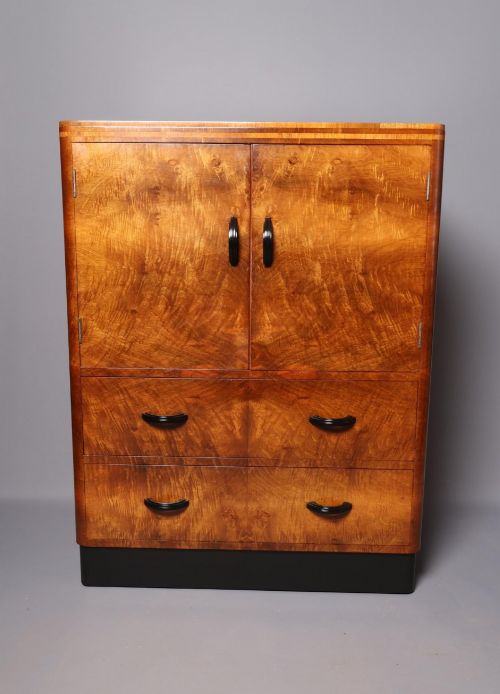
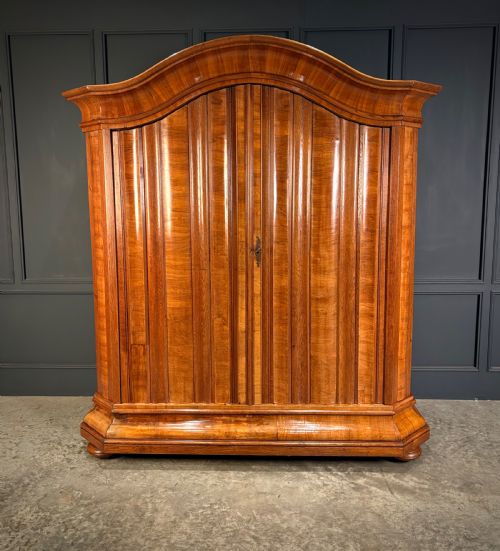
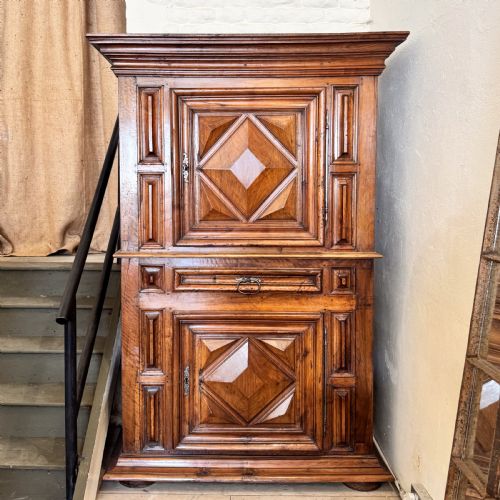
Walnut Linen Press Cabinet
A walnut linen press cabinet provides structured storage with serious period presence, bringing figured grain and architectural depth to a bedroom or dressing room.
Walnut Linen Press Cabinet
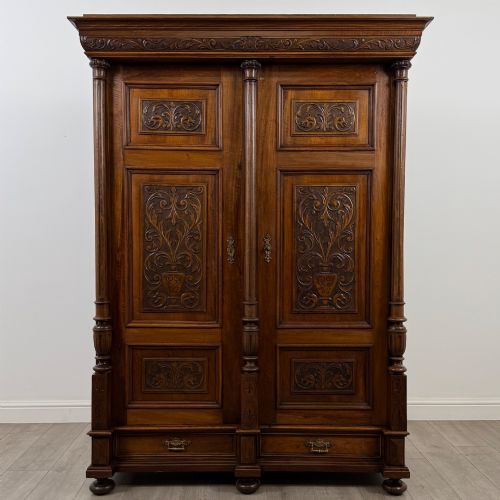
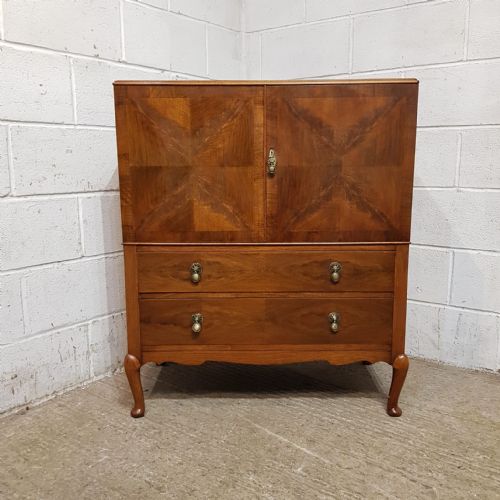
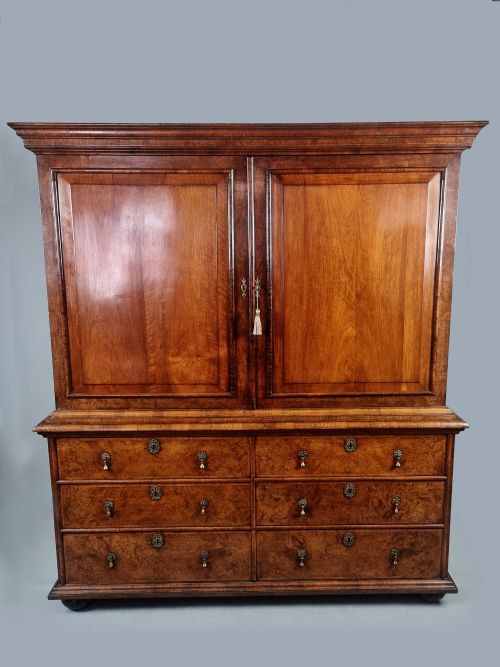
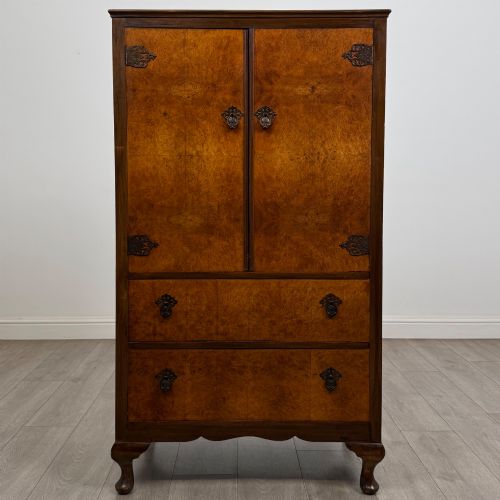
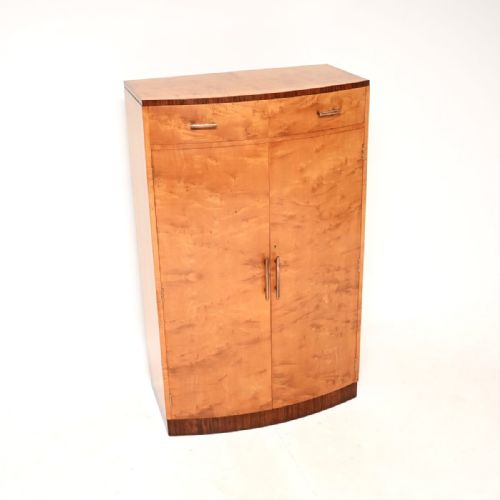
A walnut linen press cabinet combines deep timber shelving or hanging space with lower drawer storage, historically designed to keep folded textiles flat and protected. When exploring a walnut linen press cabinet, buyers encounter forms spanning from seventeenth-century William and Mary designs to twentieth-century Art Deco interpretations.
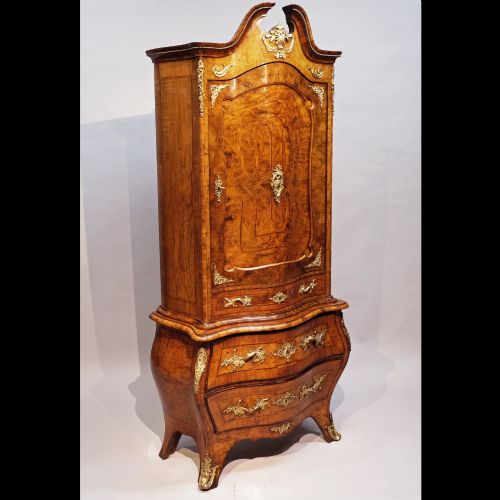
The evidence shows examples emerging across several centuries, including eighteenth-century Queen Anne and Dutch Baroque styles alongside nineteenth-century Victorian pieces. Continental and English workshops alike produced these storage items, resulting in varied proportions and cornices.
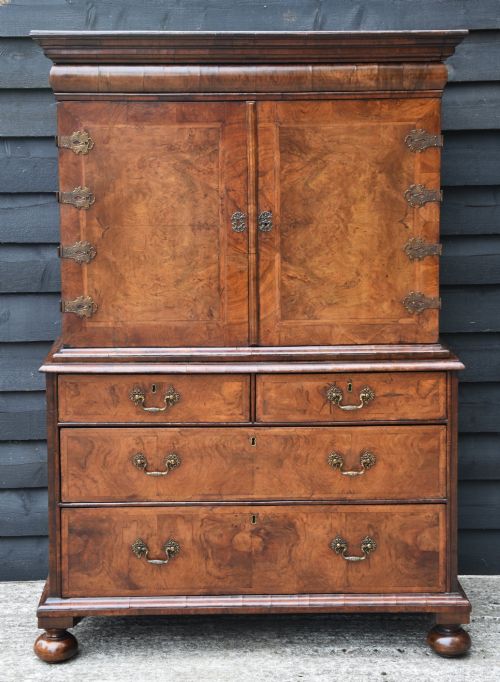
Tallboys, cabinets on chest, and compactum wardrobes frequently appear alongside traditional presses. Figured veneers and rich timber tones dominate the current selection, offering robust utility within substantial case furniture.
How they were made
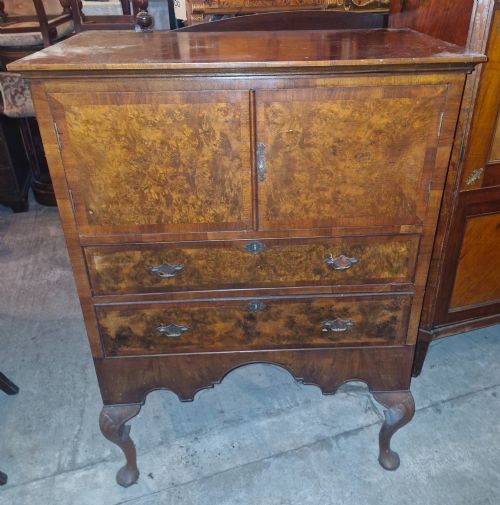
Cabinet makers utilised solid timbers and decorative veneers applied to secondary woods, creating striking visual patterns through book-matching and oyster-cutting techniques. Walnut surfaces frequently display elaborate figuring, while secondary woods like oak provide structural rigidity to the inner carcase and drawer linings.
Brass hardware such as drop handles, escutcheons, and hinges punctuate the dark timber surfaces, often fixed with hand-cut screws or pins. Ormolu mounts and floral marquetry inlay appear on Continental pieces, adding ornamental contrast to the dense grain.
Some nineteenth-century examples hide deep napkin drawers designed to keep family linens crisp and flat between grand dinners.
What varies in quality
The complexity and preservation of the timber veneer dictate much of the piece's standing, with dense burr walnut and geometric oyster patterns demanding exceptional skill to lay and maintain. Crispness in carved mouldings and the alignment of drawer runners further distinguish high-tier examples from simpler utility furniture.
Internal configuration and original hardware preservation play a major role in establishing integrity. Untouched brasses, smooth-running drawers, and well-fitted panel doors indicate superior original construction.
Heal's
The Walnut Linen Press Cabinet Glossary
- Burr walnut
- A prized timber harvested from tree growths, producing swirling, highly decorative grain patterns utilised on high-status cabinet fronts.
- Compactum
- A fitted wardrobe containing a combination of hanging space, shelves, and internal drawers within a single compartmented carcass.
- Oyster veneer
- Thin circular slices of smaller branches laid side by side to create a repeating pattern resembling oyster shells, popular in the seventeenth century.
- Marquetry
- The art of applying decorative pieces of veneer to a structure to form intricate pictorial designs or floral motifs.
- Tallboy
- A tall chest of drawers standing on a base or another chest, combining generous storage capacity with a modest floor footprint.
Walnut Linen Press Cabinet: Frequently Asked Questions
What is a walnut linen press cabinet used for?
These cabinets serve as substantial storage furniture, traditionally holding household linens on sliding trays behind upper doors while garments sit in lower drawers. Modern owners utilise them as bedroom wardrobes or general storage units.
Their deep internal compartments accommodate folded textiles and clothing while concealing clutter behind panelled doors.
How do I date a walnut linen press?
Dating relies on architectural proportions, construction methods, and decorative motifs such as marquetry or oyster veneering. Seventeenth-century pieces often feature stand bases, while eighteenth-century examples show Queen Anne bracket feet.
Twentieth-century iterations incorporate Art Deco geometric lines or compactum internal layouts reflecting later domestic needs.
Are walnut cabinets sturdy?
Walnut provides a hard, durable surface that withstands centuries of daily use when properly maintained. The dense grain resists heavy impact better than softer fruitwoods.
Internal oak framing adds further stability to the large case structures found in these presses.
How do I care for antique walnut?
Protect the timber by keeping pieces away from direct heat sources and strong sunlight, which can dry out veneers. Regular dusting with a soft cloth preserves the wax finish.
Avoid silicone-based polishes that penetrate the grain and alter the timber's natural patina.