


Walnut Inlay Cabinet
These walnut inlay cabinet examples combine rich timber and precise decoration, offering both refined display space and traditional storage for the home.
Walnut Inlay Cabinet
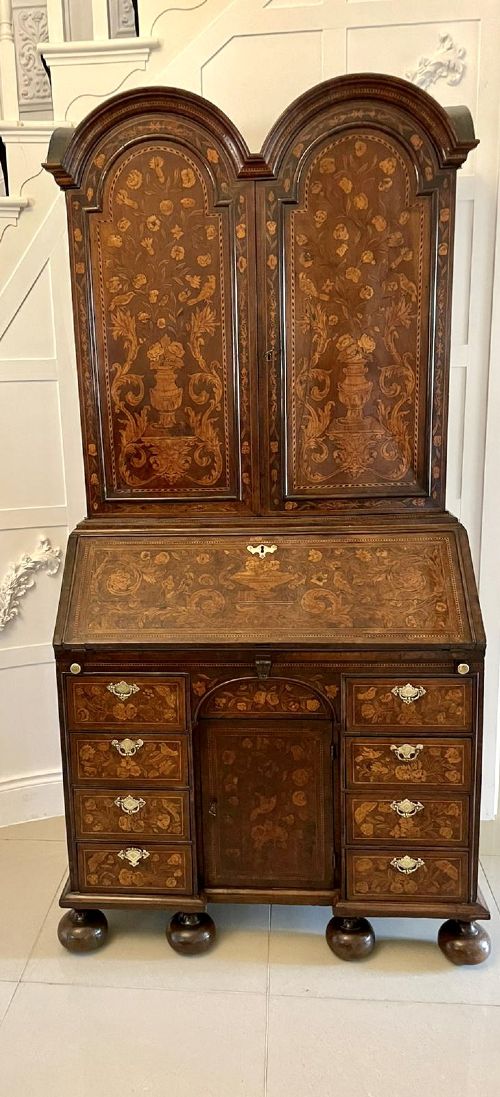
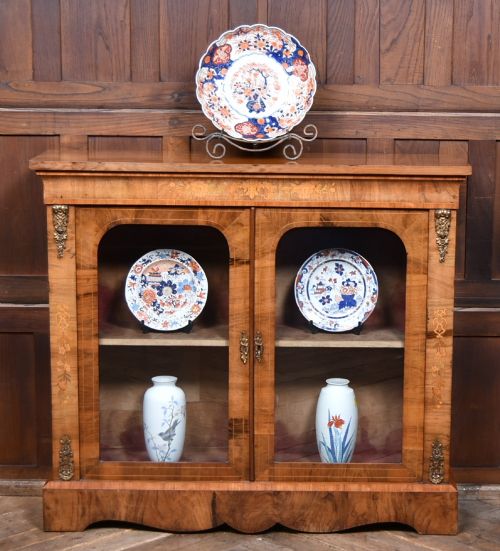
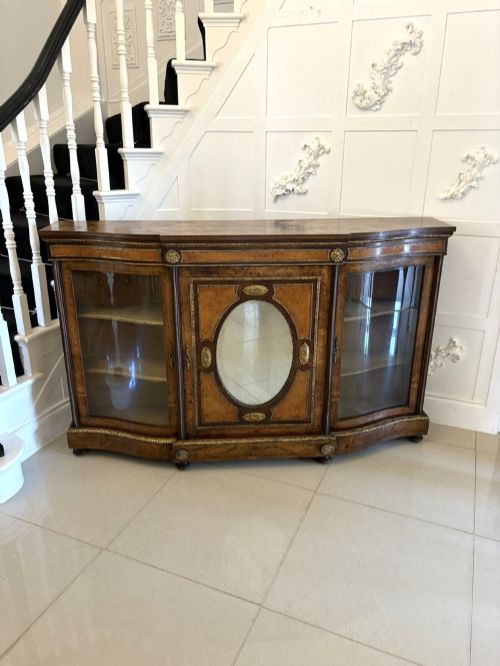
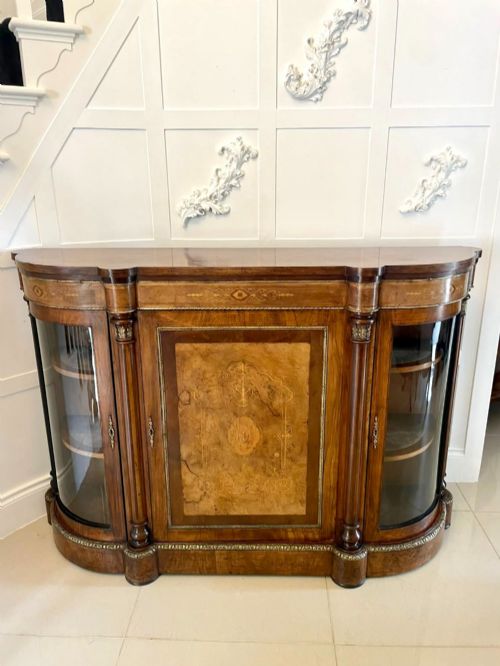
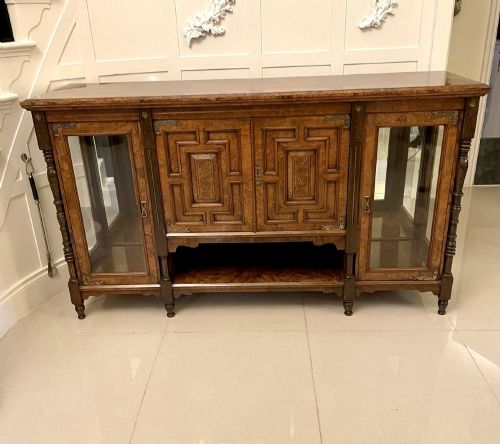
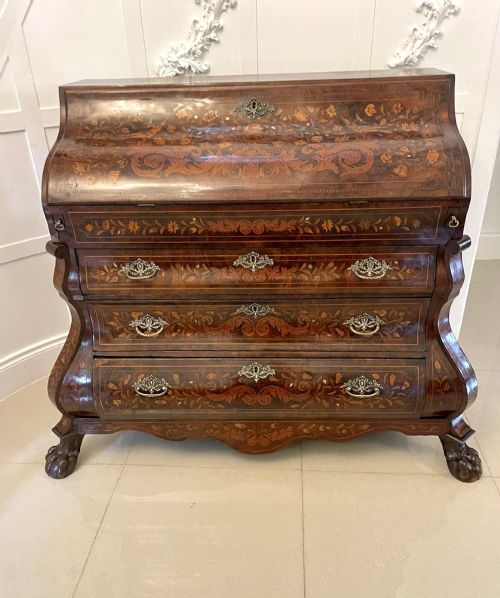
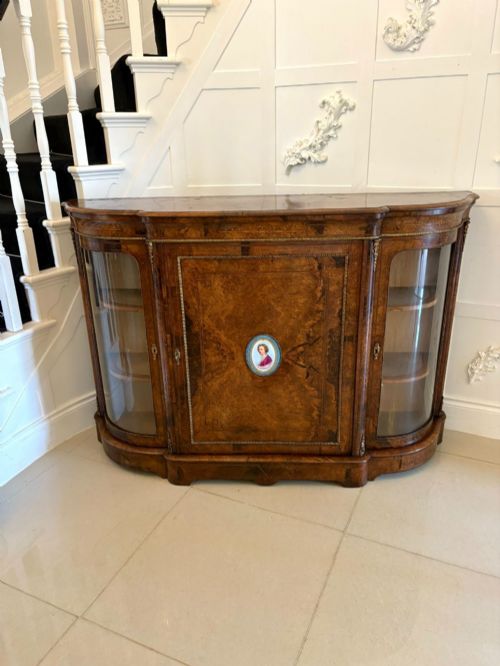
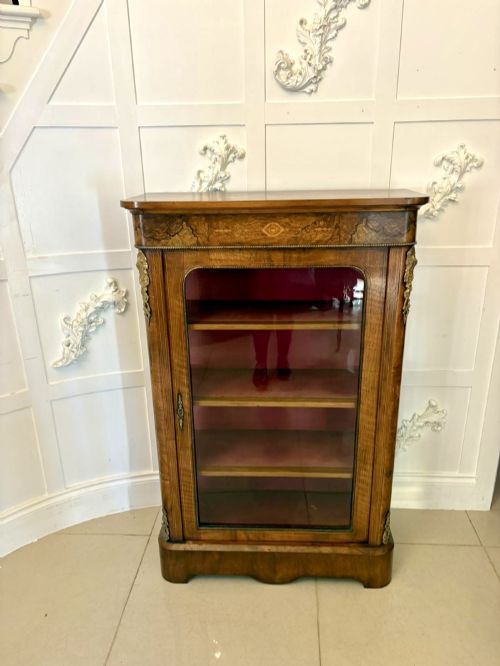
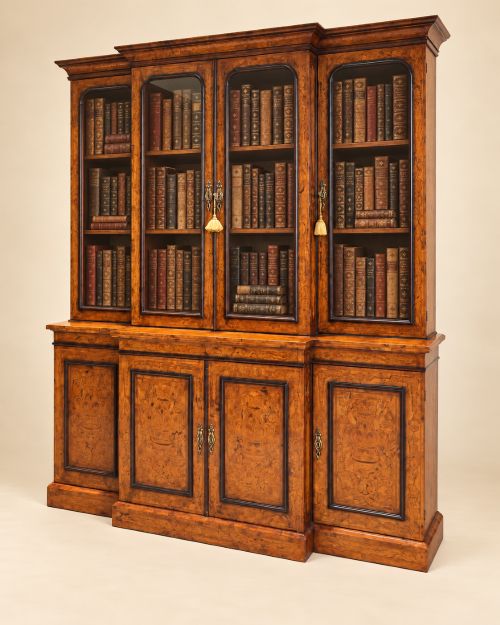
A walnut inlay cabinet encompasses a broad range of domestic forms spanning from seventeenth-century bureaus to twentieth-century bedside tables and display units. The selection on this page relies heavily on Victorian pier cabinets and credenzas, alongside continental commodes and Dutch marquetry cupboards. Buyers encounter various formats designed for specific rooms, including corner cabinets, sideboards, and glazed bookcases.
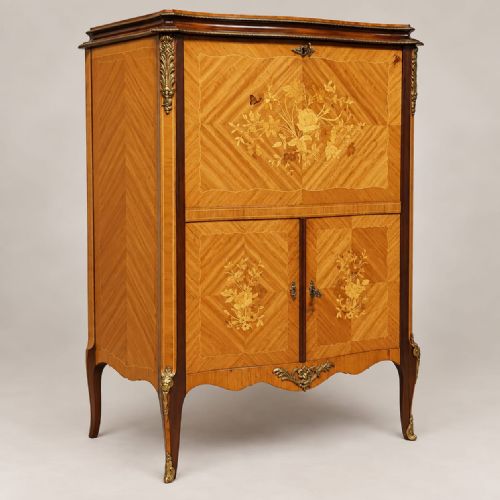
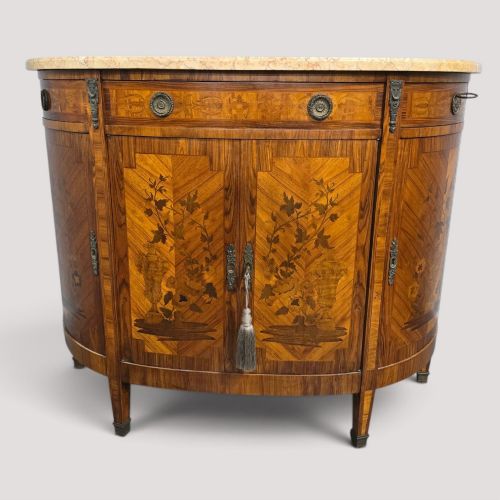
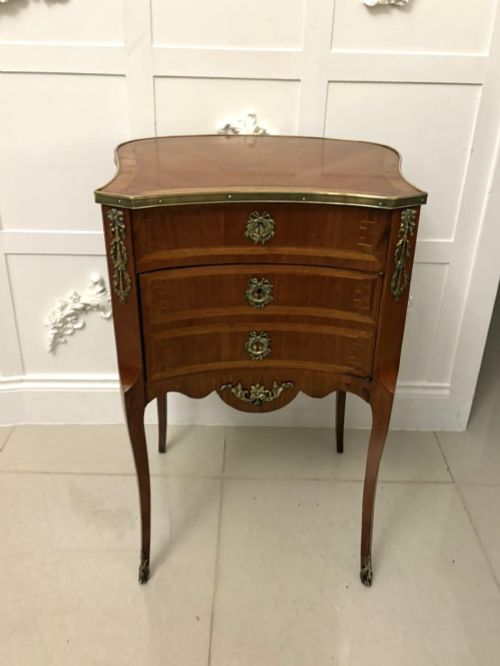
The historical spread reaches from seventeenth-century William and Mary pieces through Georgian walnut items down to Art Deco bedside furniture. Victorian manifestations often feature glazed doors, porcelain mounts, or gilt ormolu decoration intended for formal reception rooms. French Louis XV and Louis XVI styles introduce serpentine shapes, marble tops, and delicate floral marquetry into the mix.
Materials and Construction
Carpenters utilised solid walnut and figured burr walnut veneers over secondary timbers to achieve richly patterned exterior surfaces. Craftspeople added contrasting stringing, fruitwood details, and geometric herringbone patterns to frame the primary wood grain. Brass hardware, porcelain plaques, and gilt ormolu mounts frequently complete the structural composition.
Marquetry techniques involved cutting intricate floral designs from various tinted woods and setting them flush into the cabinet panels. Cabinets of specific periods incorporate marble surfaces, notably rouge or white varieties, atop commodes and side tables. Glazing, ebonising, and meticulous hand-polishing sealed the exterior finishes.
Listings feature walnut inlay cabinets spanning five centuries, from seventeenth-century William and Mary bureaus to 1930s Art Deco bedside tables.
Quality and Craftsmanship
The standard of a walnut inlay cabinet depends directly on the depth of the timber figuring and the precision of the marquetry work. Superior examples display tightly curled burr walnut and seamlessly fitted floral inlays that remain completely flush with the surrounding surface. Lesser pieces exhibit flat timber selections and coarse, simplified stringing.
Hardware integration and structural proportions further distinguish the range. Top-tier items feature original fire-gilt ormolu mounts, finely cast brass handles, and intact porcelain plaques rather than later replacements. The crispness of carved mouldings and the smoothness of drawer operation reflect the original maker's investment of time.
Maple and Co·Walter Carter Harrods
The Walnut Inlay Cabinet Glossary
- Burr walnut
- A figured timber harvested from walnut tree growths, producing swirling patterns highly prized for cabinet veneers. It provides a dramatic decorative surface.
- Marquetry
- The art of creating decorative pictures or patterns by arranging small veneer pieces on a solid wooden carcass. Floral motifs are especially common on Dutch and French pieces.
- Ormolu
- Gilded bronze mounts applied to furniture edges, feet, and key escutcheons during the eighteenth and nineteenth centuries. This decorative metalwork adds an opulent finish to revival pieces.
- Pier cabinet
- A low shelving unit or display cupboard designed specifically to stand against the wall space between windows. Victorian iterations frequently incorporate glazed doors.
- Stringing
- Thin inlay lines of contrasting wood or light-coloured timber used to edge drawers, doors, and tabletops. It defines the structural outlines of Georgian and Victorian furniture.
Walnut Inlay Cabinet: Frequently Asked Questions
How do I identify burr walnut?
Burr walnut is recognised by its dense, swirling grain patterns and knot clusters that create a mottled, highly decorative appearance.
Cabinetmakers sliced this timber into thin sheets for veneering the main visible surfaces of high-status furniture.
Where were marquetry cabinets made?
Marquetry cabinets were produced across Britain, France, and the Netherlands, with each region employing distinct design characteristics.
Dutch workshops favoured elaborate floral marquetry on bulbous cupboards, while French makers concentrated on serpentine commodes and Louis-style bedside tables.
How do I care for walnut furniture?
Walnut furniture requires placement away from direct sunlight and heat sources to prevent the burr veneers from drying out or cracking.
Regular dusting with a dry, soft cloth and occasional application of appropriate wax maintain the natural sheen of the timber.