
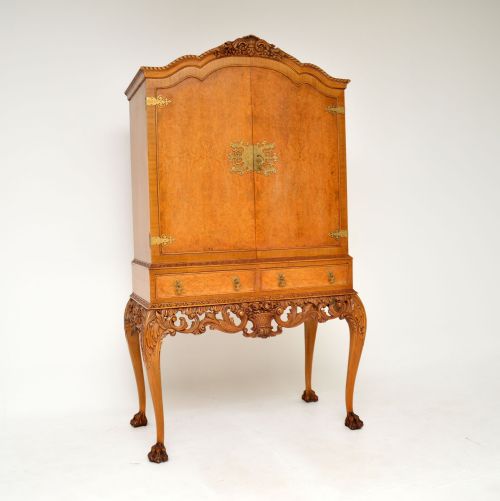
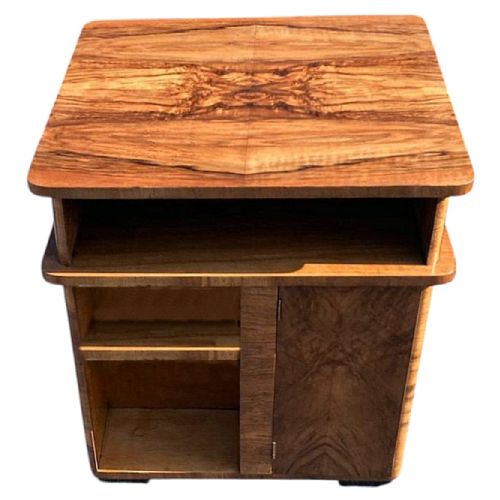


Walnut Home Bar Cabinet
These walnut home bar cabinet pieces bring distinct period style and practical drinks storage into a room.
Walnut Home Bar Cabinet
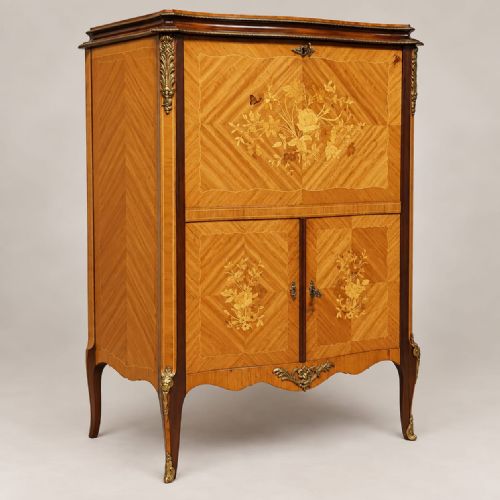
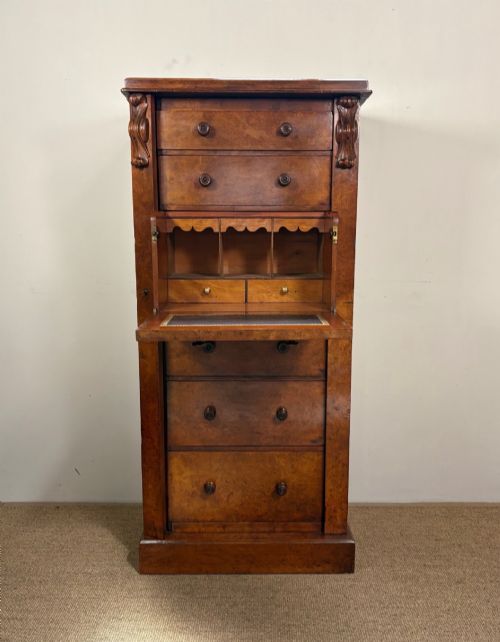
A walnut home bar cabinet typically appears as a cocktail or drinks cabinet designed to house glassware, bottles and mixing equipment. These pieces primarily date from the 1920s and 1930s in styles such as Art Deco, alongside earlier Victorian examples.
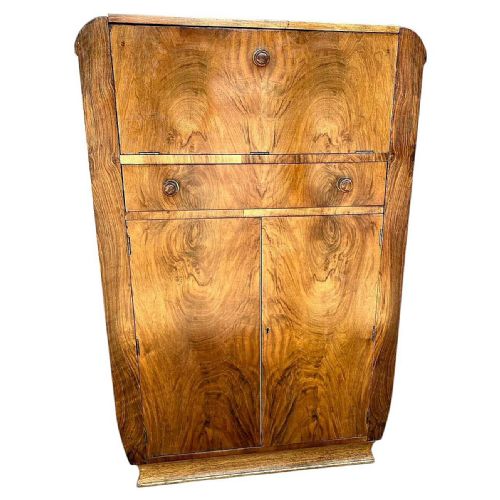
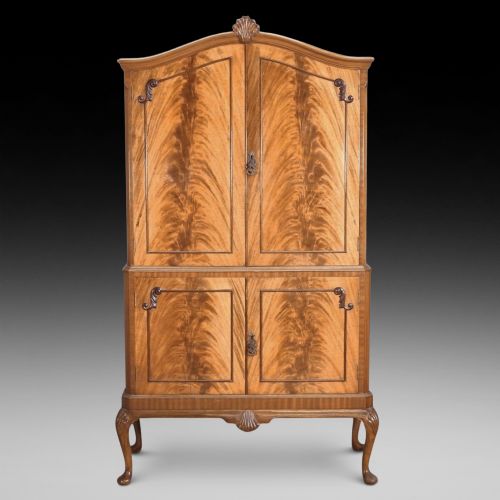
The most common form on this page is the cocktail cabinet, often featuring double doors opening to reveal a fitted interior with mirrored backs and glass shelving. Makers frequently employed walnut veneer and burr walnut to create striking grain patterns across the exterior.
How They Were Made
Craftsmen built these cabinets using solid wood carcases overlaid with walnut and burr walnut veneer to achieve decorative, figured surfaces. The distinctive grain patterns come from carefully matched veneer leaves applied to the doors and top panels.
Makers integrated functional hardware including brass and chrome handles, hinges and locks to secure the drop-down or cabinet doors. Interiors frequently incorporated mirror glass panels and glass serving slides designed to handle the daily use of mixing drinks.
Listings span periods from the Victorian era through the 1920s and 1930s, utilising walnut, burr walnut veneer, brass, mirror glass and chrome.
What Varies in Quality
Quality rests upon the selection and matching of the veneer, with choice burr walnut creating a more animated and visually rich surface than plain timber. The depth of figuring across the doors and the precision of the grain alignment set finer examples apart.
Internal fitting and hardware complexity also distinguish different grades of cabinet. Elaborate pull-out slides, specialist glass shelving and fitted mirror work indicate a higher standard of manufacture compared to simpler utilitarian storage.
Harry and Lou Epstein
The Walnut Home Bar Cabinet Glossary
- Burr Walnut
- A specialised wood cut from the abnormal growth of a walnut tree, yielding dense, swirling grain patterns. It provides a highly decorative surface highly prized for cabinet doors.
- Cocktail Cabinet
- A dedicated piece of furniture designed for storing and serving alcoholic drinks. These cabinets often feature specialised interior compartments for glasses and bottles.
- Veneer
- A thin slice of superior wood applied over a secondary timber carcase. This technique allows makers to utilise dramatic grain patterns economically while maintaining structural stability.
- Art Deco
- A design style popular in the 1920s and 1930s characterised by sleek geometric shapes and streamlined forms. It heavily influenced the silhouette of many period drinks cabinets.
Walnut Home Bar Cabinet: Frequently Asked Questions
What is a walnut home bar cabinet?
A walnut home bar cabinet is a dedicated piece of furniture designed for storing bottles, glassware and bar accessories. These units typically date from the early twentieth century and combine functional storage with decorative woodwork.
Most examples operate as cocktail or drinks cabinets featuring specialised internal compartments. They range from streamlined Art Deco designs to revival styles referencing earlier centuries.
How do I identify an Art Deco drinks cabinet?
Art Deco drinks cabinets generally display geometric forms, clean lines and symmetrical arrangements of figured wood grain. They rely on the natural pattern of the walnut veneer rather than heavy carved ornamentation to create visual impact.
Hardware on these pieces often incorporates polished chrome or brass details. The overall silhouette emphasises horizontal or vertical banding typical of the interwar period.
What is burr walnut?
Burr walnut is a timber harvested from a tree growth abnormality that produces intricate, swirling patterns in the wood. Cabinet makers slice this wood into thin veneers to display the complex grain across large surfaces like doors.
This material creates a highly decorative appearance that catches the light differently depending on the angle. It remains a hallmark of finer quality twentieth-century cabinet making.
Where were these cabinets used?
These cabinets served as a central feature in entertaining spaces within homes during the interwar period and earlier decades. They provided a discreet yet accessible station for preparing and serving drinks to guests.
Today, they function similarly in living rooms or dining spaces as both storage furniture and decorative focal points. Their internal mirrors and glass shelves continue to serve their original purpose.