

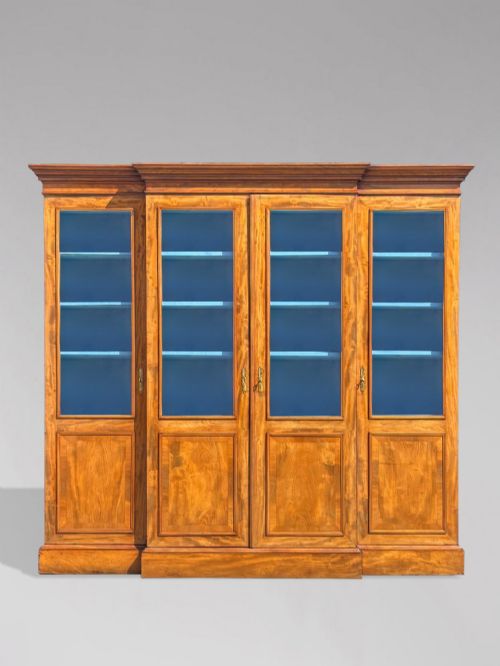


Walnut Four Door Cabinet
These walnut four door cabinet examples combine large storage capacity with rich timber grain, offering a commanding presence for any serious interior.
Walnut Four Door Cabinet
A walnut four door cabinet provides substantial storage through a configuration of four distinct cabinet doors, spanning formats from bookcases and credenzas to armoires and sideboards. Buyers browsing this selection encounter pieces originating primarily from the nineteenth and eighteenth centuries, alongside specific dated examples from eighteen sixty through to nineteen ten.
The aesthetic range draws heavily on continental and British traditions, incorporating styles such as Victorian French Revival, Louis Philippe, Gothic Revival, and Italian Provincial. These large forms typically serve as architectural anchors in a room, displaying prominent timber surfaces combined with glass panels, shelving, or internal compartmentation.
How They Were Made
Construction relies upon solid walnut and figured burr walnut veneers applied to stable carcass timbers, frequently enhanced by decorative elements like ormolu mounts, brass hardware, and intricate Tunbridgeware inlay. Carved details define many of the period pieces, showing hand-chiselled ornamentation across door panels and cornices.
Glazed sections utilise framed glass to protect contents within bookcases and display cabinets, while structural integrity relies on traditional joinery methods suited to large case furniture. Ebonised wood and iron details occasionally appear to provide structural contrast or decorative accenting.
Walnut Four Door Cabinet Retail Price Guide 2026
Typical asking prices for walnut four door cabinet among the pieces listed under this phrase on Sellingantiques today, from the lower quarter to the upper quarter. They describe what is for sale here now, not the wider market.
Hunting lodge cabinets of the eighteenth century offered game keepers ample room to store provisions alongside their heavy-duty ironmongery.
What Varies in Quality
The distinction between standard examples and top-tier exhibition pieces rests in the selection of timber and the ambition of the ornamentation, such as serpentine fronts and complex marquetry. Finer cabinets display exceptional figure in the burr walnut and precision in inlaid or carved motifs that demand high levels of artisanal skill.
Proportion and architectural harmony also separate exceptional items from simpler vernacular pieces, with superior cabinets balancing massive scale through refined mouldings and balanced door divisions.
The Walnut Four Door Cabinet Glossary
- Breakfront
- A cabinet design where the central section projects forward from the flanking outer sections, creating depth and architectural rhythm across the four-door facade.
- Credenza
- A low-profile cabinet or sideboard, frequently featuring glass doors or intricate marquetry, suited for display and storage in formal reception rooms.
- Ormolu
- Gilt bronze mounts applied to furniture edges and corners, common in French revival pieces to accent the walnut timber.
- Tunbridgeware
- A distinct type of decorative mosaic woodwork using tiny wood blocks to form geometric or pictorial patterns, seen as inlay on specific English cabinets.
Walnut Four Door Cabinet: Frequently Asked Questions
Where should I place a large walnut cabinet?
These substantial pieces require generous wall space and structural support, making them ideal for dining rooms, libraries, or spacious hallways where their scale can be appreciated without crowding the room.
Positioning them away from direct sunlight protects the walnut timber and delicate veneers from fading or drying out over time.
How do I care for burr walnut surfaces?
Maintenance involves dusting with a soft, dry cloth and occasionally applying quality beeswax to nourish the timber and preserve the natural sheen of the grain.
Avoid silicone-based polishes and keep the cabinet away from sudden temperature fluctuations or moisture sources to prevent veneer lifting.
What is the difference between a credenza and a sideboard?
Credenzas generally feature lower profiles with enclosed or glazed cupboards across the front, traditionally used in formal rooms for serving and display.
Sideboards often incorporate drawers alongside cupboards and sometimes sit slightly higher, designed primarily for dining room utility and storage.
How can I identify a Victorian Gothic revival piece?
Gothic revival pieces in this category often display architectural motifs such as pointed arches, heavy carved mouldings, and structural ironwork reminiscent of medieval stone buildings.
These design elements give the walnut furniture a severe, imposing silhouette distinct from curved French styles.